

Botswana takes part in anti Malaria campaign

23 Apr 2014
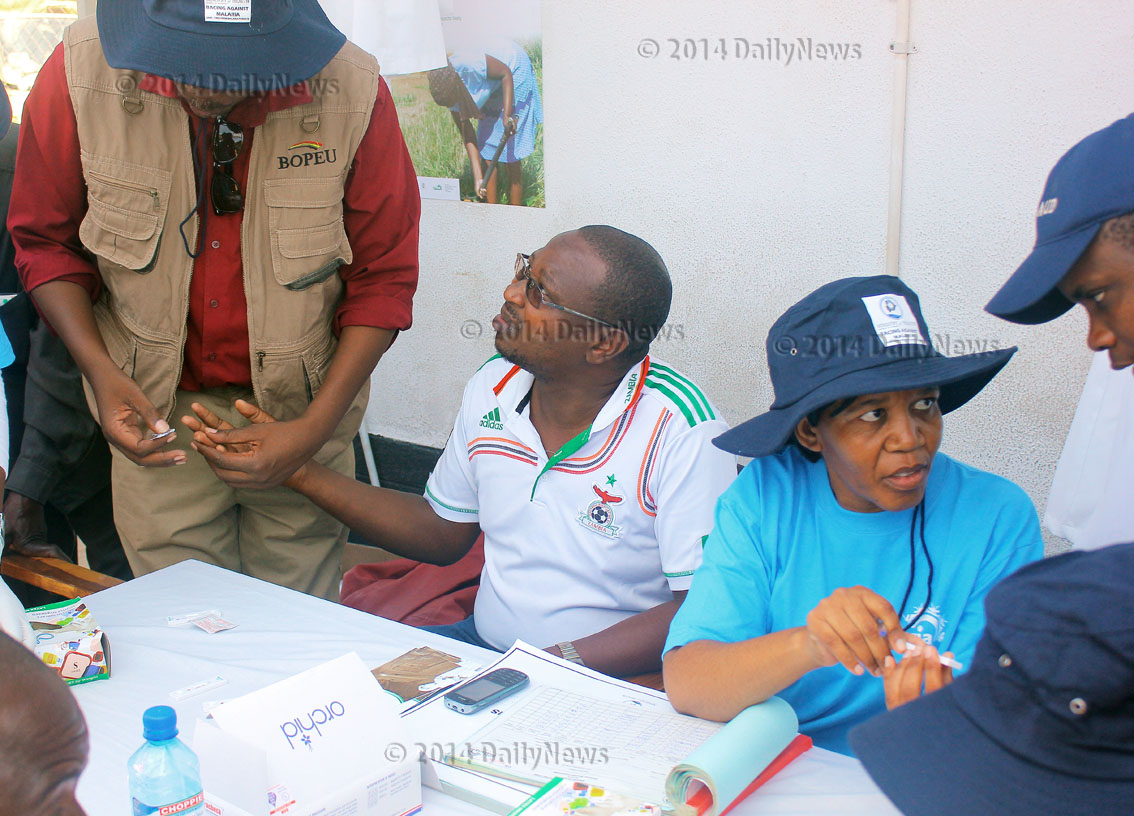
Botswana joined other countries in the Southern African Development Community (SADC) to participate in the on-going anti Malaria campaign termed Race against Malaria-2 (RAM-2) in Kasane.
The cross border campaign was aimed at creating awareness for action against Malaria in the SADC region. It kicked off with a motorcade that started in Dar es Salaam, Tanzania on April 13, and passed through Malawi, Zambia, Mozambique, DRC, Zimbabwe, South Africa, Namibia and finally Botswana.
Speaking in Kasane recently, Minister of Health, Dr John Seakgosing said Botswana was among the four SADC countries targeted to have eliminated Malaria by 2015. He commended all stakeholders for their resilience and dedication towards the achievement of the vision of freeing the region from Malaria.
He added that the decision to accelerate efforts to fight Malaria was reached at the first African summit on the roll back Malaria campaign that took place in Nigeria in 2000 and was attended by 17 heads of state, ministers of health and delegations from 44 African countries.
“This set momentum for concerted efforts by African countries supported by Roll Back Malaria Partnership to fight this disease in decades that were to come,” he said.
Dr Seakgosing said the Zambezi River Life Expedition of 2008, which started at the source of the Zambezi River in Zambia, created awareness for action against malaria in the SADC region and raised global awareness about the high burden of malaria along the river and the lack of health care faced by the area’s communities.
He added that the elimination campaign, which was launched in 2007, helped targeted countries realize that malaria often occurs at border areas, which resulted in coordinated efforts by affected countries to address malaria along their border districts.
“Malaria is one of the greatest threats to health and development. It places a large burden on economies of the region due to direct costs of illness and premature deaths. Furthermore, the broader social and economic costs that the disease imposes on households and nations cannot be ignored,” said Dr. Seakgosing.
For his part District Health Specialist in Chobe Dr John Makuka said transmission of malaria in Botswana is seasonal and closely related to rainfall. He said Botswana usually experiences an unstable pattern of malaria with high period from December to May each year. He further revealed that the country experienced intermittent severe malaria epidemic in 1988, 1993, 1996 and 1997 with a significant loss of lives.
He added that from 2001 onwards there has been a downward trend in reported malaria cases as Botswana recorded a total of 456 cases of malaria with seven deaths in 2013 as opposed to the past when thousands of malaria cases were being recorded. In regards to Chobe district, a total of 50 cases of malaria were recorded in 2013, fortunately with no deaths. As of April 2014, 61 cases have been recorded.
Dr Makuka added that Botswana has been divided into three epidemiological zones.
He said Zone A comprises of endemic areas with high levels of malaria transmission in the Northern parts of Botswana, Zone B is comprised of non-endemic areas with significant numbers of cases of malaria in the central part of the country while Zone C is comprised of non-endemic areas with sporadic cases of malaria in the southern parts of the country.
Dr Felicitas Zawaira, World Health Organization (WHO) representative, said increased commitment and expanded funding helped to reduce malaria incidence by 25 percent globally and 31 percent in Africa.
However she warned that such progress should not make us complacent as malaria still kills an estimated 627 000 people every year in the sub-Saharan Africa, mainly children under five years of age.
“This should be a strong reminder that victory is still a long way off. On the other hand, emerging drug and insecticide resistance also threaten to reverse recent gains,” she said.
Dr Zawaira said surveillance systems in the region are still weak as every year more than 200 million cases occur and most of these cases are never tested or registered.
She added that testing, treating and tracking of all cases should be a priority. RAM 2 Team Leader, Dr Kaka Mudambo said malaria is mainly imported by migrant workers, travellers and tourists who unknowingly carry the parasite from place to place.
He further said the he is pleased that Botswana is now eligible to receive funds from the Global Concept Note saying this would enable Botswana to mobilize resources to fight against malaria.
Dr Mudambo also encouraged the community to open their houses for spraying and journalists to continue marketing and supporting the campaign. ENDS
Source : BOPA
Author : Yolanda Nkonjera
Location : KASANE
Event : Anti-malaria campaign
Date : 23 Apr 2014
Related News


11 Jun 2026