

Women girls inequality will be history
21 Apr 2014
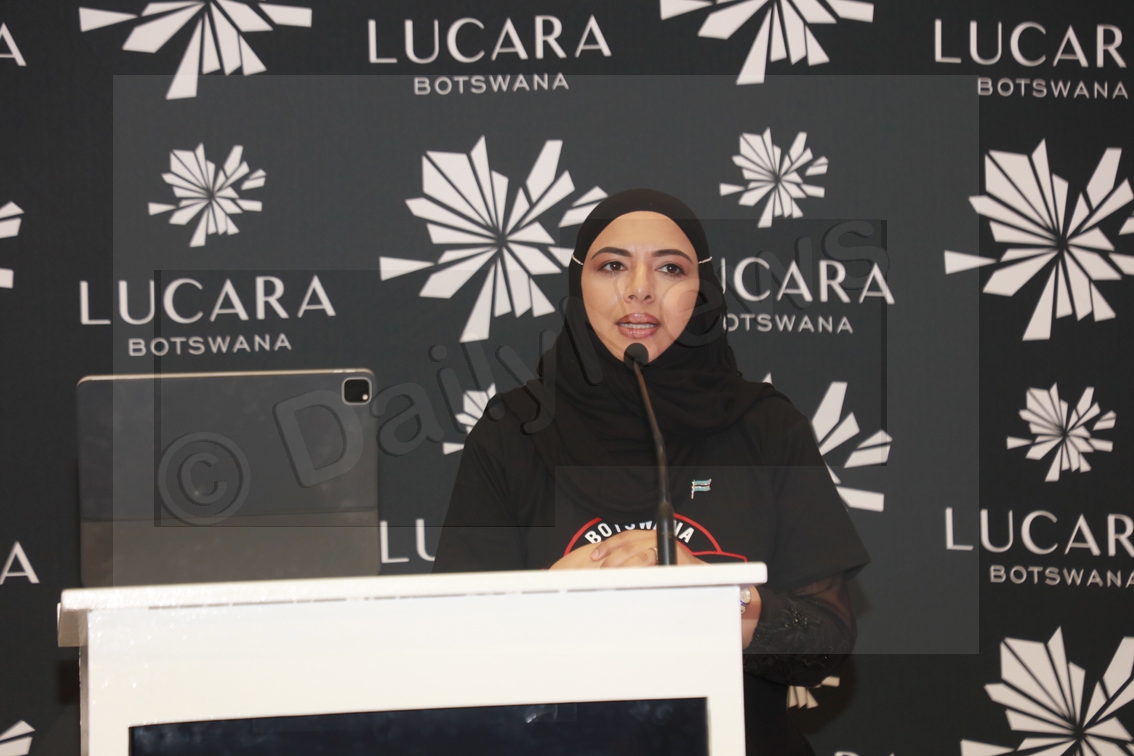
UNFPA country representative, Ms Aisha Camara-Drammeh says women and girls are subjected to persistent inequalities and discrimination despite enacted laws to protect their rights.
Speaking during the International Conference on Population and Development (ICPD) Beyond 2014 - Eminent Women’s Dialogue, Ms Camara-Drammeh said however, the inequalities and discriminations would be history in the long run.
After the convention of International Conference on Population and Development-Plan of Action (ICPD-PoA) held in Cairo 20 years ago, UN members including Botswana made a commitment to improve the quality of lives of people, she said.
Aligned with the dialogue’s theme Building the Future-Accelerating Gender Equality for the post 2015-Development Ms Camara- Drammeh said the Convention on the Elimination of All Forms of Discrimination Against Women (CEDAW) and Beijing Declaration had advocated for the gender equality and empowerment of women to be at the heart of the post 2015 development framework.
She said there were escalating reports on child mortality rates, denied access to education, subjected to abject poverty, under-represented of women in political arenas and unrecognised stances in leadership positions.
She explained that women and girls continue to face human rights violations country wide, adding “one in 3 women is subjected to violence for their entire life, often by someone she knows”. She said the recorded rate of 20 000 births by underage girls in developing countries is overwhelming.
Ms Camara- Drammeh also said women are still under-represented in decision making at all levels, in the household and the public sphere.
Despite all identified challenges that might hinder the efforts of the CEDAW and other stakeholders to achieve their goals in burying all the inequality and discrimination problems, she said interval assessment from ICPD timeframe (ICPD +5, ICPD+10, ICPD+15) and the recent Global Review Report indicate that most indicators and targets have been met, some close to being met and some surpassed.
She said there is increased access to reproductive health and primary education, adding that according to global review report, fewer women are dying during pregnancy and childbirth. Maternal mortality worldwide fell by nearly half between 1990 and 2010 acknowledged, Ms Camara- Drammeh.
“Every day, 20 000 girls below age 18 give birth in developing countries. Nine in 10 of these births occur within marriage or union, which reflects the fact that the percentage of girls being married off before they turn 18 years has not changed much in recent years,” she said.
She said the gender parity in primary and secondary education is downgrading. She said there is positive progression since more children particularly girls have enrolled for primary education reaching the rate of 90 per cent. She said in Sub-Saharan Africa region, net-enrolment stood at 75 per cent as compared to 47 per cent registered between 1990 and 2011.
She said there is great improvement since 93 girls are now enrolled in a primary school to 100 boys. Ms Camara- Drammeh further said there is increased share of women in decision making positions, adding globally, 40 out of every 100 wage-earning jobs in the agricultural sector were held by women in 2011. Ends
Source : BOPA
Author : Malebogo Lekula
Location : GABORONE
Event : Women’s Dialogue
Date : 21 Apr 2014
Related News
08 May 2026

07 May 2026
Kagame wraps visit with DTCB tour
07 May 2026
BURS donates nine chain saws
07 May 2026
Donation boosts primary schools in Gaborone
07 May 2026