


Boko in historical context
19 Nov 2026
The proposed increase in Botswana’s De Beers shareholding from 15 to 30 per cent is perhaps best understood within the historical evolution of the country’s diamond economy.
When Botswana attained independence in 1966, its economic prospects were limited. The discovery of diamonds at Orapa in 1967 dramatically changed those prospects. The partnership subsequently established between Botswana and De Beers became the foundation of the country’s economic transformation. But that partnership was itself the product of a gradual struggle to increase Botswana’s participation in the ownership and commercial benefits of its mineral resources.
The government initially held a minority stake in the mining partnership that became Debswana, increasing its ownership to 50 per cent in 1975.
During the 1980s, Botswana also acquired a direct shareholding in the global De Beers business through arrangements involving diamond stockpiles. That stake subsequently increased to 15 per cent following the restructuring of De Beers in 2001. Later developments, including the relocation of De Beers’ international sales operations from London to Gaborone in 2013, further strengthened Botswana’s position within the diamond value chain.
This history is important because it demonstrates that Botswana’s economic sovereignty has never been a single achievement.
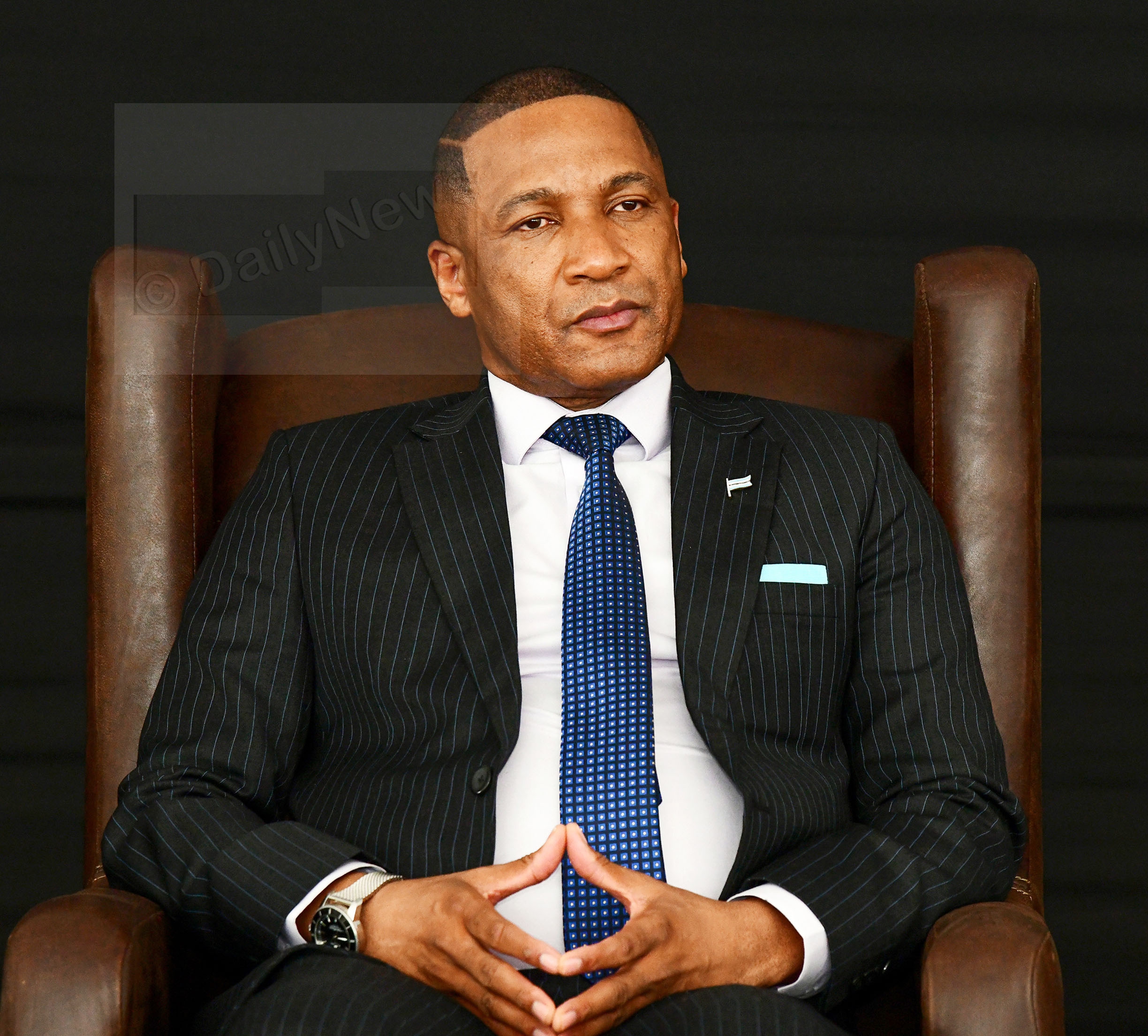
It has evolved through successive negotiations in which different governments sought to secure greater national influence over the diamond industry. President Advocate Duma Boko’s proposal to increase the country’s De Beers shareholding to 30 per cent must be understood as a potential new phase in that historical process.
If concluded as envisaged, Botswana would become the company’s largest individual shareholder. The significance is not simply the acquisition of additional shares. It lies in the prospect of Botswana gaining greater influence over the strategic direction of an international industry upon which its economy has depended for generations.
It also reflects a broader historical question confronting resource-rich African countries since independence: whether political sovereignty can be translated into meaningful ownership and control of the international industries built upon their natural resources.
The proposed transaction is not without risks. De Beers faces substantial commercial challenges, and greater ownership would expose Botswana to additional financial responsibilities.
Whether the acquisition ultimately advances the country’s economic interests will depend on its terms and subsequent performance.
But historically, the ambition represents a continuation of Botswana’s movement from being a producer of diamonds towards exercising greater influence over the global structures through which their value is determined.
The Second Republic and the momentum of history
What makes these three developments particularly interesting is their common historical direction. The indigenous languages initiative concerns cultural citizenship. The CKGR restitution concerns historical justice. The De Beers proposal concerns economic sovereignty.
Each revisits an arrangement inherited from Botswana’s earlier historical development. And this is where Boko’s concept of the Second Republic becomes significant.
A Second Republic, in the substantive sense, cannot simply be declared into existence. It must be established through changes in the institutions, rights and political expectations that define the relationship between a state and its citizens.
The historical comparison is instructive. Botswana’s First Republic was not constructed through the independence ceremony of September 1966 alone.
Its character emerged gradually through the Constitution, the consolidation of public institutions, economic policies, the diamond partnership and the development of a common national identity.
Similarly, the eventual significance of Boko’s Second Republic will depend not on its declaration, but on whether its underlying principles become embedded in Botswana’s political and institutional life. There is an important historical distinction between reforms that remain dependent on a particular administration and reforms that change the expectations of society itself.
Once indigenous languages become established in national institutions, their recognition can create expectations that future governments may find politically difficult to disregard.
Once ancestral land rights are legally restored and protected, their removal becomes more than a question of changing government policy. And once greater national ownership of strategic economic assets becomes established, it can create a new benchmark against which future economic decisions are judged.
In each instance, reforms may acquire a momentum that extends beyond the presidency that initiated them. It is conceivable, therefore, that Boko is laying the foundations of a Second Republic whose direction his successors may find difficult to reverse.
This is not because political change is ever inherently irreversible. History contains numerous examples of reform movements that failed to survive their architects. Rather, it is because successful historical transformations eventually cease to belong to the political leaders who initiated them.
They become embedded in national institutions, public expectations and the understanding of what citizens regard as legitimate.
Future governments may revise Boko’s policies, reject aspects of his political philosophy or pursue different economic priorities.
But if the principles of cultural inclusion, ancestral justice and greater economic sovereignty become sufficiently institutionalised, they may find themselves governing within a framework substantially different from the one he inherited.
The ultimate historical significance of a political leader may therefore lie not in ensuring that successors preserve his policies, but in changing the terms upon which those successors must govern.
The verdict of history
There is, of course, a danger in attempting to judge a presidency while its consequences are still unfolding. Boko’s government must be assessed against the immediate obligations of governing: employment creation, economic performance, public services and the material wellbeing of citizens.
Historical ambition cannot substitute for effective administration. Nor can political announcements be treated as completed transformations.
But history and contemporary politics operate on different timescales. The decisions that dominate today’s political arguments are not necessarily those that will define Botswana fifty years from now.
Botswana’s founding leadership is remembered for constructing and consolidating the modern state. Boko’s presidency may eventually be understood within a different historical context: the attempt to reconsider some of the political, cultural and economic arrangements established during that earlier period. Whether that attempt succeeds remains to be determined. Yet the possibility is historically significant. Boko has already entered the history books as the man who ended 58 years of BDP rule. But I would argue that this may ultimately be the least complicated part of his legacy.
His more consequential contribution may lie in having initiated the foundations of a Second Republic that fundamentally reconsiders Botswana’s relationship with its people, its land, its cultural identity and its economic resources.
If those foundations become sufficiently entrenched, his successors may inherit not merely a government to administer, but a historical transformation whose direction they will find increasingly difficult to reverse. And perhaps that is the distinction between political achievement and historical transformation. The former is measured by what a leader accomplishes during his time in office.
The latter is measured by what continues to shape the nation long after he has departed. Boko’s place in history may therefore be determined not simply by the political order he displaced in 2024, but by whether the Republic he has begun to reimagine becomes the political and institutional inheritance of generations yet to come. ENDS
Source : BOPA
Author : Tshireletso Motlogelwa
Location : Gaborone
Event : Interview
Date : 19 Nov 2026
Related News
19 Nov 2026
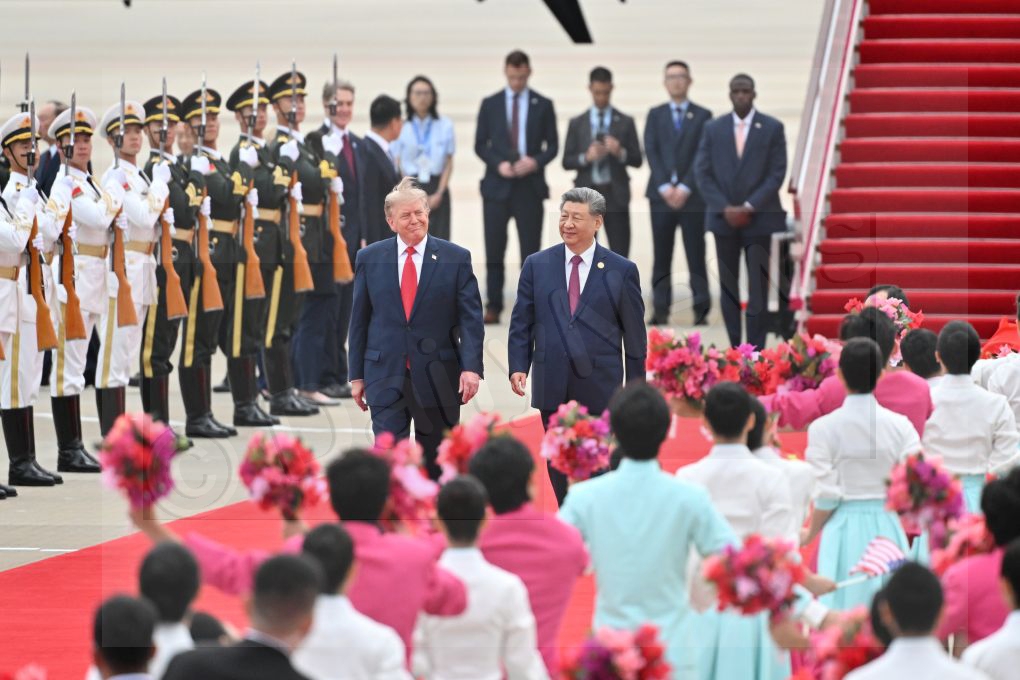
Xi welcomes Trump at Shenzhen airport
19 Nov 2026
Unlock Africa trade and stop raw exports

18 Nov 2026