


Botswana explores new water solutions
11 Nov 2026
Botswana is exploring floating solar panels on dams and other water-saving technologies to tackle growing water shortages worsened by climate change.
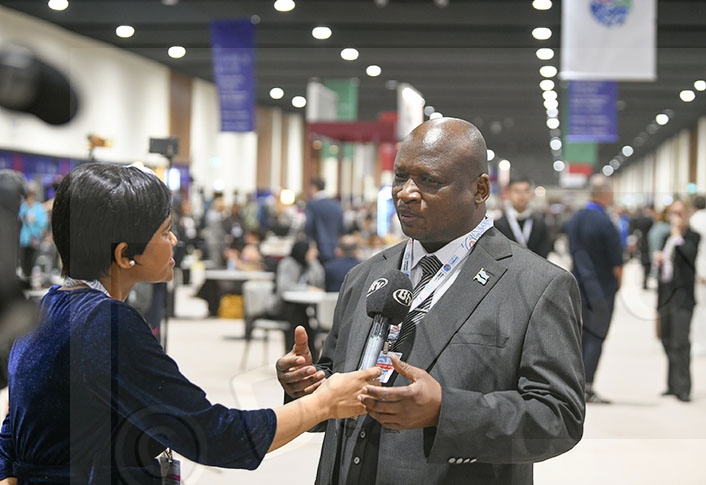
In an interview on the sidelines of the 31st United Nations Climate Change Conference (COP31) in Turkey, Minister of Water and Human Settlement, Mr Onneetse Ramogapi said water security remained a top national priority.
“Water is life and a necessary resource for all sectors, be it health or agriculture. Climate change has a negative impact on water, and that is why the water sector is a big deal here at COP31,” Minister Ramogapi said.
The minister explained that Botswana’s reliance on dams had become increasingly challenging as rising temperatures accelerated evaporation, reducing the amount of water available for consumption and economic activities.
He said government was exploring floating solar panels as one of the solutions.
Again, he said government was also promoting efficient irrigation methods, particularly drip irrigation, to minimise water wastage in agriculture.
He explained that the method delivered water directly to plant roots, making it more efficient than conventional irrigation systems, which can lose significant amounts of water through evaporation and runoff.
He further said government was also encouraging the use of treated wastewater to reduce dependence on freshwater sources, particularly for irrigation.
The minister highlighted the importance of changing public attitude toward natural resource management, calling for greater action against overgrazing, deforestation and uncontrolled veld fires.
He said although environmental education and awareness had been ongoing, communities needed to translate that knowledge into responsible practices, supported by effective enforcement of environmental laws.
Botswana’s water challenges are becoming increasingly urgent.
In November last year, Mr Ramogapi informed Parliament that the country’s national water deficit stood at 17.3 per cent and could increase by 51 per cent by 2035 if left unaddressed.
The World Bank had also identified Botswana as one of four Southern African countries expected to experience high water stress by 2040.
Against this background, Mr Ramogapi said government was pursuing alternative water sources through proposed water transfer projects from the Chobe-Zambezi system and Lesotho.
The Lesotho-Botswana water transfer project, which envisages transporting water from Lesotho’s highlands through South Africa, could provide an additional source for growing water needs.
Mr Ramogapi said Botswana was also advancing its climate adaptation priorities through its Third Nationally Determined Contribution (NDC 3.0), which outlines the country’s commitments to addressing climate change and strengthening resilience across vulnerable sectors.
Meanwhile, at the official opening of COP31 on November 9, COP31 President and Türkiye’s Minister of Environment, Urbanisation and Climate Change, Mr Murat Kurum, called on countries to move beyond climate pledges and translate commitments into practical action, warning that the world was reaching a critical point in the fight against climate change.
He observed that climate change was increasingly interconnected, with drought in one country potentially affecting food supplies elsewhere, while declining water availability could have far reaching consequences for economies, migration and security.
Mr Kurum said extreme heat was simultaneously placing pressure on cities, agriculture and human health, making it necessary for countries to approach climate action as a development priority rather than solely an environmental concern.
“Climate policy is also development policy. It is food policy. It is energy policy. It is urban policy,” he said.
He called for COP31 to become an implementation focused conference, where commitments translated into investments, technology transfer and practical solutions that improve people’s lives.
He also highlighted the importance of climate financing, noting that delayed investment in resilience could increase the cost of future disasters, while failure to deliver adaptation finance could worsen humanitarian challenges in vulnerable countries.
Drawing on Türkiye’s tradition of collective effort known as imece, Mr Kurum urged countries, institutions and communities to share responsibility in addressing the climate crisis.
He said the success of COP31 should ultimately be measured not by the statements made at the conference but by investments mobilised, technologies shared and communities made more resilient. ENDS
Source : BOPA
Author : Ndingililo Gaoswediwe
Location : Antalya
Event : COP31
Date : 11 Nov 2026
Related News
11 Nov 2026

10 Nov 2026
Boko to advance climate efforts at COP31
10 Nov 2026