



Government addresses capacity shortfalls in project implementation
04 Nov 2026
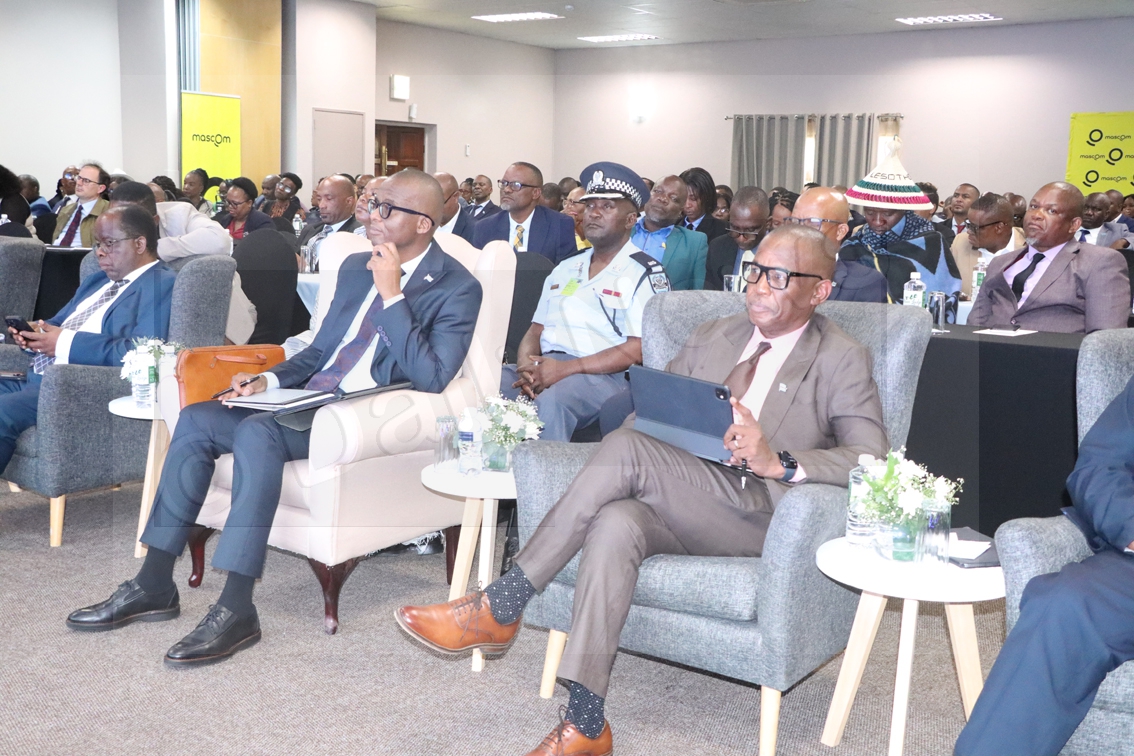
Government is moving in the right direction to address the issue of lack of capacity to ensure sustainable national development. Responding to comments raised by some participants at the just-ended Budget Pitso that was held in Maun, Vice President and also minister of Finance, Mr Ndaba Gaolathe stated that lack of capacity has been a serious challenge in government, hence efforts were ongoing to increase capacity in project implementation.
He said the problem was so bad that some mega projects worth millions of Pula had been failing because the institutions tasked with implementation had no capacity to even conduct feasibility studies.
He said government had, in the past, poured money into development projects with no tangible results due to institutions’ ineffectiveness.
Thus, he highlighted that going forward, no funding would be made without prior capacitation of the relevant institutions.
Mr Gaolathe also noted that some institutions did not take the issue of capacity seriously as they focused much on awarding tenders. “This undermines the importance of capacity. I can assure you that we are seeking to leverage on partnerships to increase capacity, and by doing so, we can reduce expenditure.”
The Vice President also highlighted the importance of building productive capacity in local communities.
“Our task is to strengthen their capabilities, unlock their productive potential and ensure that no community is left behind in the pursuit of national prosperity,” he said.
With regard to State Owned Enterprises (SOEs), Mr Gaolathe emphasised that public ownership must serve a clear economic or social purpose, noting that enterprises must be well-governed, financially-responsible and accountable for the value they delivered.
He said where the private sector could invest, innovate and compete effectively, the state should enable rather than unnecessarily displace it, adding that the question was not simply what government should own, but how every institution and every public asset could best contribute to national development.
Equally, local authorities must also strengthen revenue mobilisation, improve collection systems, eliminate procurement leakages and explore responsible partnerships that could unlock the value of underutilised assets.
The gathering learnt that greater decentralisation must be accompanied by stronger institutional capacity and fiscal accountability and that central government must also ensure that responsibilities, resources and decision-making authority were appropriately aligned.
Earlier on, some participants decried lack of consultation by government especially on the implementation of mega projects by investors.
While he appreciated that government was doing well to bring in investors, Goodhope District Council chairman, Mr Daniel Nkwane argued that consultation with key stakeholders including the community was key especially since government allocated tribal land to investors.
The mayor of Selebi Phikwe, Mr Oageng Makgosa called for the establishment of an economic intelligence unit whose primary purpose would be to collect, analyse and manage strategic economic data to protect national security, support decision-making and boost competitiveness.
He said such an agency could help accelerate project implementation, reduce bottlenecks and match investors with suitable property and land resources. ENDS
Source : BOPA
Author : Esther Mmolai
Location : Maun
Event : Budget Pitso
Date : 04 Nov 2026
Related News

03 Nov 2026
Sera turns Botswana heritage into luxury

03 Nov 2026