


Khoemacau empowers citizen-owned enterprises

23 Oct 2026
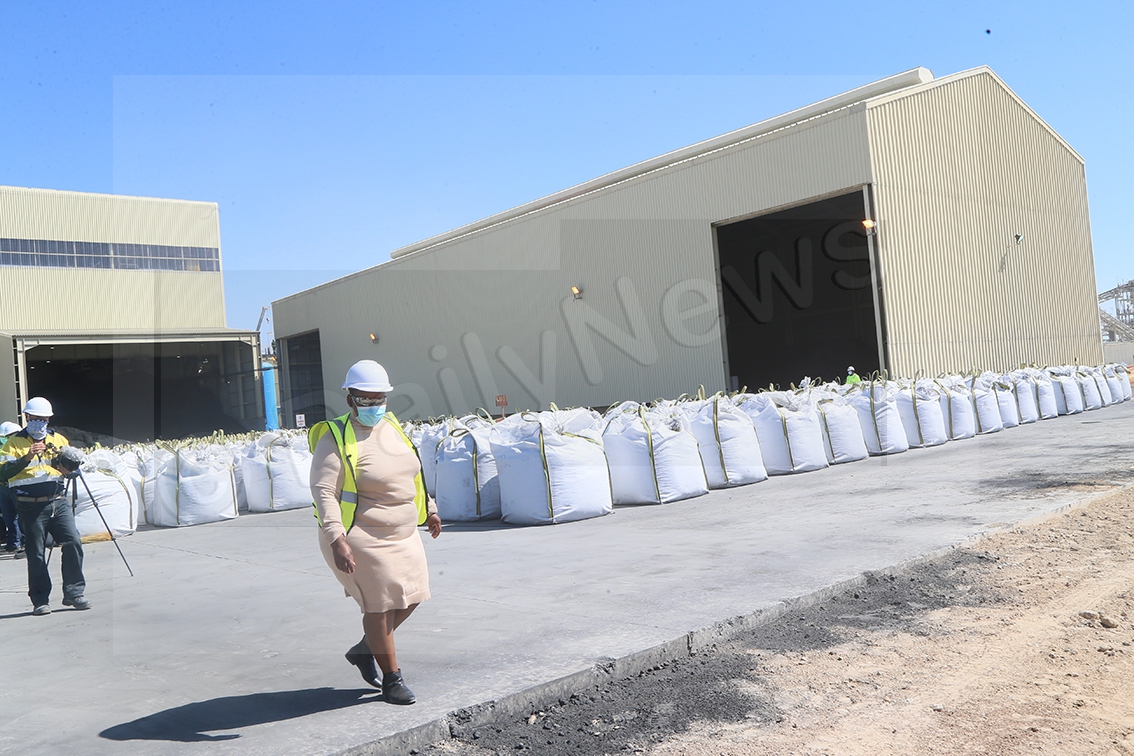
As of the end of September 2026, MMG Khoemacau mine’s direct and indirect procurement spend attributable to 100 per cent citizen-owned enterprises stood at P1.163 billion.
Behind the figure are citizen owned enterprises creating jobs, building capabilities and generating income for households and communities across Botswana.
This was revealed by the mine’ safety, health, environment and risk (SHER) manager, Ms Kesego Kereemang when giving the 2026 anchor strategic growth partner statement at the Botswana Business Summit held in Maun, where she also acknowledged that meaningful citizen participation was central to their approach.
She said the achievement represented more than procurement spend, but that it reflected growing participation of citizens in value creation within their value chain.
Through the mine’s Citizen Economic Empowerment Programme, she said they sought to support capabilities that enable the enterprises to deliver consistently, sustain their operations and pursue further growth.
“This contribution aligns with Sustainable Development Goals (SDG) 8 which promotes decent work and economic growth. Mining creates demand across engineering, transport, construction, catering, technology and professional services, and our opportunity is to help translate the demand into competitive local capability,” she added.
Ms Kereemang also stated that supplier development required clear specifications, fair access to procurement opportunities and support in meeting safety and delivery standards.
Furthermore, she said it also required sound fiscal management and commercial discipline, and highlighted that the mine’s long term ambition was for citizen enterprise to serve customers across industries, extending the value of mining into the wider economy.
She said their aspiration was not simply to create suppliers for the mine but to support the development of resilient, competitive businesses capable of participating in regional and international markets long after the life of the mine.
She also highlighted that economic participation also depended on access to education and opportunities to develop skills, citing that community investment included library upgrades at Komana and Legotlhwane Primary Schools, supporting their contribution towards SDG 4 on quality education.
“These upgrades address an important foundation of learning; access to educational resources. Alongside investment in schools, technical training, workplace exposure and mentoring can help connect learning with industry needs,” she said.
“Women, young people and people from surrounding communities must have meaningful pathways to participate in these opportunities,” she further noted.
Furthermore, Ms Kereemang stated that when a young learner gained access to better educational resources, when a graduate secured workplace exposure that developed critical skills, or when a local entrepreneur won a contract that expanded their business, sustainability became tangible and measurable in people’s lives.
She said the mine had also assisted to ensure that the Toteng community and its catchment areas had access to clean water and sanitation services through its augmentation project and water provision initiatives in Makgalo and Xhaamote settlements.
According to the SHER manager, such initiatives reflected mine involvement in addressing community water needs, adding that their enduring value depended on infrastructure that remained functional, appropriate maintenance and responsible management.
Within their operations, she said the same discipline applied to measuring consumption, reducing losses, protecting water quality and evaluating opportunities for treatment and reuse.
The summit also heard that the mine’s community investment that provided another connection between community investment and enterprise development included the refurbishment and equipping of Toteng Clinic, the tarring of Old Ghanzi road and the Toteng kgotla access road, and construction of poultry farms for surrounding villages within its zone of influence.
Ms Kereemang appreciated that the projects addressed community infrastructure needs and recognised the importance of connectivity in accessing services and participating in economic life.
“These investments illustrate how mining can support growth across sectors. They are not isolated projects, and together they contribute to the foundations of resilient communities and competitive local economies,” she said.
“Botswana’s next chapter of economic growth will not be driven by government alone, but it will be driven by partnerships between industry, communities, entrepreneurs and institutions that transform opportunity into sustainable prosperity and today we gather with a shared ambition to advance a more inclusive, resilient and diversified Botswana economy”, she concluded. ENDS
Source : BOPA
Author : Esther Mmolai
Location : Maun
Event : Botswana Business Summit
Date : 23 Oct 2026
Related News
17 Nov 2026

17 Nov 2026
Kgalagadi North seeks to attract investment
16 Nov 2026
BIHL commits P1.8 million to empower youth
16 Nov 2026