


Botswana taps global expertise to advance media reforms
22 Oct 2026
Botswana has sought international technical cooperation to strengthen its media legislative reforms, protect journalists and promote sustainable independent journalism during the Media Freedom Coalition (MFC) Strategic Workshop held in Oslo, Norway.
The engagement comes ahead of the November sitting of Parliament, during which the Minister for State President, Defence and Security, Mr Moeti Mohwasa, intends to table the proposed Media Bill 0f 2025, marking an important stage in government's efforts to modernise the country’s media legislative framework.
The proposed legislation follows a media reform process initiated by Minister Mohwasa in March 2025 and seeks to establish an independent system of media self-regulation, strengthen professional accountability and provide safeguards for editorial independence, while promoting accountability in reporting and combating fake news.
Among its key provisions are the proposed establishment of a Media Practitioners Council, mechanisms for resolving complaints against media practitioners and a Media Development Fund intended to support the growth and sustainability of the industry.
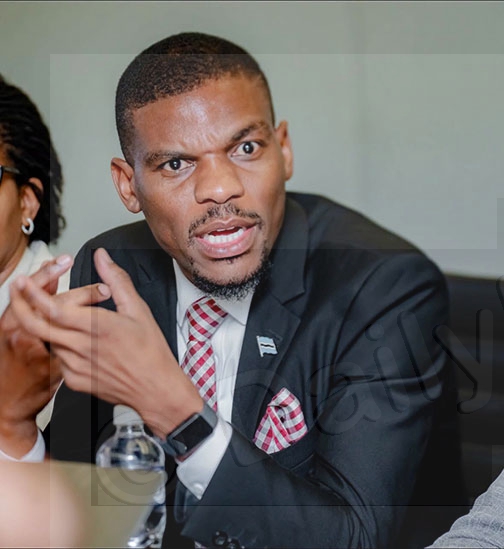
Representing Botswana at the Oslo engagement, Deputy Director of Government Communications in the Ministry for State President, Defence and Security, Mr Lawrence Seretse, outlined opportunities for the country to benefit from the Coalition's international expertise in media legislation, journalist protection and sustainable media financing.
Mr Seretse said Botswana's participation was particularly significant as government sought to ensure that its proposed reforms were informed by international experience while responding to the realities of the country's media industry.
“Our objective is to build a media environment in which journalists are free to investigate, question and hold institutions accountable, but where the industry itself has the professional and ethical mechanisms of reporting. Media freedom cannot be meaningful if the institutions expected to exercise it are collapsing under financial pressure and are also not pursuing the basic tenets of balance and fair reporting,” Mr Seretse said.
He explained that declining advertising revenues, newsroom retrenchments and the migration of journalists to independent digital platforms had created new challenges for media sustainability and professional accountability.
Government, he said, had an important responsibility to establish an enabling policy environment without compromising the independence of newsrooms or influencing editorial decisions.
He also worried that there was a significant decline in fair and ethical reporting, especially on verification of facts, right of reply and best practices.
Mr Seretse sought access to the Coalition's technical expertise to identify potential gaps in Botswana's proposed media legislation, particularly concerning the independence of the proposed regulatory institutions, safeguards against political interference and the governance of the Media Development Fund.
The Coalition's Secretariat Dereck Thorne welcomed further engagement and proposed connecting Botswana with its High-Level Panel of Legal Experts on Media Freedom, while exploring opportunities for exchanges on international media funding practices.
Such cooperation could provide Botswana with access to comparative legal expertise before the proposed legislation is considered by Parliament, as well as guidance on developing transparent financing arrangements for independent media.
The Media Development Fund is envisaged as an instrument for supporting the sector's development, although its effectiveness would depend on credible governance arrangements that protect funding decisions from political and commercial interference.
Beyond legislative reform, Botswana stands to benefit from international partnerships supporting journalist safety, professional training, digital innovation and the development of sustainable business models for public-interest journalism.
The Coalition also provides a diplomatic platform through which participating governments can exchange experiences, coordinate responses to threats against journalists and mobilise technical assistance from international institutions and specialist organisations.
Botswana is among four African member countries of the 51-member Media Freedom Coalition, alongside Ghana, Seychelles and Sierra Leone, placing it in a position to contribute perspectives from smaller African media markets to international discussions on press freedom. The Coalition is currently co-chaired by Finland and the United Kingdom.
The country's participation is also consistent with government's broader commitment to constitutionalism, human rights, institutional accountability and democratic governance under the leadership of President Advocate Duma Boko.
Addressing the workshop, Norway's State Secretary for Foreign Affairs, Mr Andreas Motzfeldt Kravik, called for international cooperation that produced practical improvements in the working conditions and safety of journalists.
“We need to look at practical steps identifying what we can do collectively to have an impact and make a difference on the ground,” the State Secretary said.
He emphasised that threats to journalism frequently extended beyond national borders and required coordinated international responses.
“This is a cross-border problem. So it is a collective problem, which requires a collective response,” he said.
Mr Kravik also underscored the importance of consistency in defending human rights, warning that governments risk undermining their credibility when they condemn violations by political opponents while overlooking similar conduct by allies.
“Because if we are one-sided in our commentary, then we lose our authority. We lose our ability to speak with integrity,” he said.
His remarks reinforced the workshop's emphasis on principled international cooperation, journalist safety and the responsibility of governments to protect freedom of expression.
For Botswana, the discussions highlighted opportunities to strengthen the country's media reform programme through practical cooperation rather than limiting participation in the Coalition to diplomatic declarations.
Mr Seretse said the country’s engagement should ultimately translate into institutional improvements and measurable benefits for journalists and the public.
“Botswana has an opportunity to demonstrate that government and the media do not have to be adversaries in the pursuit of democratic accountability. A government confident in its institutions should welcome independent scrutiny, just as a responsible media must be equipped to serve the public with professionalism and integrity. That is the balance our reforms seek to achieve,” he said.
The Oslo engagement also provided an opportunity to explore broader cooperation with Coalition members and international partners on the economic sustainability of journalism, including possible technical support for the proposed Media Development Fund.
Further consultations are expected to determine the scope of potential assistance, including legal expertise, institutional exchanges and capacity-building initiatives.
The Media Freedom Coalition brings together governments committed to promoting media freedom and protecting journalists through diplomatic cooperation, international advocacy and engagement with civil society and specialist institutions. ENDS
Source : BOPA
Author : BOPA
Location : Gaborone
Event : Interview
Date : 22 Oct 2026
Related News

23 Oct 2026
UB confer honorary doctorate on Sesana
22 Oct 2026