


Grow 365 equipsyouthwith skills in hydroponics
15 Oct 2026
The scorching sun beats down on Botswana’s parched earth, leaving traditional farmers watching helplessly as their crops wither in dry, dusty fields.
As climate change intensifies and rainfall becomes increasingly unreliable, water scarcity continues to threaten agricultural production in the semi-arid country.
Yet, amid the cracked soil and sweltering heat, a quiet agricultural revolution is taking root.
Local farmers are defying the harsh conditions through innovative farming methods, producing food for their communities while supplying major retail outlets.
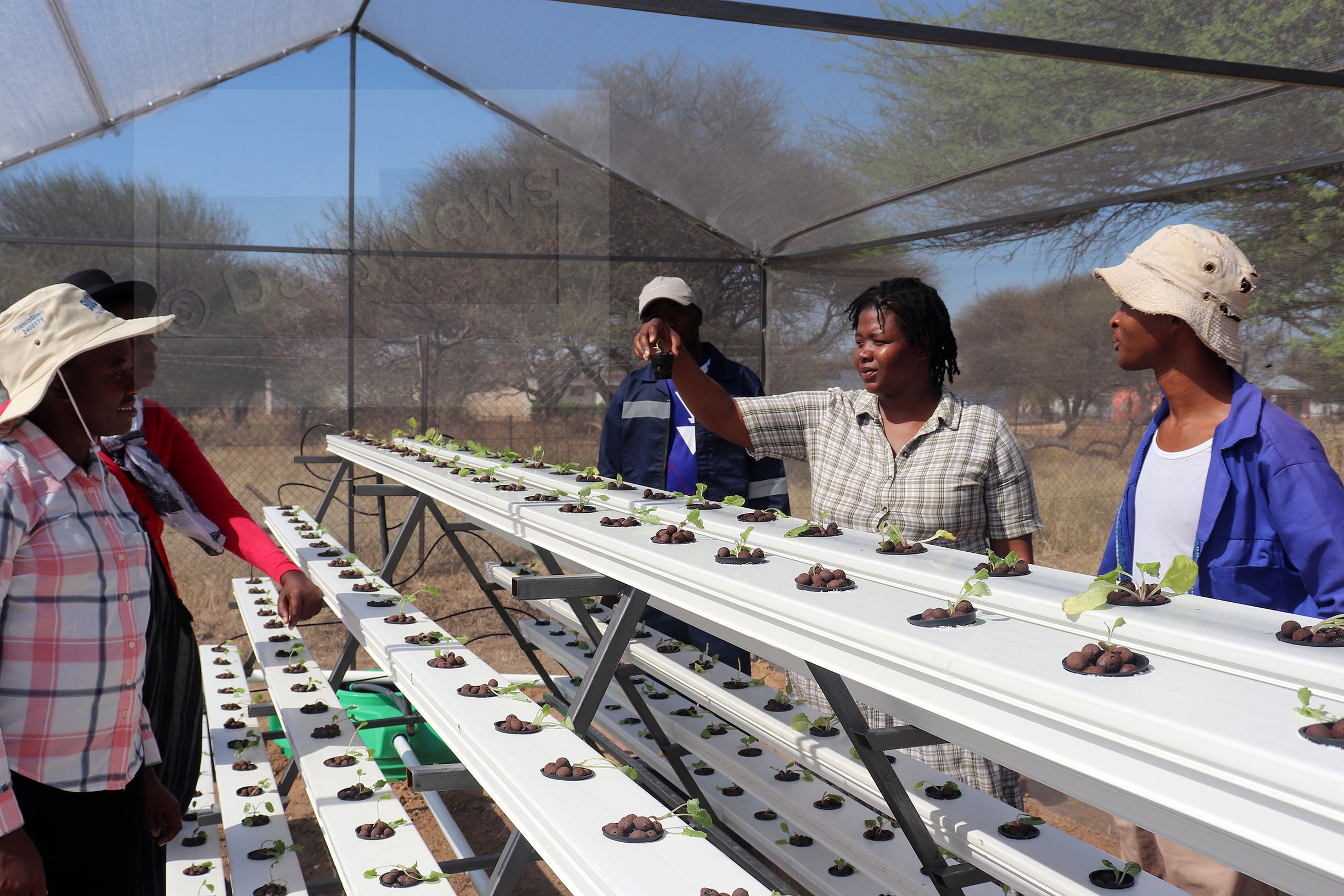
Director of Grow 365 , Ms Tshepo Setoutwe equips young people with a hands-on training in hydroponics, a modern farming technique that enables plants to grow without soil by using nutrient-rich water.
Ms Setoutwe said hydroponics offered an alternative to conventional farming in Botswana’s semi-arid climate, where water scarcity and unpredictable rainfall continued to undermine agricultural production.
“In a country where every drop counts, hydroponics uses up to 90 per cent less water than traditional agriculture,” she explained.
Unlike conventional farming, which loses water through soil absorption and evaporation, hydroponic systems recirculate water through plant roots, reducing wastage.
Crops can also be grown under shade nets or in controlled greenhouses, protecting them from extreme heat and frost while enabling year-round production.
Ms Setoutwe said the system offered several benefits, including higher yields, efficient use of space and faster plant growth. Plants could grow up to 30 per cent faster because their roots had consistent access to nutrients.
The enclosed growing environment also reduced exposure to pests and diseases, lowering the need for chemical pesticides.
Ms Setoutwe added that water from the recirculating system could be reused to irrigate conventional soil-grown plants when it was changed, further improving water efficiency.
Hydroponics could also be integrated with solar energy to power water pumps, particularly in rural areas where access to reliable electricity remained a challenge.
However, Ms Setoutwe acknowledged that the technology had limitations, including high initial costs for pipes, pumps, solar panels and greenhouses.
She said setting up a functional system required specialised knowledge, making formal training essential to prevent costly mistakes.
The system also depended on continuous water circulation, meaning power outages could damage crops within hours if backup arrangements were unavailable.
Although diseases were less common in controlled environments, she warned that infections entering a shared water system could spread rapidly among plants.
Despite these challenges, Grow 365’s training initiative seeks to equip more young Batswana with practical skills to pursue sustainable agricultural ventures.
One of the trainees, 28-year-old Mr Shathani Mokonyoli, described the training as worthwhile and an eye-opener.
He said he intended to share the knowledge acquired with other community members to encourage a shift towards farming methods that required less water.
Mr Mokonyoli said hydroponics was particularly suitable for Botswana’s semi-arid conditions, adding that the system could use about 500 litres of water over a month, which could subsequently be recycled for irrigating soil-grown plants. He said adopting hydroponics could also help address land constraints because the system required relatively little space. ENDS
Source : BOPA
Author : Goweditswe Kome
Location : Masunga
Event : Grow 365 farmers event
Date : 15 Oct 2026
Related News



13 Oct 2026