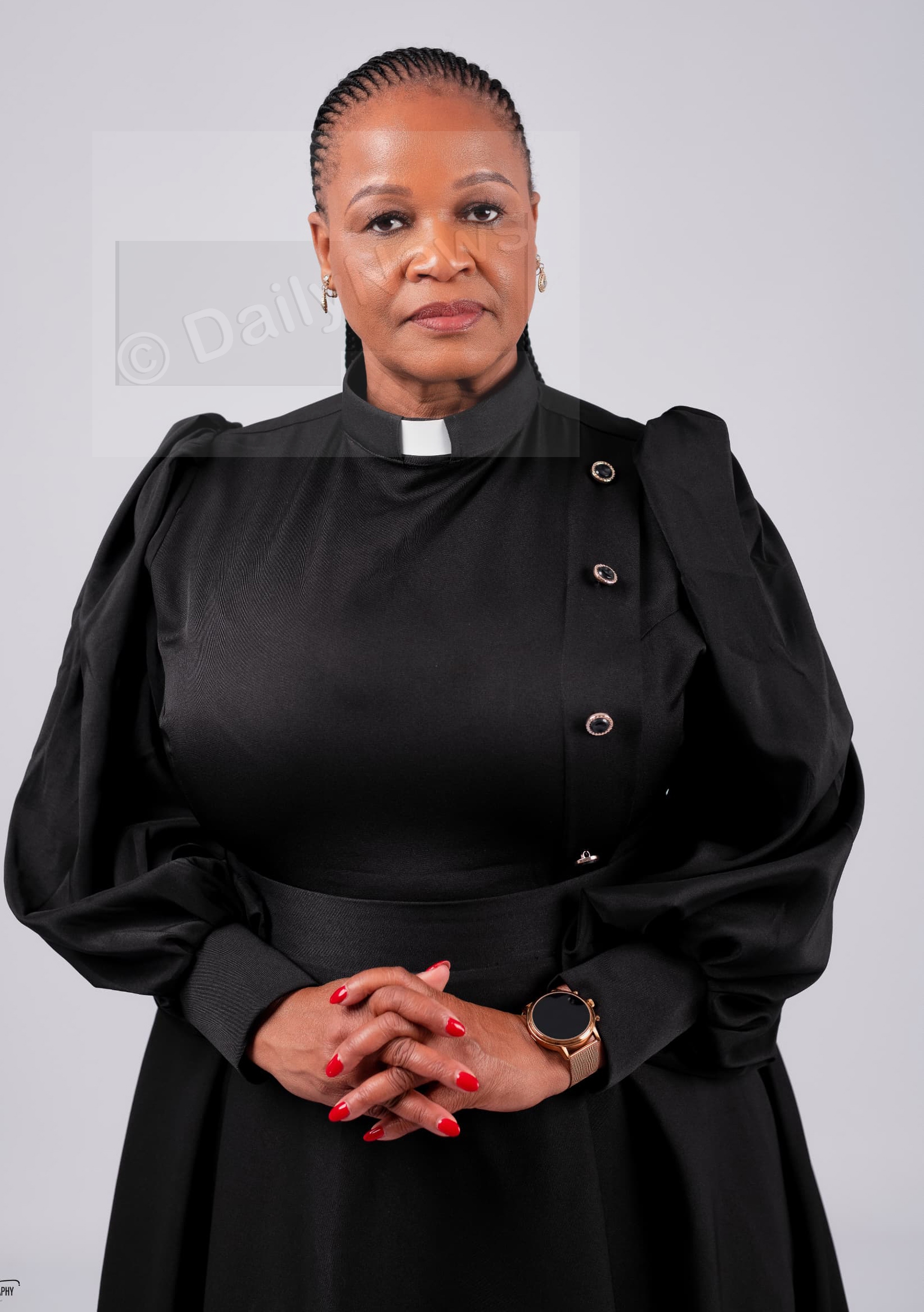
Rev Ramaribana breaks glass ceiling
15 Oct 2026
For generations, women have prayed from the pews, nurtured congregations and carried the burdens of their communities, often without occupying the highest seats of church leadership.
However, Reverend Felicia Ramaribana, is changing the narrative Her election as president of the United Congregational Church of Southern Africa (UCCSA) at the church’s assembly in Swakopmund, Namibia is more than a personal milestone.
It is a breakthrough for women in the church, particularly in Botswana, as she is the first woman from the Synod of Botswana to lead the regional denomination.
Rev Ramaribana also becomes the second woman to hold the presidency in the UCCSA’s history. Her election signals a shift towards a more inclusive vision of spiritual leadership, one that recognises women not only as faithful servants but also as decision-makers, theologians and agents of change.
For her, the journey to the regional pulpit had been shaped by years of service among congregations and communities, alongside a deep interest in how scripture can speak to the lived experiences of ordinary people, particularly women.
Her ministry began in 2004 when she joined Mmadinare Congregational Church as an intern. Two years later, she was ordained, beginning a journey that would take her to Palapye, Maunatlala, Francistown and Orapa.
“In Francistown, I served as a congregational minister and moderator of the Lephoi Region. My work also extended beyond the pulpit to the classroom, where I served as resident school chaplain at Maun Secondary School, as well as acting minister of Matlapana congregational church,” she said.
These experiences have placed her at the intersection of faith, community development and the everyday challenges facing families and young people.
Her academic pursuits have further shaped her approach to ministry. Rev Ramaribana who holds a Bachelor of Theology (Honours) and a Master of Theology in Old Testament Biblical Studies from the University of KwaZulu-Natal said her research explored liberation hermeneutics and womanhood, approaches to scripture, focusing on how biblical interpretation could contribute to the upliftment of rural women.
“It is a perspective that resonates with my vision for a church in which women’s contributions are recognised not merely through praise for their service, but through meaningful representation in leadership,” she said.
Reflecting on her election, Rev Ramaribana approached the achievement with humility, viewing it as a tribute to generations of women who have served and prayed faithfully, often away from the spotlight.
Their contribution, she believed, should pave the way for women who aspire to lead.
As she begins her tenure, which runs until 2028, one of her priorities is to establish a permanent pipeline for women’s leadership.
“The aim is to identify, mentor and prepare women for decision-making positions, ensuring that their participation in church governance becomes a recognised pathway rather than an occasional exception,” she said noting that empowerment should extend beyond representation.
She also emphasises financial independence as a path for women trapped in abusive relationships or destructive domestic circumstances.
Financial self-reliance, she argued, could give vulnerable women greater freedom to make decisions about their lives and seek safety when necessary.
With gender-based violence firmly on her presidential agenda, Rev Ramaribana challenges religious interpretations that used submission to justify abuse, arguing that faith should never become a reason for anyone to endure violence.
Her position is that churches should strengthen their response to domestic abuse through trained pastoral teams, confidential referral networks involving social workers and programmes that helped young people develop healthier attitudes towards relationships.
Such an approach, she said required change in how some pastoral interventions were handled. “Rather than advising survivors to endure abuse or return to unsafe homes, ministers must be equipped to recognise the warning signs of violence and prioritise the safety of those seeking help,” she said.
She also believed that preventing GBV required engaging men and boys before harmful attitudes become entrenched.
She suggested that through youth programmes addressing consent, self-control, accountability and respect, the church could help nurture a generation that understood that masculinity was not measured by dominance or violence, but by responsibility and respect for others.
Her vision also extends to families experiencing marital difficulties, maintaining that while marriage was sacred, human beings within those relationships took precedence.
“By bridging my grassroots ministry experience with a robust regional platform, the aim is to leave a lasting legacy of justice, equity, and renewed family strength throughout the UCCSA,” she said. ENDS
Source : BOPA
Author : Naomi Leepile
Location : Tsabong
Event : Interview
Date : 15 Oct 2026
Related News

15 Oct 2026
15 Oct 2026
Botswana and China sign news dissemination MoU
15 Oct 2026
Land allocation delays frustrating
15 Oct 2026