BEMA advocates integrated fashion to spur industrialisation

23 Sep 2026
Botswana Exporters and Manufacturers Association (BEMA) has called for a more connected fashion industry, describing the sector as an ecosystem that brings together designers, manufacturers, leather processors, textile businesses, suppliers, financiers, logistics companies and markets.
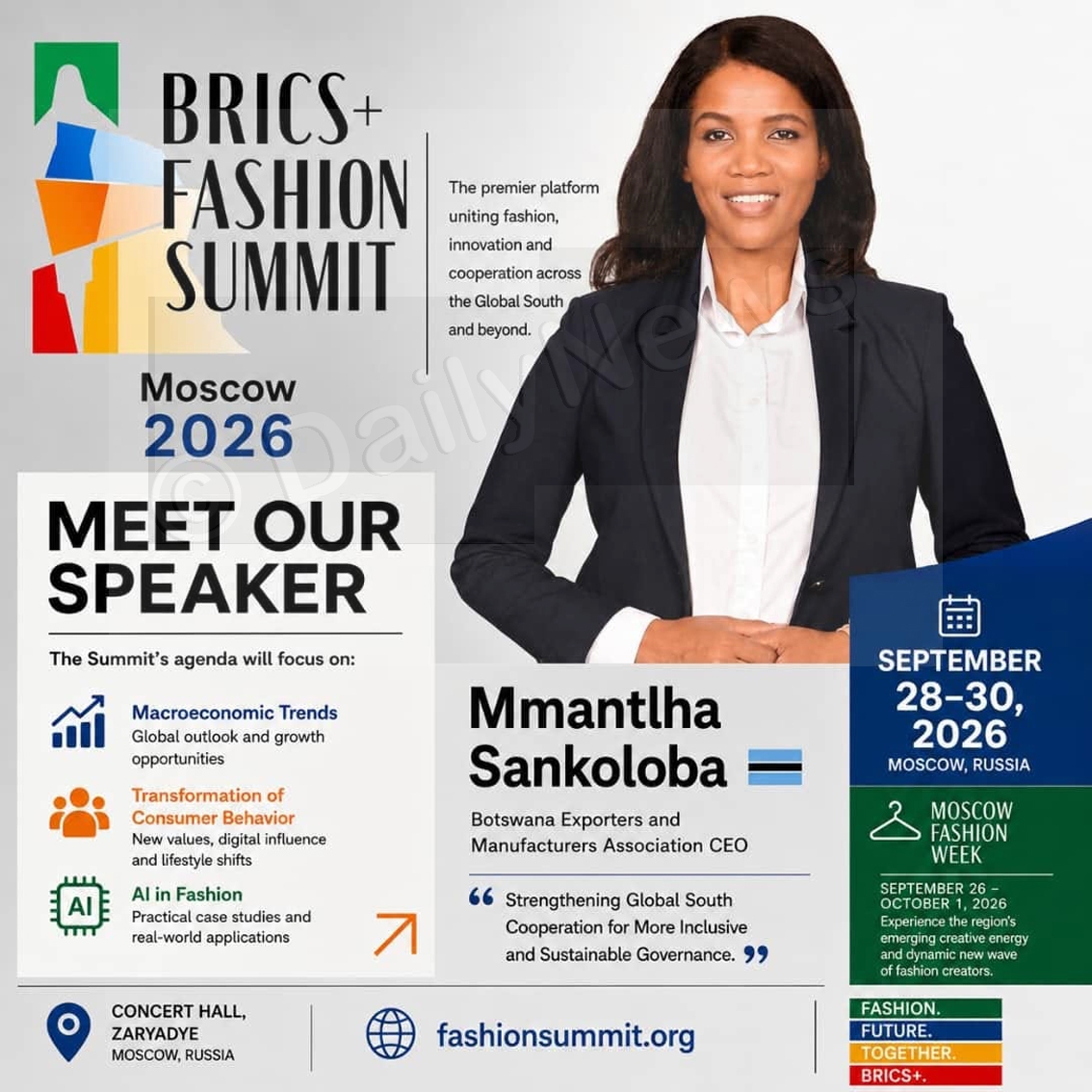
BEMA Chief executive officer, Mmantlha Sankoloba said fashion was not just about clothes, but an industrialisation, a job creation, youth empowerment, women economic participation, exports and sustainable wealth creation.
She made the remarks in an interview ahead of her participation at the fourth season of the BRICS+ Fashion Summit scheduled for Moscow from 28 to 30 September 2026.
“As BEMA, we want the BRICS Fashion Summit to see Botswana not merely as a small market but as a strategic partner with significant potential across fashion, textiles, leather processing and other manufacturing value chains,” Sankoloba said.
To establish a sustainable fashion industry in Botswana, she highlighted that it was essential to develop a local textile, leather and fashion ecosystem rather than relying solely on imports.
Furthermore, she stated that key opportunities existed in leather processing, where Botswana could leverage its livestock resources to create value-added products such as footwear and handbags.
Similarly, in textiles, she said developing local capabilities in all aspects from production to distribution was vital.
Sankoloba further acknowledged that the BRICS+ Fashion Summit presented a chance to explore various markets and value chains, including textiles and fashion products and believed Botswana would utilise all available platforms to boost exports while simultaneously developing its domestic production capacity.
To ensure local designers and young creative talents get opportunities to export to distant markets in the BRICS blog, she said BEMA’s focus was to connect Botswana’s creative talent with international markets by facilitating exposure to a range of industry stakeholders including designers, buyers, and investors.
Efforts, she said were centered on creating opportunities through showcases, mentorship and skills development while also addressing production capabilities to meet international standards.
Botswana’s fashion industry has made its way to the BRICS Fashion Summit, demonstrating the country’s creative products capability towards attracting international attention.
And in light of that, it is apparent that there are opportunities available for more local designers to establish Botswana’s presence in the blog.
“The bigger opportunity is to create a pipeline of Botswana designers and brands that can progressively enter international markets. The BRICS market is diverse, and that creates opportunities for different categories and price points. Botswana designers should not try to compete by simply copying international fashion but we should build brands around our own identity, creativity, craftsmanship and African heritage while meeting international standards.”
Sankoloba also noted that collaborations between designers and manufacturers, along with designer exchange programmes could facilitate the transformation of local ideas into market-ready products and foster mutual engagement with international fashion markets.
BEMA’s engagement with BRICS and their participation started three years ago with a number of commercial discussions and potential deals and Sankoloba said their priority this year was to move conversations to bankable and implementable partnerships.
“Some of these engagements have not yet reached conclusion but they remain active working processes. We are continuing discussions, assessing opportunities and working through the requirements needed to turn them into concrete partnerships,” she said.
During the 2026 Summit, Sankoloba said the focus would be on enhancing opportunities in textile and garment manufacturing, leather processing, technology transfer, skills development, and local value chains in Botswana.
Meanwhile, Sankoloba underscored the need for Botswana to integrate fashion, textiles and leather into its industrial development strategy, promoting them as productive sectors with key policy recommendations including fostering local manufacturing, incentivising investment, developing relevant skills, improving access to finance, ensuring government procurement favours local firms, supporting export growth, facilitating technology transfer, and establishing local raw material value chains.
Additionally, she said the protection of intellectual property and enhanced collaboration between stakeholders were essential for long-term international business relations.
“From our experience BRICS+ FS participation is instructive, some opportunities move quickly, while others require negotiations, due diligence, technical work and commercial alignment. The fact that some engagements are still being worked through does not mean they have failed; it means we must remain deliberate in converting opportunities into concluded transactions. Ultimately, BEMA wants the BRICS Fashion Summit to produce measurable economic outcomes for Botswana,” Sankoloba noted.
She, therefore said BEMA’s goal was to secure orders, partnerships and investment opportunities for Botswana, aiming for sustainable economic growth domestically. BEMA seek to establish Botswana as a manufacturing hub for fashion and leather processing, creating local jobs, enhancing skills, and fostering stronger enterprises.
“By leveraging the BRICS+FS platform, we aim to advance economic diversification and industrial development, ensuring that value is retained within the country”. ends
Source : BOPA
Author : Ketshepile More
Location : Gaborone
Event : Interview
Date : 23 Sep 2026
Related News
22 Oct 2026
22 Oct 2026
Filmmakers call for ownership of African stories
21 Oct 2026
Springline Fashion Show returns Saturday
20 Oct 2026