


BOLCOP to turn FMD crisis into catalyst for transformation
21 Sep 2026
The ongoing Foot and Mouth Disease (FMD) crisis must become a catalyst for structural transformation, Minister of Lands and Agriculture, Dr Edwin Dikoloti has said.
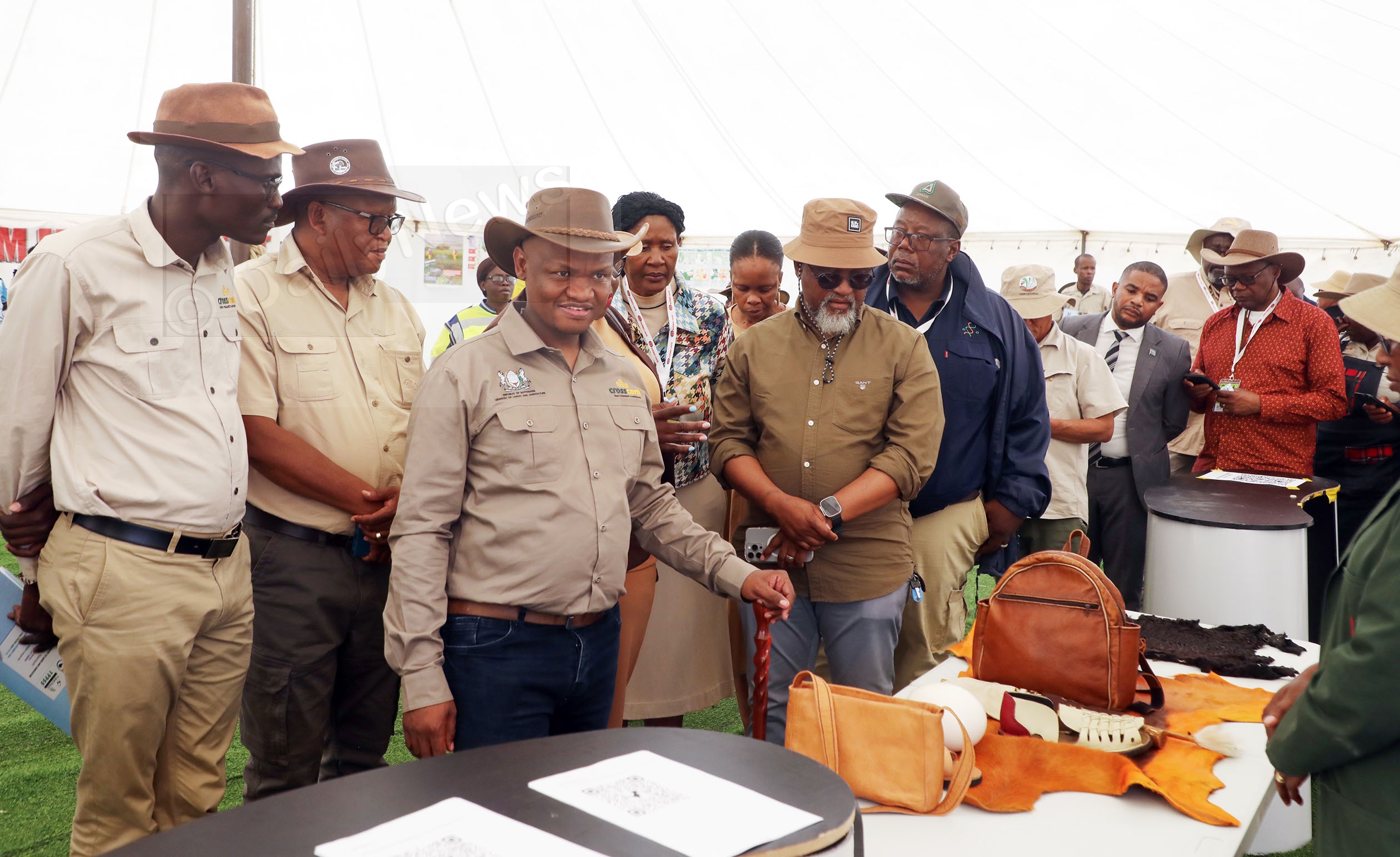
Speaking at the official opening of this year’s National Lands Agriculture Expo 2026 in Gaborone Thursday, Dr Dikoloti said government would launch the Botswana Livestock Commercialisation Project (BOLCOP) as central to such a vision. Addressing farmers, board chairs, sponsors and industry leaders, Dr Dikoloti said the flagship scheme was designed to re-engineer the country’s smallstock sector.
The rollout comes as the livestock sector reels from a string of FMD outbreaks that began in the Northeast District in late January and early February this year, before spreading to additional zones, with the latest cluster of infections hitting the Kgatleng region.
The outbreaks have disrupted cattle movement, shut export routes to the European Union and piled pressure on rural households that depend on livestock for income and food security. The minister told the gathering that government, however, remained committed to eradicating the outbreak while using the disruption to drive deeper reform. “Government is committed to eradicate this outbreak and to turn this crisis into a catalyst for structural transformation,” he said, adding that once the disease challenge was overcome, BOLCOP should leave the livestock sector more competitive on the global stage.
To achieve such, he said BOLCOP would introduce superior genetics, expand artificial insemination infrastructure, upgrade market infrastructure and de-risk farming enterprises, while pushing climate-smart, technology-driven value chains. The goal, he noted, was to convert local flocks and herds into high-value commercial assets.
The minister also used the platform to restate government’s broader ambition of lifting agriculture’s contribution to GDP from under two per cent, a level he called unacceptable for a country with Botswana’s land resources, to between six and 10 per cent by 2030, a target anchored in the National Growth Plan and related policy documents.
Though designed for livestock, Dr Dikoloti emphasised that scaling the BOLCOP model to 50 000 farmers nationwide would yield significant economic impacts.
“At three tons per hectare, we generate 150 000 tons of grain. At 4.5 tons, that figure climbs to 225 000 tons,” he said, referring to it as a game-changer that would drastically reduce the national food import bill and feed the nation.
“To sustain this momentum, we are rewarding our top-performing farmers by doubling their allocation to two hectares this season,” he added. Conservation International (CI) director, Ms Portia Segomelo highlighted that the Green Climate Fund (GCF) project, Ecosystem Based Adaptation and Mitigation in Botswana’s communal rangelands, was both visionary and necessary.
Ms Segomelo noted that the initiative had made significant progress in advancing value chains toward greater GDP contribution, with its five demonstration sites already delivering tangible results.
She explained that project offices in Bobonong, Tshane and Maun were strengthening local ownership, while 27 sites had improved management through grazing committees, restoration plans as well as climate-sensitive practices.
Furthermore, she indicated that more than 550 farmers, including women and young people, had received training in agro-ranging and deployment, with further collaboration under way to integrate such skills into technical and vocational education.She stated that 28 eco-rangers had also been deployed to strengthen rangeland management and climate resilience, while plans to train an additional 232 eco-rangers by December were expected to expand the project’s reach and community impact.
Ms Segomelo said the initiative would support enterprise development, reinforce ecosystem services and diversify livelihoods of communities reliant on land-based activities.
She further emphasised that climate-smart practices would help safeguard biodiversity, promote livestock productivity, embed value addition in climate responses and create opportunities across multiple value chains and economic sectors. ENDS
Source : BOPA
Author : Loago Thomas
Location : Gaborone
Event : Official opening
Date : 21 Sep 2026
Related News

16 Oct 2026
Documentary Iowa Across the Pacific

16 Oct 2026
The lensman takes final breath

15 Oct 2026
Rev. Ramaribana breaks glass ceiling
15 Oct 2026