


Bakalanga revive rainmaking ceremony
03 Sep 2026
On September 11 to 13, the drums will sound again in Mapoka village.
The Kalanga rainmaking ceremony, the heart of Kalanga spiritual heritage, will be revived.
It comes at a time when Botswana celebrates 60 years of Independence, under the theme: Building Resilience: Driving Prosperity, a theme elders say begins not in the office, but in the soil, songs, and people’s memories.
For the elders, it is more than a dance. It is a reminder that some traditions began long before the flag was raised in 1966, and they must not die with the generation that remembers them.
“Our grandfathers did not wait for the weather report,” says Kgosi Baydzi Mosondo (73) of Masukwane, one of the last women who remembers the full ceremony from her childhood.
“When the rainmakers danced, the clouds would gather. You could smell the rain on the wind before the first drop fell. The whole village would sing, because the land was answering us,” she added.
In the past, the ceremony was not entertainment but survival because when rivers ran dry, dikgosi would send messengers.
The rainmakers; men and women believed to hold the connection between the people, the ancestors and the sky, would lead days of song, prayer and dance at a sacred place.
Kgosi Mokhonto explained that this is the reason why this year’s ceremony is being linked to Botswana’s 60 years of independence.
“Independence is not just about politics and the economy. It is also about who we are. The Kalanga people were calling for rain here before 1966. We were feeding our people before 1966. To celebrate 60 years without our culture is to celebrate with half a heart,” says Kgosi Mosondo.
If everything is done accordingly, he believes the ceremony is usually followed by heavy rains.
“We are not saying we can control the weather. We are saying we must not forget how to ask. How to respect the land and how to stand together as a community,” says Kgosi Mosondo.
The ceremony will be followed by going to the hill to ask Mwali, the rain maker, to give them rain.
The September 11 to 13 dates were set by Mwali himself to conduct the ceremony.
Organisers expect elders, youth groups, traditional leaders and visitors from across the Kalanga-speaking region and even beyond to gather in Mapoka.
There will be teaching sessions for the youth to learn the songs, storytelling to preserve the meaning, and prayers, not just for rain, but for memory.
But how did it begin, and what happened to this heritage of the Bakalanga of North East? Part of the answer lies with Ngwisiwa Ntogwa, founder of the Tjilenje Tje Ngwao cultural group, which is working to revive Kalanga culture.
Ngwisiwa says it all started with a man called Ntogwa, a Venda from South Africa who came to Botswana in the 1970s as a young man.
The family does not know his real first name. “He had many first names, but the only one we remember is Matchafeni,” says Ngwisiwa.
He says the late Ntogwa crossed into Botswana at Brunapeg, a prominent rural town and capital of the Mangwe District in the Matabeleland south province of Zimbabwe during the time of the Ian Smith regime in Rhodesia.
Fearing for his life, he hid in a hyena hole for a day and a night before making his way to Mokgwebana, now Ramokgwebana.
He first settled on a hill behind what is now the Ramokgwebana border post. While there, a voice told him to move to another hill across the railway line, near where Ramoja Junior Secondary School now stands
After a few months, another voice directed him to Ramokgwebana where he was welcomed by the local people.
Ngwisiwa describes Ntogwa as a beautiful and neat young man who wore long robes.
“Because of the way he dressed, everyone thought he was a woman, and was made to share rooms with other women,” says Ngwisiwa.
Over time, the women began to complain that he touched them inappropriately at night.
The men did not believe them at first, because Ntogwa appeared respectable and looked female. That changed when he impregnated one of the women. People wondered about the kind of person he was.
The child was named ‘Funny’. In Kalanga it became Fani. The name stuck because the story seemed unbelievable. The Kalanga are known for adapting English names to their pronunciation, for example David becomes Dafi.
There is another version of the story. Mr Zenzo Mdongo of Butale, near Ramokgwebana, says Ntogwa arrived without a name.
He also shares about him sharing a room with women because he was thought to be a woman and that when the elders confronted him he replied, “A-nto-gwa,” meaning “I am not fighting.” The phrase was shortened, and he became known as Ntogwa.
Ntogwa is said to have told the people that he was a man of God, sent to help them through Mwali, the rainmaker.
He had arrived with a few belongings but because he now had a child, Fani, he was given a residential plot near the railway line to start a family.
He was a hoso dancer, not a hosana. When he danced for rain he wore skirts, which surprised people and drew large crowds.
As he danced he placed a small container beside him, and people would drop in coins, ‘masolombana’ or coins in Kalanga, until it was full. That is how he raised funds to expand his work.
From there, Ntogwa traveled from village to village across North East, spreading his message of speaking to Mwali.
Whenever he arrived, he would sleep outside the village at night, report to the chief at the kgotla in the morning, and then sing and dance. Rain would often follow.
“People believed him because what he said was happening,” says Ngwisiwa, adding that his last base was in Mmadinare.
Ntogwa also married in several villages including Tonota.
In his later years, he said another voice told him the trains near the railway line were too noisy, and he should move.
He relocated to Mbalambi with his wives, but later relocated back to Ramokgwebana where he died.
Ngwisiwa compares Ntogwa to ZCC leader, Bishop Banarbas Lekganyane, whom some believe that when a true man of spirit arrives in a particular place, what follows is the rain.
But time moved on. Droughts, boreholes and modern farming pushed the ceremony to the margins. The elders passed on without teaching the young. The songs were never written down. The dances were never taught in school.
Ngwisiwa is of the believe that with family disputes over the rightful heir to the throne, Mwali ended up withdrawing.
“That is why ceremonies like the one coming to Mapoka are now practical events and have no impact, they cannot bring rain like before,” says Ngwisiwa adding that it is a concern to the Ntogwa family that their grandfather’s culture died a natural death because of disputes over leadership.
Today, only Robert Ntogwa, son of Vumbu, remains as caretaker, but the knowledge has not been passed on.
However, Kgosi Ngocha Habangana of Mapoka shares a different view. “It did not die a natural death. Today’s children know WhatsApp, they do not know the Kalanga steps. If we do not do this now, in 10 years there will be no one left who remembers how,” he says.
Kgosi Habangana says the rainmaking ceremony will also be marked by the official declaration of the ploughing season.
When declaring the commencement of 2026/2027 ploughing season, Kgosi Habangana said he will broadcast seeds onto the ground and Hosana traditional dancers will then dance on that space and work the seeds into the earth.
This will be followed by ceremonial dances at a chosen Nzese tree, the site chosen for the rainmaking rituals. The proceedings will continue daily until September 13, when he will officially disperse the gathering.
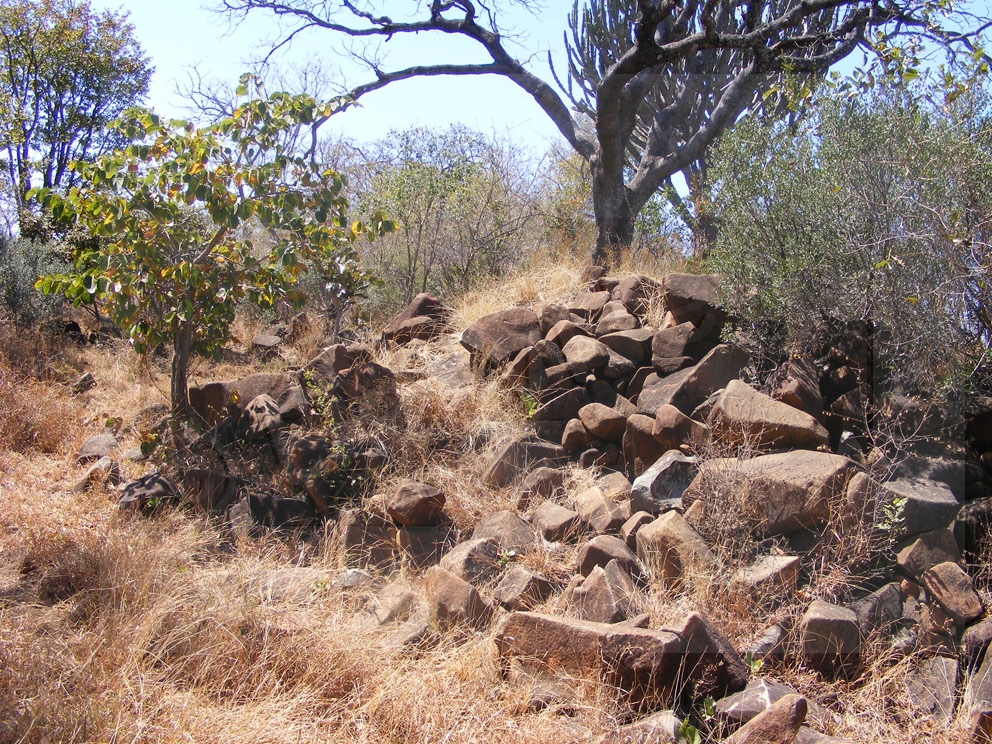
The ceremony will be held at Nzeze, a site discovered by Ntogwa after being directed by Mwali. Nzeze is a Kalanga name for Mosetlha tree in Setswana.
The tree has been there for centuries and what is surprising is that it dries on one side and comes alive on the other side, but survives all conditions. “It never dies, whatever happens to it. It is the only protected tree for its purpose,” he added. ENDS
Source : BOPA
Author : Thamani Shabani
Location : Mapoka
Event : Interview
Date : 03 Sep 2026
Related News

05 Oct 2026
Zimbabwe to begin cloud seeding
05 Oct 2026
Government commits to 100 000 homes by 2028

05 Oct 2026
Balance tourism growthwith ecological protection
05 Oct 2026