


Masalila enjoys pottery work
25 Aug 2026
Making pottery at home has for long been a fun activity that every person in the family involved enjoyed and can start it as a hobby or just as a profession and a source of income.
It has been practiced by both men and women for thousands of years and has played an imperative role in human history, culture and society development.
From ancient of years, pottery has played a significant role in the culture and traditions of many societies throughout to express some cultural identities, religious beliefs and status of the community.
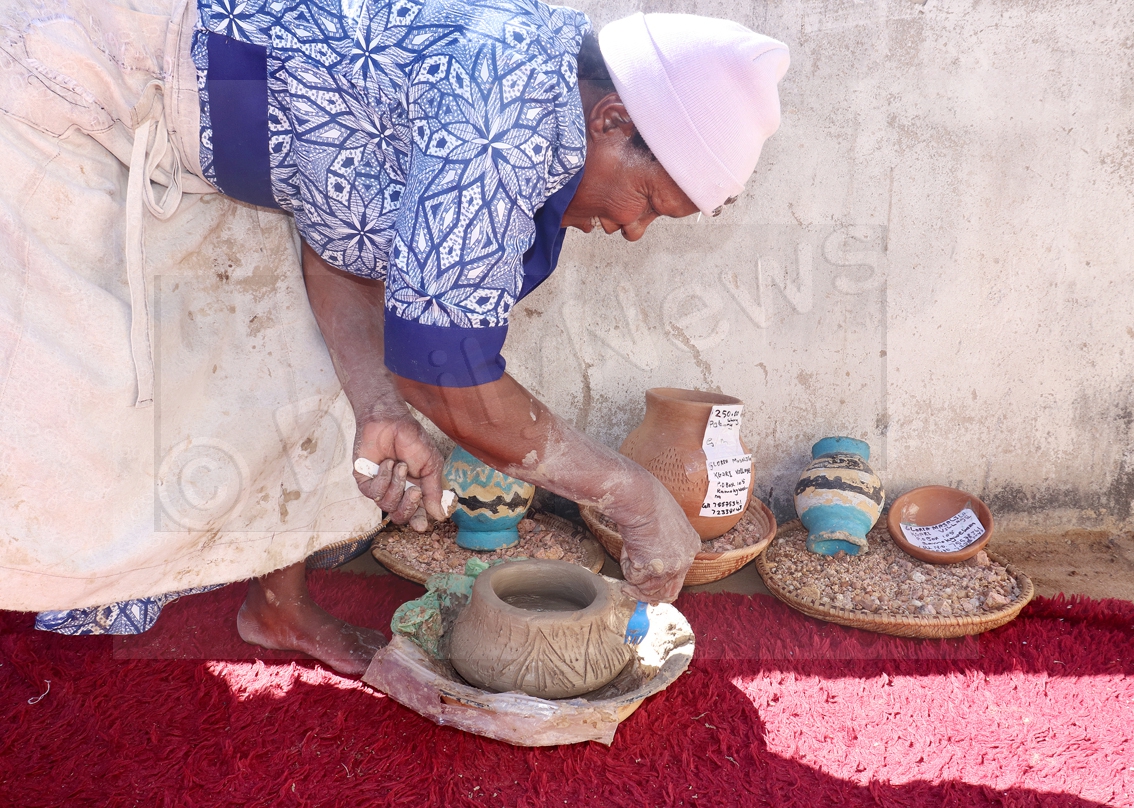
In an interview, 68 year-old Ms Gloria Masalila of Kgari said the desire to start working with pottery developed at a tender age in the early 70s when she always observed her grandmother at work.
Ms Masalila said her grandmother used to mould clay pots of different types, sizes, decorations and colours that were appealing to the eyes.
Her interest on pottery, she said was further cultivated at school during a class called Home Craft or Manual Work where she started working with soil from ant mount to mould clay pots, calabash, cups and the ambition was further developed.
She indicated that around 1976, it was then that the Non-Formal Education introduced her to clay pots produced using newspapers and after selling them, they boosted her financially as she managed to sell.
“The first thing you would need to do to start making pottery at home is to get the right material and equipment for the project,” she said to start her project, she collects soil from the neighbouring village of Moroka.
She said when digging, the soil comes as clumps and at home she pounds those clumps with pestle to break them into finer particles.
“For better results and to attain fine course soil, I then use a weaning basket to remove larger particles of soil and attain smooth and thinner soil particles,” she said.
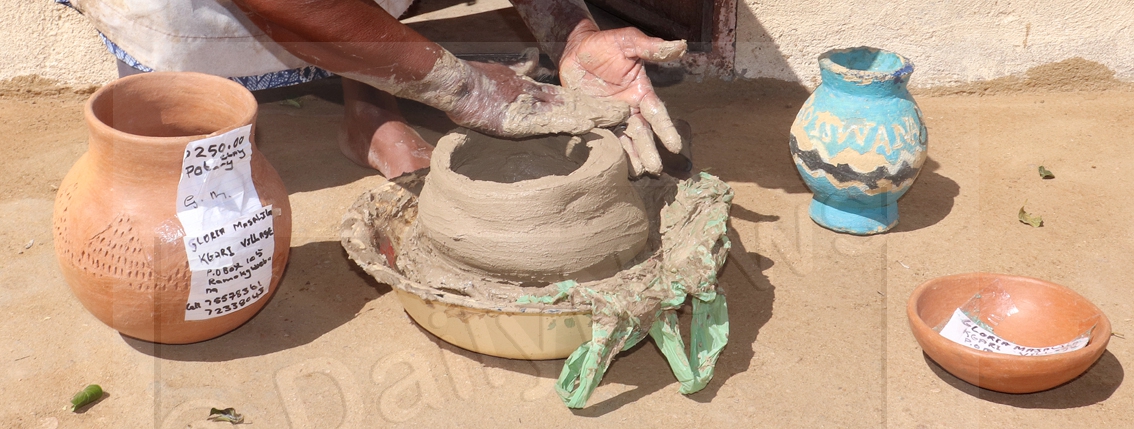
Ms Masalila said in starting her work, she mixes the soil with water to a desired and required level of moisture content and mould it round to form a ball like shape and then start molding her clay pot from inside at the same time making sure that the outside does not lose shape, smoothness or collapse while working on it.
She indicated that she works on it starting from the bottom until reaching its mouth then leaves it to dry up slowly for robustness in the morning, she turns it upside down to close the bottom part.
After completing the pot, it is left for a day to strengthen up and then a fire made from dry cow dung and Morula tree fibre is used to burn the pot to toughen it.
Then decorations follows using a fork to engrave shapes and colours from a certain soft black stone and alkaline stone. She noted that in a day, she can produce two clay pots in fear that making many at the same time may lead to them drying up while working on other pots.
On the other hand, she highlighted that there are some taboos to be followed when working with pottery as some days before going for digging the soil one should go on camp and avoid being in contact with their partners.
She said after digging, they were required to throw some little soil by a hand, cup or a dish as part of rituals to safeguard the hole from bad spirits that could make the clay pots to crack.
“The clay pots can be used for storing and cooling water, cooking vegetables, meat, chimoni, pounded nuts, lentils including a mixture of samp and beans,” she said.
Ms Masalila stated that knowledge transfer seems futile as youth appears to have no interest in pottery and at the moment she intends to expand working with two elderly women who have shown interest. ENDS
Source : BOPA
Author : Goweditswe Kome
Location : KGARI
Event : Interview
Date : 25 Aug 2026
Related News

15 Oct 2026

14 Oct 2026
Masega talks empowerment

13 Oct 2026
Maun Photo Walk returns for second

13 Oct 2026
Gastronomic festival to promote cultural Ties


13 Oct 2026