


Forensic audit generates 90 priority actions
25 Aug 2026
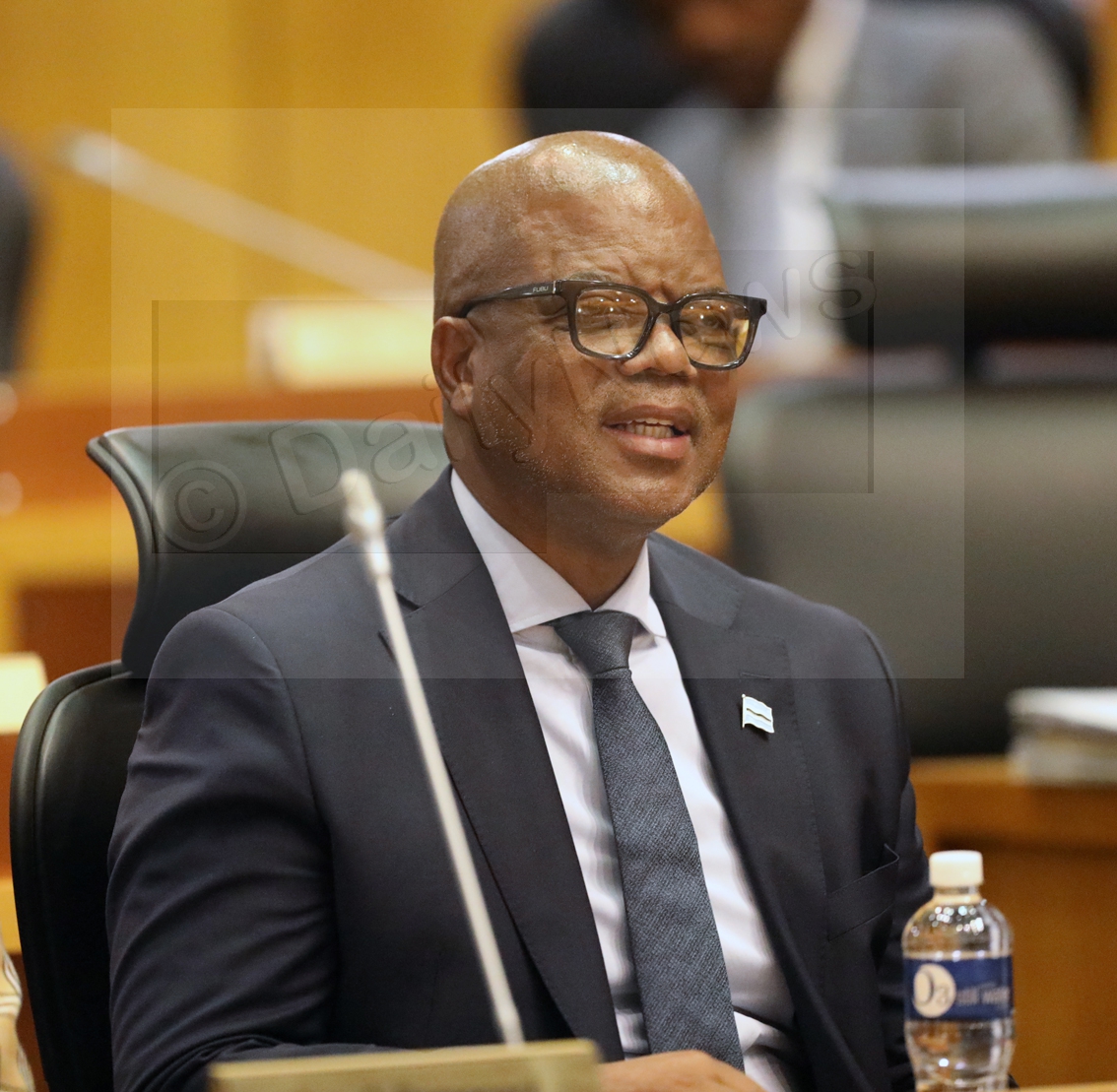
Allegations of corruption and abuse of office that surfaced during change of government warranted to be addressed, Minister for State President, Defence and Security, Mr Moeti Mohwasa has said.
In response to a question in Parliament, Minister Mohwasa said government then committed to conducting a forensic audit, although other quarters called for a Presidential Commission of Enquiry.
He said in March last year, the President instituted the forensic audit of public sector entities to assess the integrity and effectiveness of governance, control and oversight arrangements across public sector institutions, covering a 10-year period from April 2014 to 31 March 2024.
The minister said the initiative marked a significant step toward enhancing transparency and accountability within public institutions. He said a team of forensic auditors, namely Alvarez & Marsal Middle East Limited (A&M) was appointed.
Mr Mohwasa said forensic audit, the first of its kind in terms of scale and complexity in the history of this nation, was carried out in two phases. He said phase one involved the development of a comprehensive forensic audit plan and project.
Mr Mohwasa said the prioritisation of entities to be included in phase two of the programme was based on several factors, such as the revenue generated by the entity, annual budget expenditure, financial performance and evidence of historic findings, procurement, governance strength and legal framework. He said the National Forensic Audit programme comprised 30 forensic audits of entities identified through the phase one risk assessment process, which involved 92 public sector entities.
Mr Mohwasa said the total project expenditure amounted to P97.3 million, comprising P82.5 million in fees paid to A&M and P14.8 million in administrative overheads.
Minister Mohwasa said at the end of phase two, the A&M forensic auditors produced three sets of reports, namely; the Summary Report of the National Forensic Audit Programme, thirty (30) entity-specific audit reports; and special investigation legal referrals arising from twenty-six (26) of the 30 entity-specific audit reports, which, in aggregate, include more than 80 current and former senior officeholders and more than 150 contractors, suppliers and counterparties.
He said to protect the integrity of potential future action, the 30 entity-specific reports were not published as part of the Summary Report of the National Forensic Audit Programme presented to the President on April 30, 2026.
Mr Mohwasa said the Summary Report of the National Forensic Audit Programme presented summarised, consolidated findings and recommendations arising from the 30 forensic audits undertaken across selected government ministries and departments.
The minister said the programme had three primary outputs and the first major output was the 30 forensic entity-specific audit reports.
“These reports capture suspected fraud, corruption, and serious misconduct warranting urgent specialist investigations, asset tracing, recovery assessment, and potential enforcement actions,” he noted.
Minister Mohwasa said there were varying degrees of accountability attribution, ranging from failure to ensure that established controls were observed to suspected acts of gross negligence, serious misconduct, abuse of public resources, fraud and other acts of corruption. “Therefore, it would be neither appropriate nor right to publish these detailed reports (containing names of people) without due legal processes, as natural justice dictates,” he said.
Minister Mohwasa said the forensic audit generated 686 recommendations, including 90 Very High Priority actions, such as special legal referrals for further investigation and structural reforms, and 590 High and Medium Priority actions requiring entity-level implementation.
He said in this regard, the government had retained some members of the project governance teams, now repurposed as the Forensic Audit Implementation Steering Committee (FAISC), to assist with the coordination, governance and oversight of the implementation strategies and plans.
Mr Mohwasa said it was important to emphasise that the Summary Forensic Report of the National Forensic Audit Programme was widely disseminated to all key stakeholders, including Cabinet, Members of Parliament, Permanent Secretaries, Chief Executives of State-Owned Entities and the general public.
He said in this regard, in addition to the Report being posited in the government website, the Project Team produced 500 hard copies of the Summary Report of the National Forensic Audit Programme and distributed the report nationally.
Mr Mohwasa wa responding to a question from the Maun North MP, Mr Dumelang Saleshando, who an update regarding the processing of the forensic audit report. ends
Source : BOPA
Author : BOPA
Location : Gaborone
Event : Parliament
Date : 25 Aug 2026
Related News

25 Aug 2026