


Currency strength depends on diversified economy
24 Aug 2026
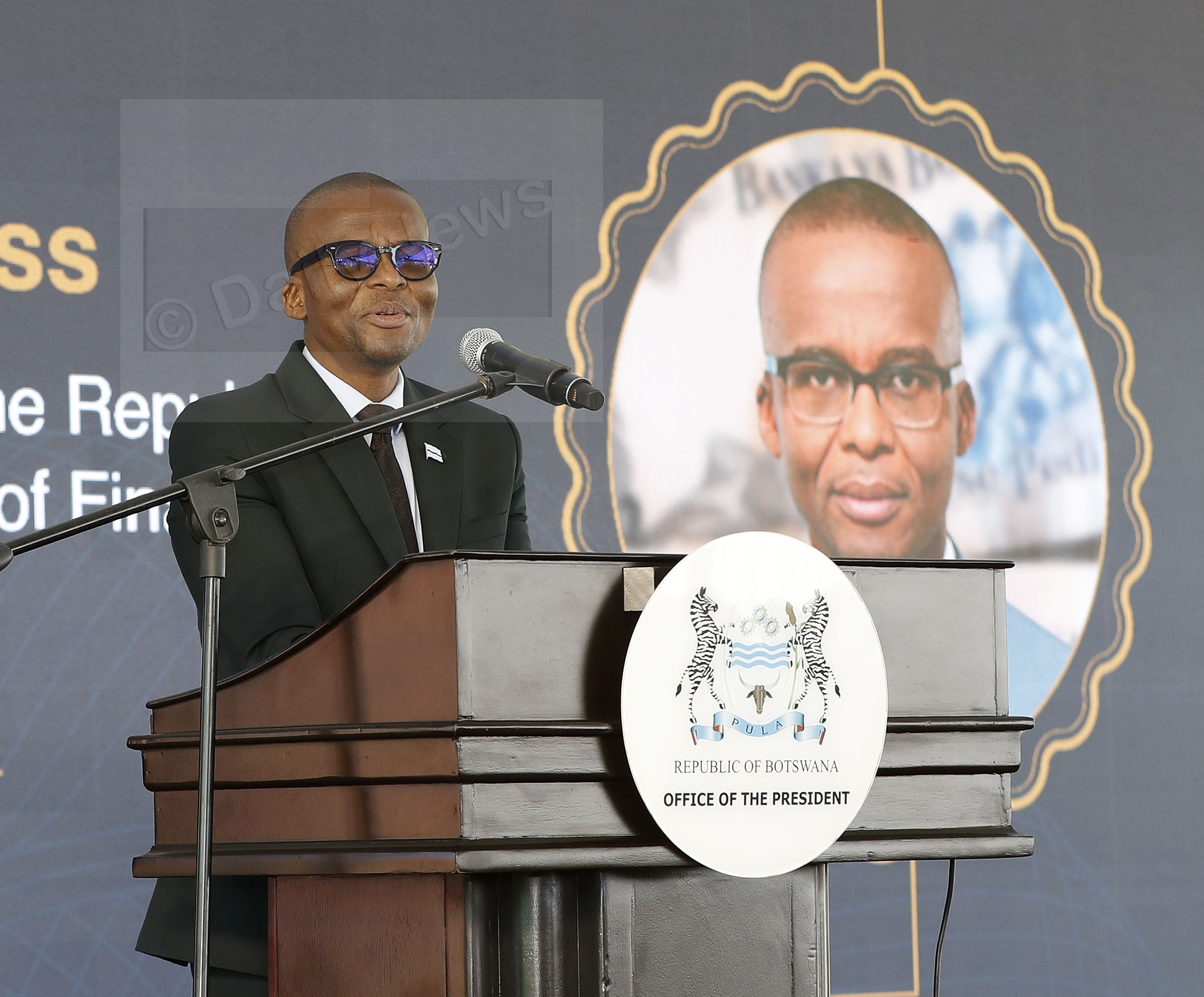
As Botswana marks half a century of the Pula and Thebe, Vice President and Minister of Finance, Mr Ndaba Gaolathe used the Bank of Botswana’s golden anniversary celebrations to deliver a candid message: the currency’s next 50 years will only be as strong as the diversified, inclusive economy that stands behind it.
Delivering key note address under the theme: Pula and Thebe: Shielding Wealth, Nurturing Inclusive Growth, in Kanye yesterday, Mr Gaolathe said Botswana introduced its own currency when it was just 10 years old, an act of monetary sovereignty that saw the establishment of a central bank and withdraw from the Rand Monetary Area.
“There is something profound about the milestone we mark today. When Botswana was only 10 years old, we gave ourselves a currency. As Botswana approaches sixty, that currency turns fifty. The question before us is therefore not simply what the Pula has meant to Botswana over the past half-century. It is also what kind of Botswana must now stand behind the Pula for the next fifty years, “ he said.
“The names themselves, he noted, carried enduring meaning. Pula (rain) represents life, blessing and prosperity. Thebe (the shield) represents protection, resilience and security. In those two words, our forebears gave us both an aspiration and an obligation to create prosperity and to protect it. That remains our responsibility today,” he said.
Mr Gaolathe praised the Bank of Botswana for five decades of stewardship that earned public confidence through competence and integrity, while stressing that operational independence was a public trust exercised in service of the national interest.
Yet he refused to let the anniversary become mere celebration. Prolonged weakness in the global diamond market, he said, had exposed long-recognised vulnerabilities pressure on government revenues and foreign-exchange reserves, narrowed fiscal space, heavy import dependence and an export base that remains too concentrated.
The deeper lesson, Mr Gaolathe argued, was that monetary tools alone could not permanently shield the Pula.
“Ultimately, the strength of a currency reflects the strength of the economy beneath it. We cannot permanently shield the Pula through monetary instruments alone. We must strengthen what stands behind the Pula,” he said
That foundation, he said, required productive farms and factories, competitive businesses, greater domestic value addition in mining, tourism that reaches more communities, energy security, modern financial services, technology companies and entrepreneurs who could compete beyond Botswana’s borders, above all,
Batswana whose skills and enterprise are turned into productive activity.
Economic diversification, once a desirable goal, was now fundamental to our economic sovereignty.
Government’s National Development Plan 12 and the Botswana Economic Transformation Programme aim at a high-income, digitally enabled, export-driven and diversified Botswana in which citizens are ‘increasingly employed, empowered and fulfilled.’
He maintained that inclusive growth was inseparable from this vision.
“A Pula that is stable but cannot be earned by enough of our people cannot represent the fullness of our ambition,” Mr Gaolathe said.
He added that opportunity must reach villages and districts, young people, women and entrepreneurs who lacked capital.
Financial inclusion, he said, must mobilise savings into productive activity and enable more Batswana to become owners and creators of wealth.
He welcomed the Bank’s work on the future of money and payments, including digital currencies, while cautioning that innovation must be intelligent.
“The first fifty years proved that Botswana could create and safeguard its own currency. Let the next fifty prove that we can build beneath that currency, a more diversified economy, create prosperity on a greater scale, and extend the opportunity to participate in that prosperity to every corner of our nation, ” he said.
Meanwhile, Bank of Botswana Governor Mr Lesego Moseki said the commemoration of Pula Day in Kanye was not incidental, but intentional.
Mr Moseki said that since assuming office in November 2025, he had pledged to deepen public understanding of the Bank’s mandate and strengthen trust, including embedding financial literacy in everyday life.
“Today’s celebration is therefore not only about looking back on 50 years of the Pula and Thebe; it is about renewing the trust, discipline, and shared responsibility that must carry our currency into the next 50 years,” he said.
He reminded the audience that the Bank’s primary objective under the 2022 Amendment Act remains domestic price stability, keeping inflation low, stable and predictable so that rising prices do not erode the purchasing power of ordinary Batswana. Yet he stressed that safeguarding the Pula is a collective duty.
“Go itshetlela ga ledi la Pula gase boikarabelo jwa Bank of Botswana hela. Every Pula earned, he added, represents time, sacrifice, skill, patience and hope,” Moseki said.
On 23 August 1976, Botswana introduced the Pula and Thebe as legal tender, moving from the Rand Monetary Area after the Bank of Botswana’s establishment in 1975. ENDS
Source : BOPA
Author : Marvin Motlhabane
Location : KANYE
Event : keynote address
Date : 24 Aug 2026
Related News


05 Oct 2026
Zimbabwe to begin cloud seeding
05 Oct 2026
Government commits to 100 000 homes by 2028

05 Oct 2026
Balance tourism growthwith ecological protection
05 Oct 2026