


Local entrepreneur harnesses AI to enhance learning
24 Aug 2026
What if every learner could keep studying even when classrooms close, teachers are stretched thin, or resources are simply not available! One Botswana platform is turning artificial intelligence into a practical answer for those who have long been left behind.
Moithuti AI, as it is affectionately known in the market, is a website built precisely for such challenges. It uses adaptive AI to deliver personalised learning support that remains available round the clock, regardless of geography, school type or temporary disruption, under a monthly subscription of approximately P100.
When COVID-19 lockdowns shut down schools across Botswana in 2020, the gap between learners who could continue studying and those who could not became starkly clear.
BOPA recently interviewed Ms Tryphinah Moatshe, marketing and sales lead at Moithuti AI, to understand the significant redress the solution brings to the education space.
Ms Moatshe described how the access gap played out under one roof. A younger brother attending a private school in the city kept up with online lessons and largely maintained his academic performance. His cousin, a strong student living in a village and enrolled in a public school, had almost no access to learning resources. When schools eventually reopened, her results had dropped sharply. “The contrast was not about ability,” Ms Moatshe said. “It was about continuous access.” That realisation prompted the creation of Moithuti AI, a Botswana-developed education technology platform designed so that learning does not stop when classrooms do.
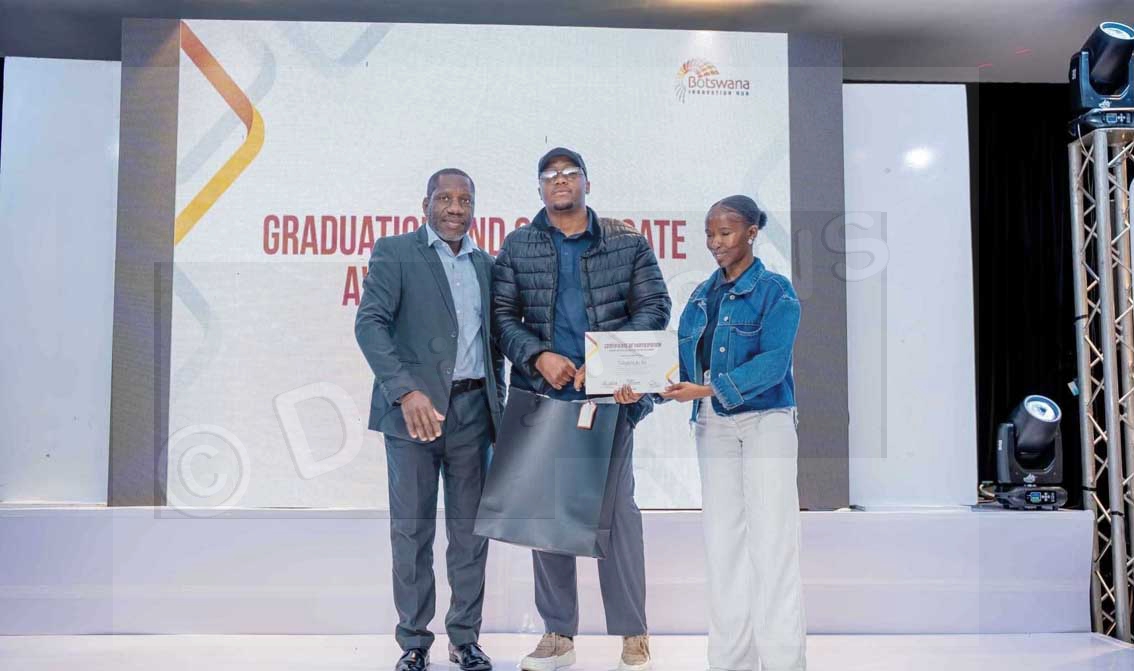
Founded in 2020 and incubated at the Botswana Digital & Innovation Hub (BDIH) in Gaborone, Moithuti AI draws its name from “moithuti,” the Setswana word for learner. Its goal is to create a connected digital ecosystem for students, teachers, school administrators and parents.
“At its core is the principle that quality education should not depend on geography, school type or temporary disruptions such as pandemics, natural events or other interruptions. The platform supports every stakeholder in a learner’s journey,” she said. Students can access resources, complete assignments and quizzes, and track their progress.
Teachers organise lessons, materials and assessments more efficiently. Administrators gain clearer visibility into school operations, while parents follow their children’s academic journey and stay connected with teachers, she added. What sets Moithuti AI apart, Ms Moatshe said, was its use of artificial intelligence to make that support personal, adaptive and available at any time. At the centre is Thuto, an AI tutor that learns with each student. “Thuto adapts to individual learning styles, remembers progress, and delivers personalised explanations and resources at the learner’s own pace.
It is available 24/7, including through messaging channels, so students can get instant revision help, study guides, notes and academic support whether they are preparing for exams late at night or working through a difficult concept after school,” she explained.
The system supports learning in both Setswana and English, allowing students to engage with material in the language that helps concepts click.
Beyond one-to-one tutoring, AI runs through other parts of the platform. Interactive quizzes adapt to each learner and provide instant, step-by-step feedback so students understand not only whether an answer is correct but why. An intelligent study planner adjusts schedules as exams approach. For schools, AI-optimised timetabling reduces clashes and keeps operations synchronised. Progress analytics give teachers live insights into grades, attendance and performance, highlighting which students are thriving and who need support before gaps widen.
Teachers also benefit from an intelligent assistant that helps curate lessons matched to a class’s evolving understanding and can learn elements of a teacher’s style so that independent learning still feels consistent with classroom teaching. Parents receive culturally and linguistically adapted insights and practical suggestions, making it easier to stay involved.
This combination of adaptive AI and practical school tools, Ms Moatshe said, directly addressed the vulnerability exposed during the lockdowns.
“When physical schools close or resources are uneven, learning can continue if support is accessible, personalised and always on.”
By analysing strengths and weaknesses and tailoring content accordingly, the platform moves beyond simple content delivery toward genuine personalised pathways. BDIH has been instrumental in the company’s development. Mr Nyaladzi Monyamane, entrepreneurship development advisor at BDIH, noted that mentorship and coaching sessions focused on business model refinement, go-to-market strategies and product development.
Practical support, including access to shared workspace and branded marketing materials such as gazebos, banners and flyers, enabled the team to operate more professionally and visibly.
“The overall guidance helped them sharpen their execution and better position the company for growth,” Mr Monyamane said.
BDIH also facilitated meetings with the Ministry of Child Welfare and Basic Education.
Moithuti AI was given the opportunity to present a full working demo of the platform and received guidance on addressing learners’ needs, including the integration of official learning content and curriculum. The hub further supported the piloting journey to selected institutions through company branding.
A commercialisation workplan is used to document the advisory and coaching sessions. Through its Technology Transfer Office, start-ups are assisted to protect their intellectual property, for example through the filing of trademarks.
BDIH promotes technology, entrepreneurship and commercialisation within its focal sectors, which include Information and Communication Technology, Mining Technology, Clean-Tech, Biotechnology and Indigenous Knowledge Systems.
Through its Commercialisation Centre, the hub works with experienced professionals as part of its mentorship programme, engaging mentors with diverse skill sets to guide affiliated start-ups.
BDIH has also partnered with international institutions such as the Massachusetts Institute of Technology on the Early-Stage Program for Botswana and the Indiana University Kelley School of Business through the Globase Program. Moithuti AI is a beneficiary of both programmes, Mr Monyamane added. Recognition has followed these efforts. In 2024, Moithuti AI won the Pula Pitch Competition. Mr Monyamane said the founders’ longer-term vision extended beyond Botswana and aim to partner more widely with schools domestically and expand into the SADC region, contributing to a more connected and inclusive education system across Southern Africa. The goal is a trusted African platform that empowers learners, supports teachers, strengthens schools and enables parents to take an active role, regardless of the challenges of the moment.
In a country and region where educational continuity can still be fragile, Moithuti AI’s origin story remains relevant. What began as one family’s uneven experience during a global crisis has become a deliberate effort to ensure that interruptions no longer determine who gets to keep learning. By combining practical school-management tools with adaptive AI support that meets students where they are, and with sustained institutional backing from BDIH, the platform offers a concrete response to an enduring problem: making education accessible at all times. ENDS
Source : BOPA
Author : Marvin Motlhabane
Location : Kanye
Event : Interview
Date : 24 Aug 2026
Related News


13 Oct 2026
Expo sparks regional leather expansion
12 Oct 2026
Partnership to boost vehicles maintenance
12 Oct 2026
Farmers urged to treat agriculture as a business

12 Oct 2026