


BERA and BURS join forces to curb illicit fuel trade
18 Aug 2026
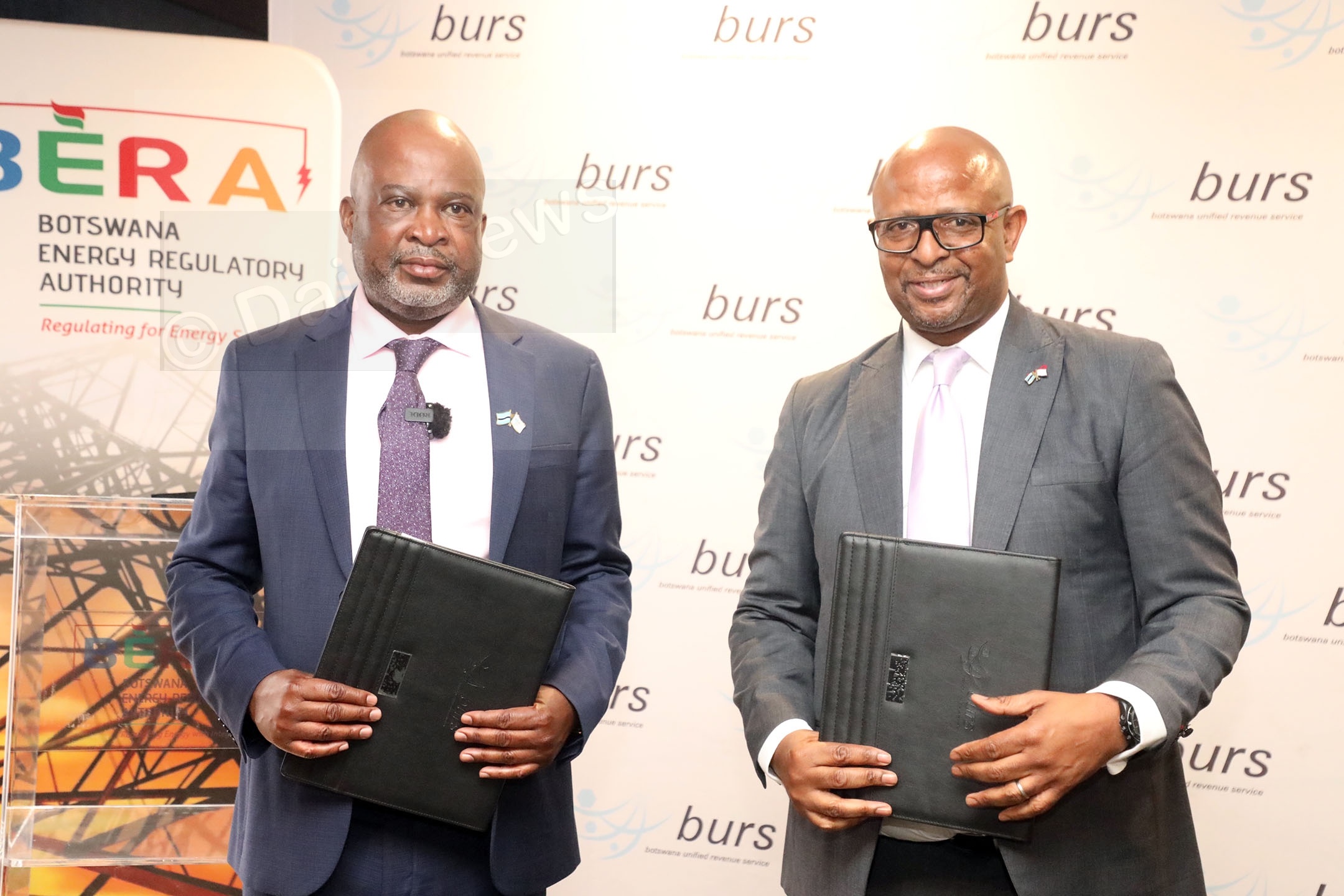
The Botswana Energy Regulatory Authority (BERA) and the Botswana Unified Revenue Service (BURS) have signed a Memorandum of Understanding (MOU) aimed at strengthening collaboration in the fight against illicit fuel trade, revenue leakage and the entry of unsafe petroleum products into the country.
Speaking at the signing ceremony, BURS acting commissioner general Mr Phodiso Valashia said the agreement would create a formal framework for the two entities to align their complementary mandates and work together to protect public revenue, consumers and Botswana’s energy security.
Mr Valashia said the partnership was particularly important as it came at a time when Botswana needed to safeguard the revenue that sustained essential public services.
“Every Thebe that is not paid means somebody somewhere has not received required medicine or education,” he said.
He noted that while Botswana had historically relied heavily on mineral revenues to drive the economy, the country could no longer afford to overlook revenue leakages.
According to Mr Valashia, the MOU would facilitate coordinated enforcement across the petroleum value chain, strengthen information sharing and improve the technological systems used by the two organisations to identify and manage risks.
He said combining the intelligence and expertise of BURS and BERA would help close gaps through which revenue could be lost, unsafe products could enter the market and unlawful trade could flourish.
“This MOU is intended to coordinate enforcement across the petroleum value chain,” he said.
BERA chief executive officer Dr Never Tshabang said the collaboration was also intended to address the economic impact of illicit fuel trading and help ensure fuel security in the country.
Dr Tshabang said revenue lost through illicit trade was estimated at about P4 billion, stressing that the figure highlighted the need for stronger measures to protect the economy.
“We used to live in the world of plenty but today it’s no longer the same. The economy is bad, so the little that we can save goes a long way,” he said. He said the agreement would also assist in ensuring that businesses operating in the fuel sector complied with the law and that activities within the petroleum industry were conducted above board.
Dr Tshabang further raised concerns about sophisticated forms of illicit trade, including the movement of fuel across borders and alleged fuel dumping.
He said BERA did not have the same level of expertise as BURS in monitoring border related activities, making collaboration between the two institutions important in tackling such practices. “We need this MOU to combat this as we are dealing with sophisticated traders,” he said.
Beyond the revenue implications, Dr Tshabang said illicit fuel activities could also pose risks to consumers if poor quality or contaminated fuel entered the market.
He warned that substandard fuel could damage vehicles and potentially put lives at risk, making fuel quality and consumer protection another important component of the collaboration.
The two organisations said the agreement would allow them to pool their resources, expertise and intelligence to strengthen enforcement and promote fair trade within Botswana’s petroleum market. The signing therefore marked a formal commitment by BERA and BURS to work as partners in protecting government revenue, strengthening fuel security and ensuring that petroleum products entering and circulating within the country meet the required standards. ENDS
Source : BOPA
Author : Tumisang Moilwa
Location : Gaborone
Event : Signing of MoU
Date : 18 Aug 2026
Related News

13 Oct 2026
Expo sparks regional leather expansion
12 Oct 2026
Partnership to boost vehicles maintenance
12 Oct 2026
Farmers urged to treat agriculture as a business
12 Oct 2026