



Six decades of judicial growth
13 Aug 2026
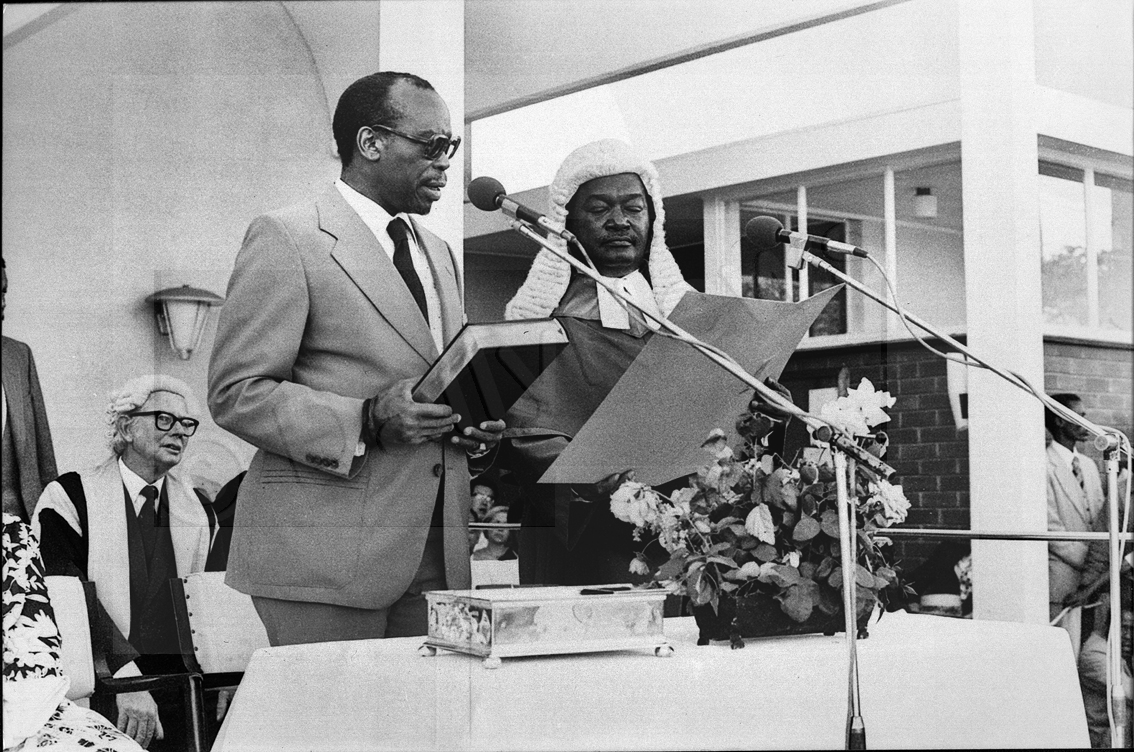
When Botswana lowered the Union Jack on September 30, 1966, the new republic inherited a legal system administered largely by expatriate judges and magistrates, alongside customary courts presided over by Dikgosi.
Sixty years later, that system has grown into a Judiciary that is the cornerstone of one of Africa’s longest-standing democracies.
The early years relied on foreign jurists to help set the tone. Justice Akinola Aguda of Nigeria served as Chief Justice between 1972 and 1975, bringing experience from another newly independent African state.
The push toward localisation gathered pace with the appointment of Mr Moleleki Mokama, the first Motswana to hold the office, who served from 1976 to 1981.
Over the decades the Bench found stability in long-serving leadership. Chief Justice Julian Nganunu presided from 1992 to 1997, a period remembered for firm rulings in complex criminal matters.
He was followed by Chief Justice Maruping Dibotelo who served from 1997 to 2010, and then Chief Justice Terrence Rannowane who led the Judiciary from 2018 to 2024.
Today the courts are headed by Chief Justice Gaolapelwe Ketlogetswe, who took office in 2024.
This leadership was supported by institutional growth. The establishment of the Court of Appeal in 1978 ended appeals to the Privy Council in London and gave Botswana full control over its final court.
The Judicial Service Commission, the Directorate of Public Prosecutions, Legal Aid Botswana and a vibrant independent Bar have since widened access to justice.
From a handful of magistrate courts at independence, the country now has a High Court with specialised divisions, a Court of Appeal, and customary courts that continue to play a vital role in communities.
It is within this evolving framework that Botswana has retained one of its most contested laws, Section 203 of the Penal Code, which provides for death by hanging for murder.
The sentence is carried out at Gaborone Central Prison and, according to records from the Botswana Prisons and Correctional Services, 48 people have been executed since independence. The most recent confirmed case was in 2021.
According to Botswana Prisons and Correctional Services’ chief public relations officer, Senior Superintendent Oagile Kojane, of those executed, 47 were males and one was female.
He said there are currently 22 inmates, all males, under sentence of death at Gaborone Central Prison. Senior Superintendent Kojane said eight inmates under the sentence of death have had their sentences confirmed by the Court of Appeal.
He further indicated that execution is carried out at the end of the judicial process being the Court of Appeal and application for prerogative of mercy or presidential pardon, adding that the general practice is that families should be informed before an execution take place.
Mr Kojane stated that the state does not publish detailed statistics on person under sentence of death and that all sentences are pronounced before open courts.
“All inmates under sentence of death have access to legal representation. Those who cannot afford their own legal services are provided for by the government,” said Mr Kojane.
He explained that the service also provides religious service, psychological services, healthcare support and meals to all inmates including those under death sentence.
He explained that all executions are done in accordance with the Prison Act, saying the last execution was carried out in 2021 and involved one person.
Mr Kojane indicated that all eight prisoners under death sentence have made applications for prerogative of mercy and are awaiting the outcome of their applications which are still being assessed by the Advisory Committee on Prerogative of Mercy.
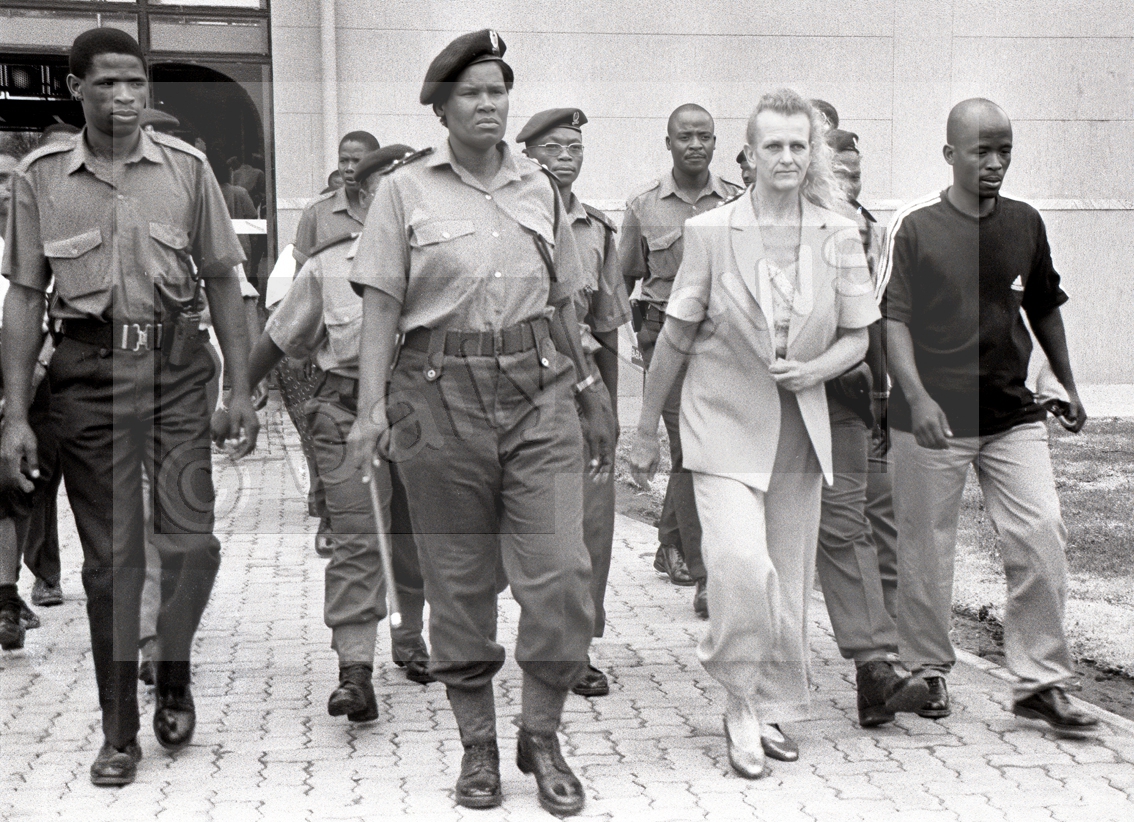
The only case of a female executed that still remains etched in the public memory is that of Mariette Bosch. The South African woman was convicted and sentenced to death for the murder of her lover’s wife.
Her final appeal was argued by a German lawyer reputed to have lost only two of 35 death penalty appeals, and it was dismissed by a Bench led by the then Chief Justice, the late Mr Julian Nganunu.
The State was represented by Mr Unoda Mack. Bosch was executed in 2001 in the early hours of a Sunday morning without her family being notified in time, an approach that drew international criticism and raised questions about transparency.
The nature of the death sentence for murder, has placed Botswana at the centre of a national and international debate. Public support remains strong.
A 2024 Afrobarometer survey found that 82 per cent of Batswana support the death penalty for serious crimes, viewing it as a matter of sovereignty and deterrence.
At the same time, human rights bodies including the African Commission on Human and Peoples’ Rights and Amnesty International have urged the country to consider a moratorium or abolition, arguing that discretion should rest more fully with the courts and that greater openness is needed.
The contradiction came into sharp focus in 2024 when government officials appealed for clemency for a Motswana woman sentenced to death in Bangladesh, while maintaining capital punishment at home.
Under President Duma Boko, no executions have been reported, though no formal moratorium has been declared.
From Justice Aguda’s early stewardship to Chief Justice Ketlogetswe’ s current tenure, Botswana’s Judiciary has delivered six decades of constitutional governance, peaceful transfers of power, and respect for the rule of law.
Cases such as that of Mariette Bosch showed a Bench willing to uphold the law under pressure, with prosecutors like Mr Mack and Chief Justices like Mr Nganunu presiding over trials that tested both the law and public opinion.
As the country marks 60 years, the achievement of the Judiciary is clear. Yet the question of capital punishment remains unresolved.
Whether the next decade brings reform, greater transparency, or continued retention of the death penalty, it will be decided within the same courts that have carried Botswana this far.
For now, the gavel continues to fall, appeals continue to be heard, and eight people remain on death row. ENDS
Source : BOPA
Author : Thamani Shabani
Location : Francistown
Event : Feature
Date : 13 Aug 2026
Related News

22 Sep 2026
China opens door to Zim English teachers


22 Sep 2026