


BAA focuses on squad depth to secure legacy
05 Aug 2026
The Botswana Athletics Association (BAA) is looking to aggressively build a deeper pool of talent to end the nation’s long-standing reliance on a select group of elite runners.
For years, the exceptional international performances of Letsile Tebogo, Collen Kebinatshipi and Bayapo Ndori have brought home silverware, a success that occasionally masked the need for broader squad depth.
However, the national team’s performance at the recent Glasgow 2026 Commonwealth Games underscored the necessity for a wider talent base, particularly within track and field, which remains the country’s premier sporting discipline.
Sports stakeholders note that a steady pipeline of developmental talent is essential to relieve the heavy competitive workloads typically carried by top-tier athletes.
Without a deliberate and sustainable development framework, observers warn that the current golden era of local sprinting risks being remembered as an isolated phenomenon rather than an institutional legacy.
Speaking on the association’s strategy, BAA sport development manager, Patrick Moesi confirmed that the association was systematically expanding its athlete pool for future international assignments.
Moesi explained that several athletes within the newly established development bracket were intentionally fielded at the Commonwealth Games to gain crucial elite-level exposure.
“While we would have loved to win a medal, our primary mission was to give upcoming athletes the chance to compete at an international level. The roots of development are bitter, but the fruits are sweet,” he noted.
Although the team returned from Scotland without a podium finish, Moesi emphasised that BAA remained highly encouraged by the competitive spirit of its emerging talent.
The association views the tournament as a successful baseline, particularly given that several prospects advanced through stiff competition.
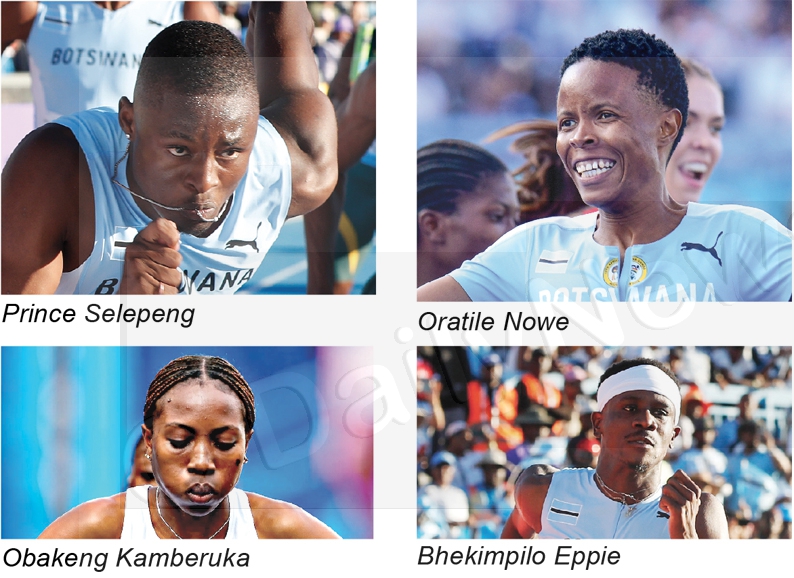
Athletes such as Prince Selepe, Tshepiso Masalela, Bhekimpilo Eppie, Oratile Nowe and Obakeng Kamberuka all qualified for the finals in their respective events, a positive trajectory for the transition plan.
Notably, 20-year-old Selepe secured an eighth-place finish in the men’s 200m final after clocking a 20.31 second run in the semifinals.
In the women’s 400m final, Kamberuka also placed eighth with a time of 52.53 seconds.
With the contingent now back home, attention shifts toward refining these secondary-tier prospects ahead of upcoming regional events.
BAA hopes that exposing junior runners to global pressure now will yield sustainable results by the time Botswana hosts the African Senior Athletics Championships in Gaborone.
Moesi noted that a selection of junior athletes was currently in Oregon competing at the World Athletics U20 Championships.
He added that in the ongoing absence of school sports, BAA was planning to organise regional competitions to cast a wider net in identifying raw talent across the country. ENDS
Source : BOPA
Author : Anastacia Sibanda
Location : GABORONE
Event : Interview
Date : 05 Aug 2026
Related News
15 Oct 2026

15 Oct 2026
Sankoyo submit required documents to BFA
15 Oct 2026
BFA pledges continued support for Mares

13 Oct 2026