


Student-friendly transportation policy motion sails through
28 Jul 2026
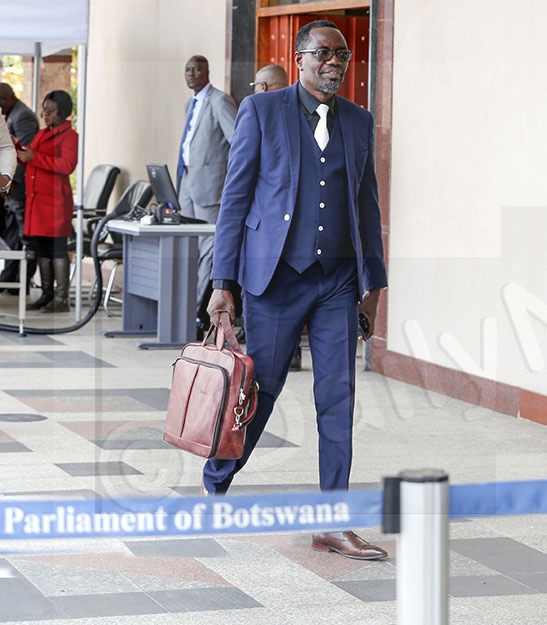
Parliament has approved a motion requesting government to introduce a nation-wide policy framework on safe, student-friendly transport.
The motion by MP for Maun West, Mr Carterpillar Hikuama aims to shift from an ad-hoc transport system to a standardised national service, focusing on four key objectives of establishing a ‘Gold Standard’ for school vehicles with safety protocols. It intends to create a regulatory authority for monitoring school transport providers, ensuring equitable transport access for students in rural and low-income areas and integrating school bus routes with school schedules to optimise student transit time.
Mr Hikuama said school transit should be professionalised and school buses turned into a mobile extension of the classroom where safety was non-negotiable.
He said the cornerstone of a robust education system, rested not only in the quality of classrooms but in safe, accessible journeys to school, where inconsistent standards currently undermined youth well-being and equity.
Mr Hikuama said the motion also addressed a student-friendly element where emphasis was on a secure and respectful transport environment for students; with vetted personnel trained in child safeguarding and first aid, zero-tolerance policies against bullying and climate comfort to maintain a dignified space.
These measures, he said, aimed to protect lives and enhance the overall efficiency and accessibility of school transport, shifting it from vulnerability to empowerment.
He said socio-economically, the motion justified that dedicated school transportation improved educational outcomes as students who arrived safely and punctually were better prepared for learning and also addressing the issue of chronic absenteeism often linked to transport issues.
The MP emphasised that the motion enhanced child protection, as dedicated school buses would lower risks of abduction, traffic accidents and harassment associated with public transit.
Additionally, he said a national policy framework would provide economic relief by subsidising transportation costs for parents, effectively serving as an indirect tax cut for working-class families.
Commenting in support of the motion, MP for Nkange, Mr Motlhaleemang Moalosi said the policy would ensure learners were protected from physical, emotional, or sexual abuse during their commute.
He said the policy would establish strict zero-isolation rules, enforced vetted multi-adult supervision and maintained transparent tracking protocols with a multi-layered security strategy that eliminated opportunities for bad actors.
Mmopane/Metsimotlhabe MP, Ms Helen Manyeneng said the motion, which was long over-due would guarantee safe transport of learners and protect them from severe weather ailments.
Also, in support of the motion, Tonota MP, Mr Gaefele Sedombo, who raised the issue of donkey carts, said they were not a safe mode of transport as they lacked basic safety measures.
He also said traffic laws did not have set clear safety rules for animal drawn carts; therefore, he said government should introduce safe, efficient and accessible school transportation.
Meanwhile, Tati West MP also the Assistant Minister of Child Welfare and Basic Education, Mr Justin Hunyepa said government recognised evolving road safety and child protection standards that necessitated safer and more dignified transport for students.
He said government took a step with the issuance of a Savingram on February 2026, which directed the termination of donkey carts for transporting learners; which had been introduced as a temporary solution in 2016 for learners living over five kilometres from school, particularly in remote areas.
Consequently, he said councils had been instructed to prioritise learner safety, utilise licensed transport operators and ensure effective monitoring of transport services.
While some councils, with support from the Ministry of Child Welfare and Basic Education, were already implementing these directives, Mr Hunyepa said financial constraints were affecting universal implementation.
Mr Hunyepa further said efforts were being made by government to explore partnerships with the private sector and development partners to provide adequate transport services.
He said the implementation of the Savingram was underway, with some schools already providing the necessary safer transport and authorities collecting data to identify areas lacking service and ensure future adjustments, aiming to enhance safety and dignity in transportation for school learners.
Serowe North MP, Mr Baratiwa Mathoothe said the motion reinforced what government had already put in place through the Savingram.
He said where funds permitted; government would put in place school buses for learners.
Responding to the comments, Mr Hikuama said Botswana could learn from nations with unified school bus policies; such as Namibia, which enacted stricter bus standards and saw a 40 per cent reduction in youth accidents while South Africa’s Learner Transport Programme has improved safety and access for over 670,000 students, reducing fatalities through GPS and safety measures.
Moreover, he said because of the country’s geographical dynamics, the learner transport policy should not rely on a one-size-fits-all approach.
He said the policy would ensure that connections between rural poverty and urban opportunities were built, creating safe spaces for students to prepare for exams and addressing the unfair advantages based on children’s locations.
Despite challenges in funding and logistics, Mr Hikuama said successful examples from Namibia and South Africa showed these issues could be overcome through political will and strategic mapping. ENDS
Source : BOPA
Author : Ketshepile More
Location : Gaborone
Event : Parliament
Date : 28 Jul 2026
Related News

07 Oct 2026