


Domestic funding vital - SADC
28 Jul 2026
As Botswana charts a new development trajectory, aspiring to transition from a mono-commodity economy towards the Vision 2036 aspiration of becoming a high-income, economically diversified nation, the question of development finance has become increasingly critical.
Recently, Vice President and Minister of Finance, Mr Ndaba Gaolathe, joined fellow Southern African Development Community (SADC) Ministers of Finance and Investment at the Committee of Ministers of Finance and Investment (COMFI) meeting held in Harare, Zimbabwe, from 29 June to 3 July.
The meeting focused on regional financial integration, macroeconomic stability and sustainable development financing.
BOPA caught up with the head of the institution that coordinates many of these regional initiatives and organised the Harare meeting.
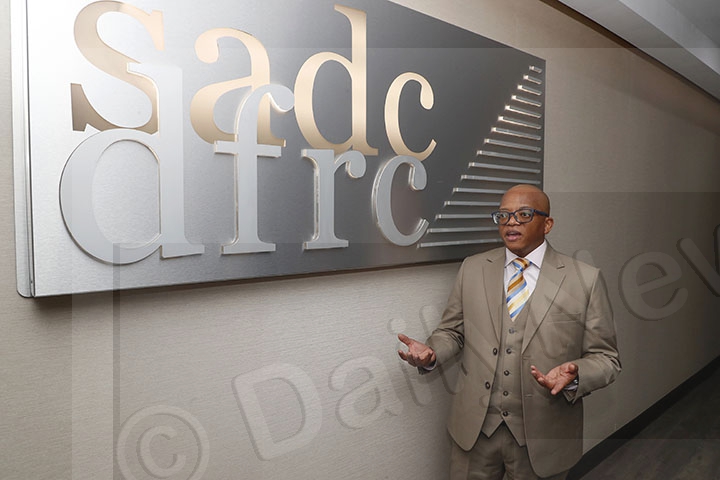
SADC Development Finance Resource Centre (SADC-DFRC) executive director, Mr Zwelibanzi Sapula underscored the importance of mobilising domestic resources to finance development.
Stocky and welcoming with an easy smile, Mr Sapula received BOPA team at the SADC-DFRC offices in Gaborone’s Central Business District (CBD). Appointed executive director in November 2024, coincidentally the same month Botswana ushered in a new government, he speaks passionately about the organisation’s mandate.
“In the year 2000, SADC Ministers of Finance and Investment took a decision to establish a Development Finance Institutions (DFI) network. Today, the network has more than 40 members from across the SADC region, including the Botswana Development Corporation (BDC), National Development Bank (NDB) and the Citizen Entrepreneurial Development Agency (CEDA),” he explains.
He adds, “From South Africa, we have the Industrial Development Corporation (IDC) and the Development Bank of Southern Africa (DBSA), from Mozambique, the Banco Nacional de Investimento (BNI) as well as the Development Bank of Namibia and other development finance institutions from across the SADC member states.”
He further explains that in July 2003, the SADC-DFRC was established to coordinate and strengthen the DFI Network. Beyond this coordination role, the centre was mandated to mobilise development finance for regional integration projects that promote economic growth, employment creation and poverty alleviation across the region.
“We were tasked with adding value beyond simply convening the DFI Network,” notes Mr Sapula, adding “Our mandate includes building the capacity of development finance institutions, harmonising regulatory and legal frameworks to create an enabling environment for cross-border collaboration, mobilising resources for regional integration projects and developing a pipeline of projects that advance regional integration.”
Botswana has long identified regional infrastructure projects that have the potential to advance both domestic economic diversification and regional integration. Some, such as the Kazungula Bridge and the Trans-Kalahari Highway, have already been completed and are operational.
Others including the Trans-Kalahari Railway, Mmamabula-Lephalale Rail Link, Ponta Techobanine Heavy Haul Railway and Deep Sea Port and the Chobe-Zambezi Water Transfer Scheme, have long been on the regional agenda but are yet to be implemented.
Mr Sapula says the planned redevelopment of the A1 Highway into a dual carriageway is also of interest to the SADC-DFRC because it forms part of the Trans-African Highway Network, linking Cape Town in South Africa to Cairo in Egypt and is therefore of strategic regional significance.
He reckons that the centre also supports other regional infrastructure initiatives, including the Lobito Corridor, a transformative road and rail project linking Lobito on Angola’s Atlantic coast to the Copperbelt regions of Zambia and the Democratic Republic of Congo (DRC) as well as projects contained in the SADC Regional Infrastructure Development Master Plan.
That week, Mr Sapula, accompanied by Ms Chadza Macheng, SADC-DFRC executive officer for stakeholder relations, paid a courtesy visit to Botswana’s Ministry of Finance to discuss strengthening collaboration in support of the country’s development priorities and broader regional integration initiatives.
Mr Sapula believes that Botswana, like many countries in the region, possesses significant domestic financial resources particularly through pension funds and other institutional investors that can be mobilised to finance critical infrastructure instead of relying predominantly on external borrowing.
“One area we promote is Public-Private Partnerships (PPPs). For many years Botswana financed much of its development through mineral revenues, but fiscal constraints are becoming more evident. PPPs provide an opportunity to crowd in private sector investment and achieve national development objectives,” observes Mr Sapula.
Beyond its original mandate of coordinating regional development finance institutions, the SADC-DFRC now also coordinates the SADC Public-Private Partnership Network which focuses on capacity building, project development and advisory support for PPPs across the region.
“We still face the challenge that only about 20 per cent of SADC trade is intra-regional, while 80 per cent is conducted with the rest of the world. The African Continental Free Trade Area (AfCFTA) seeks to change that. We are working with development finance institutions to ensure funding is available and with SADC to strengthen the infrastructure needed to facilitate greater regional trade,” notes Mr Sapula.
His remarks resonate with a broader continental shift. In April this year, the African Development Bank (AfDB) adopted the Abidjan Consensus, establishing the New African Financial Architecture for Development (NAFAD) to help address Africa’s estimated US$400 billion annual development financing gap.
The initiative seeks to mobilise the continent’s estimated US$4 trillion in domestic savings including pension and sovereign wealth funds, for productive investment rather than relying excessively on foreign borrowing.
“That is precisely the direction Africa needs to take. We must mobilise domestic resources to support the AfCFTA and complement existing sources of development finance.
Ethiopia demonstrated this through the Grand Ethiopian Renaissance Dam, a US$5 billion project largely financed through domestic resource mobilisation after international financing proved difficult to secure.
Across Africa, substantial resources are held by pension funds, insurers and other domestic institutions,” he adds.
Born in South Africa’s Eastern Cape, Mr Sapula holds a Bachelor of Engineering from the University of Pretoria and a Master of Business Administration from the University of Cape Town.
He has more than two decades of experience designing and implementing programmes that promote inclusive growth, sustainable development and regional integration including senior roles at the Development Bank of Southern Africa.
For Mr Sapula, however, regional integration is more than an economic objective. It is a deeply held conviction.
“Shared prosperity and the complementary development of Southern African countries is something I am passionate about.
If you have a beautiful house, its value declines when it is surrounded by shacks.
Likewise, our countries must industrialise and develop together so that the benefits of growth are shared by ordinary citizens,” states Mr Sapula with a bold conviction. ENDS
Source : BOPA
Author : Pako Lebanna
Location : Gaborone
Event : Interview
Date : 28 Jul 2026
Related News


13 Oct 2026
Expo sparks regional leather expansion

12 Oct 2026
Partnership to boost vehicles maintenance
12 Oct 2026
Farmers urged to treat agriculture as a business
12 Oct 2026