Africa-Centred HIV Cure Strategy ideal
27 Jul 2026
As global efforts to find a cure for HIV gather pace, experts are calling for an Africa-focused research agenda.
They argued that scientific breakthroughs would have limited impact unless were designed to meet the unique realities, healthcare systems and needs of African populations, where the burden of the epidemic remained highest.
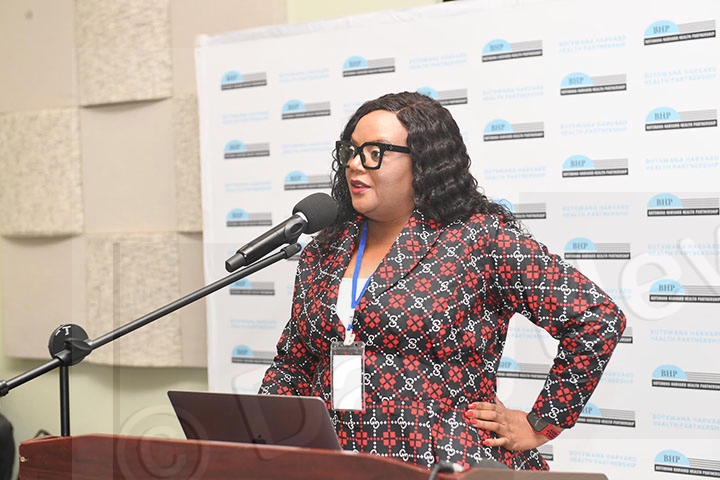
Even though principal research scientist based at the Botswana Harvard Health Partnership (BHP), Professor Catherine Koofhethile said the global scientific community had made progress in HIV treatment, developing a cure remained one of medicine’s greatest challenges.
Despite decades of progress in HIV prevention and treatment, Prof. Koofhethile said Africa still faced major HIV burden, and that the continent had yet to meet key global HIV impact targets.
She said the goal of reducing annual new HIV infections below 370 000 by 2025 and AIDS-related deaths below 250 000 had not yet been achieved, but instead, Africa recorded approximately 663 000 new HIV infections and 396 000 AIDS-related deaths in 2023.
“One death is a really big deal, so imagine 390 000,” she said.
While Botswana has achieved and surpassed the UNAIDS 95-95-95 treatment targets, the ending HIV requires a coordinated international response.
“We cannot solve the problem here only, we have to solve the global problem,” said Prof. Koofhethile.
Meanwhile, she praised advances that had simplified HIV treatment from multiple daily pills to once-daily medication and long-acting injectable therapies, but emphasised that these treatments suppressed the virus rather than eliminate it.
Prof. Koofhethile said when anti-retroviral therapy suppressed the virus, HIV could remain dormant inside certain CD4 T-cells, and if treatment was stopped, the hidden reservoirs could reactivate, leading to viral rebound.
“The main reason why we cannot eliminate HIV from the body using treatment is because of these reservoirs,” said Prof. Koofhethile, warning patients never to stop antiretroviral treatment without medical supervision, because research had consistently shown the virus returned once therapy was interrupted.
In cure versus remission, Prof. Koofhethile distinguished between two goals of HIV cure research.
“The first is a sterilising cure, which completely eliminates HIV from the body. The second is functional cure or remission, where individuals maintain undetectable viral levels without continuing antiretroviral therapy,” she said.
She mentioned that researchers worldwide were pursuing both approaches.
Prof. Koofhethile outlined several experimental strategies currently under investigation.
She mentioned the ‘shock and kill’ approach, which aimed to activate dormant HIV so infected cells could be destroyed, combination immunotherapy using vaccines and broadly neutralising antibodies to strengthen immune responses, gene-editing technologies designed to remove HIV DNA from infected cells and stem-cell transplantation.
Stem-cell transplantation, she said was the only strategy that had resulted in documented HIV cures in a small number of patients.
The approach gained international attention after Timothy Ray Brown, known as the ‘Berlin Patient,’ became the first person cured of HIV following treatment for leukemia using donor stem cells carrying a rare genetic mutation that blocks HIV infection.
However, Prof. Koofhethile cautioned that the procedure was expensive, highly invasive and unsuitable as a large-scale cure strategy.
“We have to be creative, we need to come up with our own ways of eliminating HIV,” she said, adding that the African research, was contributing to global effort.
Prof. Koofhethile highlighted several HIV cure studies underway on the continent, including research in South Africa exploring combination immunotherapy and early treatment.
She also pointed to ongoing work in Botswana, including studies involving adolescent cohorts aimed at understanding the biological mechanisms that could lead to long-term viral remission.
Researchers are working to identify biomarkers that predict, which patients might naturally control the virus after stopping treatment, while also investigating how immune responses differ among African populations, Prof. Koofhethile said.
Although acknowledging that a widely available HIV cure remains elusive, she said scientific progress provided reason for optimism.
Prof. Koofhethile called for greater collaboration among scientists, healthcare workers, governments, communities, policymakers and people living with HIV to accelerate cure research.
“We need to work together,” she said, adding that ‘communities are the most important drivers of finding a successful cure strategy that can work for us’.
Prof. Koofhethile also announced plans to develop a Botswana HIV cure research agenda that would bring together researchers, healthcare providers, policymakers and affected communities to define national priorities. ENDS
Source : BOPA
Author : Lesedi Thatayamodimo
Location : Gaborone
Event : Interview
Date : 27 Jul 2026
Related News


06 Oct 2026
Envoy pledges continued support for Botswana

06 Oct 2026
Access to sign language critical
06 Oct 2026
Boko hails Royal visit