


Farmers reel from bitter winter blow
22 Jul 2026
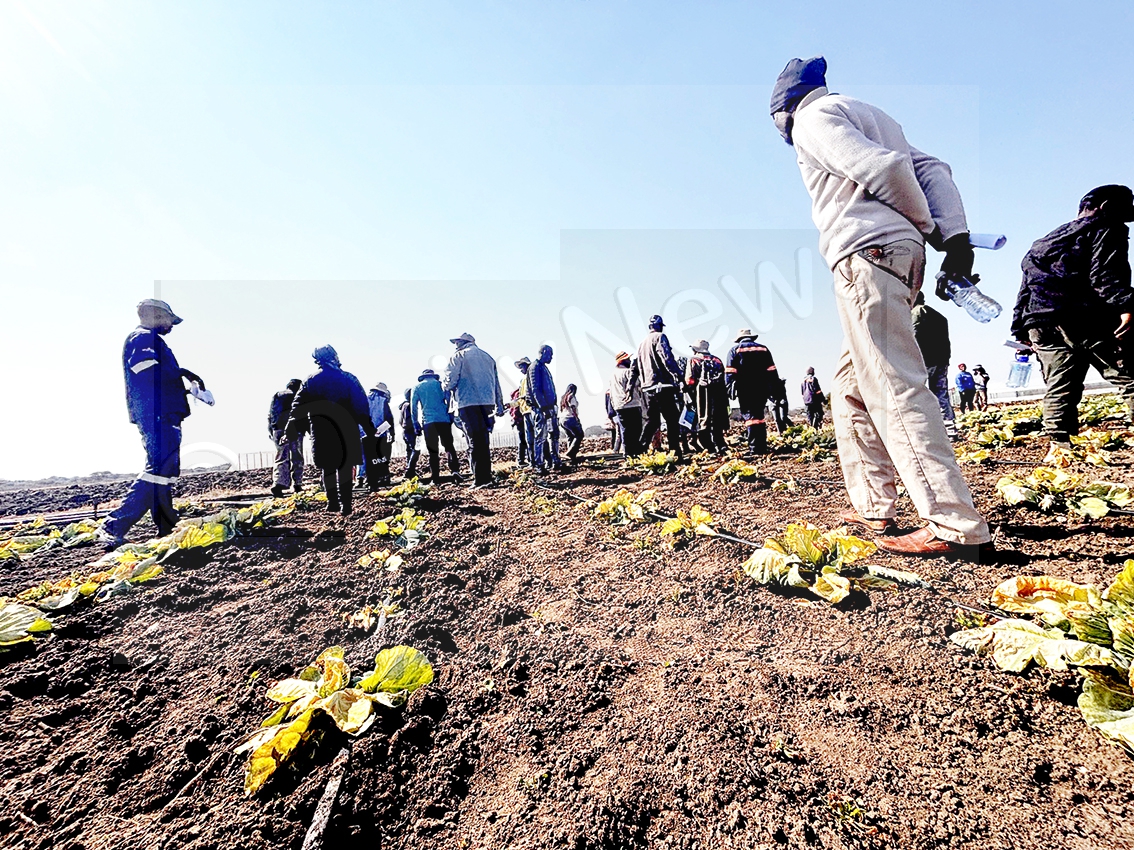
At least six farmers in the Kanye District have lost approximately P1.5 million worth of field crops after a severe three-day frost hit the area between July 8 and 10.
The heavy losses affected 1.5 hectares of cabbage and 0.25 hectares of tomatoes, along with significant damage to chillies, spinach, rape, and other vegetables on farms in Lorolwane, Nneneke and Diphatana.
In an interview, Mr Oaitse Keikitse, Kanye District Irrigation Officer, described the widespread destruction as a blow. He noted that the frost damaged not only cold-sensitive crops like tomatoes but virtually every crop in the fields.
He highlighted the potential income lost, explaining that a single hectare of cabbage could yield between 30 000 and 40 000 heads while tomatoes, a high-value crop, could generate close to P100,000 on less than one hectare.
Although frost events are not uncommon in the region, Mr Keikitse said his department continued to urge farmers to adopt protective measures.
He noted that the Ministry of and Lands and Agriculture has recently offered subsidy packages to help farmers install tunnels.
Fortunately, the situation could have been worse. According to Mr Keikitse, the majority of farmers under his watch had already protected their crops with secure tunnels, which shielded much of their produce from the worst of the frost.
He encouraged farmers to monitor weather forecasts closely and take early action to minimise damage.
He also recommended a traditional method of burning tyres and firewood between 3am and 4am to create protective smoke that traps warmth around the plants.
“This technique is effective and has been successfully adopted even on big commercial farms in areas like Tuli Block,” Mr Keikitse added.
Mr Aubrey Rowland, chairperson of Kanye Farmers Association and owner of Motlhatsa Farms in the Masoke extension area, said the district experienced extremely low temperatures that dropped to -5°C during the cold snap, making it difficult for farmers to protect their crops.
Mr Rowland reported that he had planted the first batch of 2 000 cabbages, out of a planned 10 000, in an open land.
After more than four weeks, including fertilisation, the entire crop was wiped out by the cold front.
In response, he has decided to delay the next planting, as forecasts predict another cold spell during the week of July 25.
While acknowledging the value of protected environments, he emphasised the importance of farmers understanding the difference between tunnels and greenhouses when dealing with cold weather.
“Tunnels (often called high tunnels or polytunnels) consist of curved metal hoops driven into the soil and covered in specialised plastic sheeting. They rely on the sun for heat and manual roll-up sides for cooling. Because they are not sealed or heated, they cannot fully protect plants from deep winter freezes without supplemental heaters.
However, they are highly effective against wind, rain, and hail, and are favoured by farmers for their affordability and flexibility.”
Despite their higher cost, greenhouses he said were good in protecting crops from harsh weather conditions.
“They are robust structures equipped with electrical, plumbing, and heating systems to maintain precise temperatures, making them ideal for year-round production,” he said.
Mr Rowland welcomed government efforts through the Local Enterprise Authority (LEA), which has installed greenhouse technologies at the Glen Valley Incubator, where farmers nationwide can receive training.
As winter continues to challenge Botswana’s farmers, the overall message is clear; better preparation, improved infrastructure, and informed choices between different protective technologies are essential to building resilience against unpredictable weather. ENDS
Source : BOPA
Author : Marvin Motlhabane
Location : Kanye
Event : Interview
Date : 22 Jul 2026
Related News


13 Oct 2026
Expo sparks regional leather expansion

12 Oct 2026
Partnership to boost vehicles maintenance
12 Oct 2026
Farmers urged to treat agriculture as a business
12 Oct 2026