


Bale Merges Fine Art and Eco-Conservation
13 Jul 2026
At just eight-years-old, Kenneth Bale discovered that a pencil and sketchpad could say the things his voice could not.
Buffeted by academic struggles and the devastating, early loss of his mother, art became his quiet sanctuary.
Today, the Francistown-born creative has transformed that personal survival mechanism into a loud and vibrant professional calling.
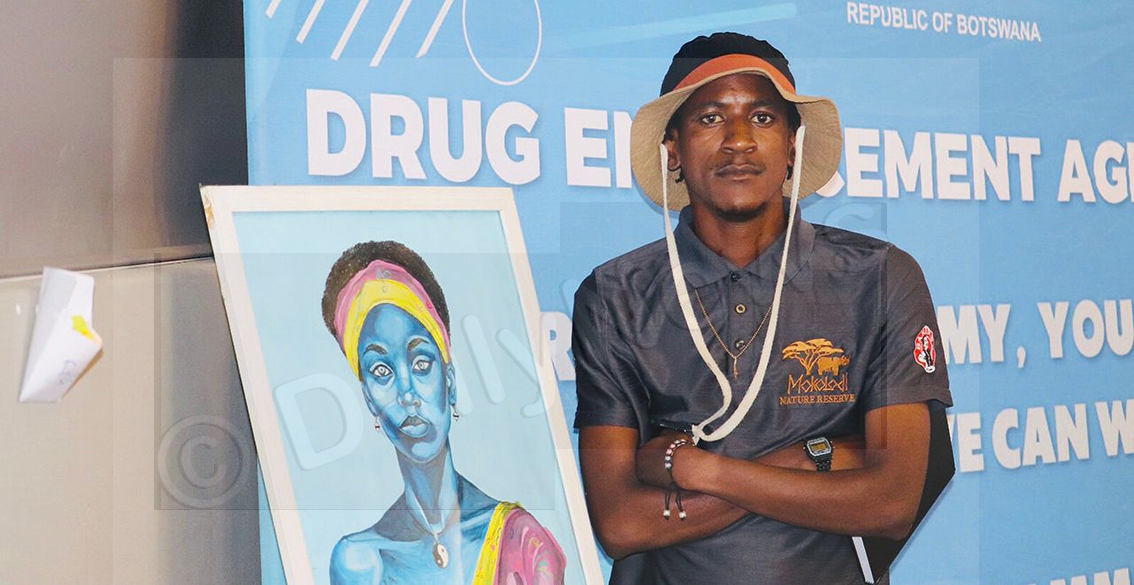
Professionally known as ‘Artistic Bale,’ he is no longer just painting to escape, but to trigger a national movement that links contemporary African identity directly with environmental survival.
Currently splitting his creative time between Gaborone and the Mokolodi Nature Reserve, Bale is building a distinct body of work that merges fine art, visual literature and environmental consciousness.
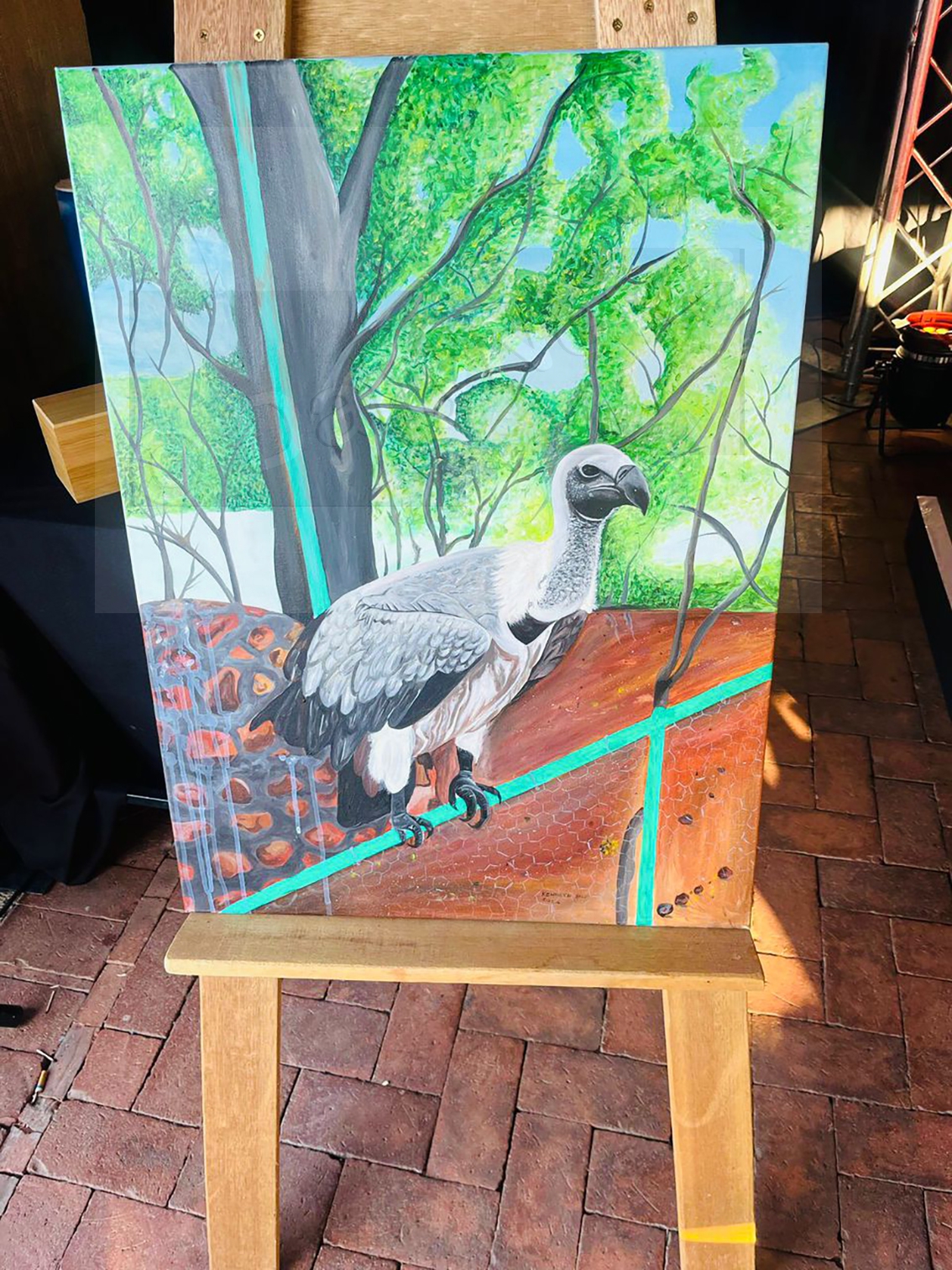
“My work focuses on contemporary African identity, emotional storytelling, conservation and symbolic blue-toned portraiture. Through independent practice and creative development programmes, I have focused on merging fine art with environmental awareness through projects like Blue Tapestry,” he explains.
Looking back, the evolution from a childhood sanctuary to a professional career was cemented during a period of global stillness.
Though art was a lifelong companion, Bale turned professional during the 2020 pandemic lockdown, using the isolation to fully commit to his career as a visual storyteller.
“While I struggled academically and personally, sketching and painting gave me direction. Art became my escape, my voice and eventually my purpose. I am deeply inspired by everyday life, people, the streets and traditional African storytelling, but my biggest inspiration emanates from pain, survival and the need to heal,” he recalls.
Since taking that professional leap, Bale has built an impressive resume. He was recently selected as one of five artists to participate in a live painting activation during the World Athletics Relays event in Botswana.
He has also completed two art residencies and successfully hosted four solo exhibitions. His creative growth is heavily tied to his affiliation with the Art Residency Centre (ARC), a platform that exposed him to collaborative environments and mentorship. His environmental background and volunteer work at Mokolodi Nature Reserve heavily influence his physical medium, he frequently sources raw materials from local hardware shops, recycling centre and found objects.
That culminated in Blue Tapestry, a multidisciplinary exhibition that was held from May 30-31 this year at the Worldview Conference Centre in Mokolodi Nature Reserve. Supported by in-kind sponsorships and venue collaborations with the reserve and local businesses, the project beautifully espouses visual art with environmental awareness.
Despite his rising profile, Bale remains candid about the hurdles that African artists face.
“One of the biggest challenges is limited access to funding, professional exposure and sustainable creative opportunities. Many people still underestimate art as a serious career, making it difficult to secure investment. Balancing creativity with survival, managing materials, transport, exhibition costs and marketing independently, is a constant tightrope walk,” he says.
Furthermore, Bale points to intellectual property theft and a lack of legal awareness as systemic issues plaguing local creatives. Yet, he views these hurdles as refining fires.
As technology and artificial intelligence rapidly reshape the creative landscape, Bale remains unthreatened.
“I don’t see AI as the death of traditional art, but rather as a challenge for artists to become more original and intentional. The danger comes when technology creates work without cultural depth, emotional experience or human struggle. Traditional art carries history, touch, imperfections and spirit. The future belongs to artists who can balance innovation while preserving authenticity,” he says.
This human element is exactly what draws people to his work.
“Kenneth’s work feels deeply human,” notes an avid supporter. “Every painting carries emotion and memory in a way that makes you stop and reflect.”
Pavithra, an art enthusiast and collector, agrees ‘What draws me is the vulnerability and symbolism. His use of blue tones creates an incredible psychological depth that is both personal and universal.’
With Botswana celebrating 60 years of independence in September, Bale believes that artists play a vital role as cultural reservists and patriots.
Bale’s ultimate vision is to build a globally recognised creative movement where art serves as a tool for healing, identity and environmental awareness among young people.
He aims to establish studios, mentorship spaces and travelling exhibitions that give youth, especially those from broken or overlooked backgrounds and a sense of belonging.
To achieve the nationwide, Bale argues that systemic change is required thus calls on the Ministry of Sport and Arts to pivot its approach.“Stay authentic to your voice and your story. The world might make you feel like you need to imitate trends to be seen, but your uniqueness is your greatest strength,” says Bale .ENDS
Source : BOPA
Author : Keetile Bontsibokae
Location : Molepolole
Event : Interview
Date : 13 Jul 2026
Related News
15 Oct 2026
14 Oct 2026
Masega talks empowerment
13 Oct 2026
Maun Photo Walk returns for second

13 Oct 2026
Gastronomic festival to promote cultural Ties

13 Oct 2026