


Kelebogile shapes new narrative on ability
28 May 2026
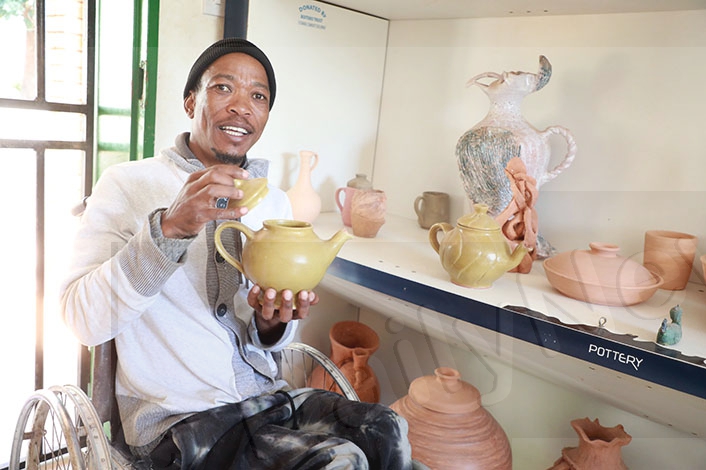
On any given morning at Boiteko Mall, if you walk past the doors of Mophane Pottery and Ceramics, you will find Kesegofetse Kelebogile at his workbench, his hands coated in thick and grey earth.
Watching him work is a lesson in patience. To the untrained eye, raw clay is just dirt. But under Kelebogile’s deliberate touch, it rises, thins and transforms into prosperity.
“You can play with clay any way you want,” the 40-year-old artisan says with an energetic smile. “Whatever product you can imagine, you can bring it to life.”
It is a philosophy that extends far beyond the edges of his potter’s wheel. For Kelebogile, a Serowe native currently residing in the Sebina ward, life itself is like a lump of clay, stubborn at first, but ultimately shaped by the hands of the person holding it.
“Clay is merely dirt in the wrong hands, but in the right hands, it becomes prosperity,” he says.
Kelebogile’s journey into the world of ceramics began two decades ago at the Camphill Community Trust in Otse, near Lobatse.
From 2004 to 2006, he immersed himself in learning the ancient techniques of throwing and firing clay. He showed such immense talent that the school hired him immediately upon graduation, keeping him on staff until 2012.
But Kelebogile harboured a deeper dream as he wanted to build something of his own, right back in his home village of Serowe.
The turning point came in 2011. A P100 000 grant from the then Ministry of Youth, Gender, Sport and Culture, now Ministry of Sport and Arts, served as his launching pad.
While Kelebogile says the funding was ‘a drop in the ocean’ compared to the massive costs of setting up an industrial workshop, it was enough to buy his first kiln and mechanical potter’s wheels.
By early 2012, Mophane was officially open for business. Recognising his drive, the Serowe Boiteko Trust stepped in to provide the strategic premises he works out of today.
Kelebogile’s success is a quiet and powerful defiance of the labels society often places on him. As an artisan living with disability, his daily triumphs serve as a living testimony that disability is never inability.
He speaks candidly about the challenges he faces, pointing out that his physical or cognitive differences are rarely the true obstacle. Instead, the greatest barriers are the rigid societal, cultural and environmental mindsets that underestimate people like him.
His work proves that persons with disabilities hold extraordinary talents capable of driving the country’s economy forward.
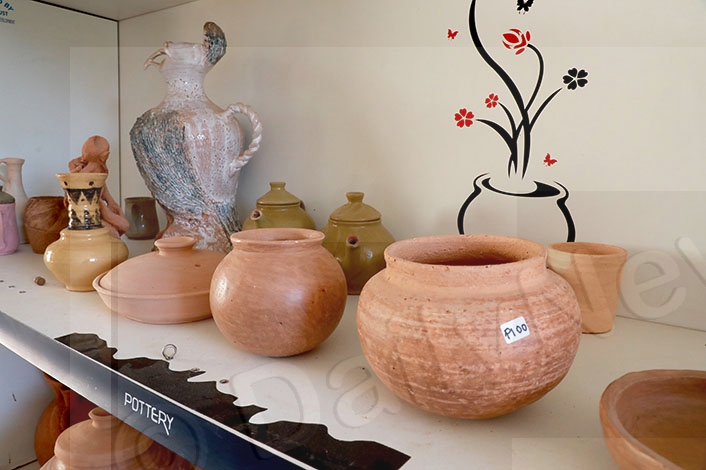
Kelebogile’s creativity is bound by nothing, he moulds everything from delicate P20 clay jewellery to massive and life-sized P10 000 custom sculptures of people, animals and vehicles. His diverse clientele reflects his adaptability, spanning from traditional dance troupes and faith-based organisations to luxury safari lodges and hotels.
Never one to stop innovating, he is currently developing custom anatomical clay models to pitch to the Ministry of Health, with the aim to create unique visual tools for community health and condom awareness campaigns.
Kelebogile is not walking this path alone. Beside him is his business marketing manager, Madiba Moraedi, who shares a fierce and generational vision for the enterprise.
“In five years’ time, we intend to be the leading pottery brand in the country,” Moraedi says, looking around the workshop.
For Moraedi and Kelebogile, Mophane is about more than just profit, but cultural survival and national pride.
Moraedi speaks passionately about the need to train youth across the Gammangwato territory to ensure that the ancient craft is preserved for posterity.
He argues that Botswana should not rely on importing commercial clay products from neighbouring countries when the soil beneath their own feet is rich enough to foster self-sufficiency.
Because artistic patterns and traditions vary across the diverse geographical regions of Botswana, the duo believes these skills must be shared nationwide, rather than kept behind the closed doors of a single workshop.
To realise this dream of national expansion, Mophane is looking toward new horizons. Having previously marketed their masterworks at the Gaborone Global Expo, the duo is now in advanced negotiations with the Nhabe Museum in Maun.
Moving a selection of their inventory to Maun, the vibrant gateway to the Okavango Delta, would place Kelebogile’s work directly in front of international tourists. Tapping into the global safari market could change everything for the small Serowe business.
But as they reach for broader markets, Moraedi emphasises that their ultimate foundation relies on local support. “Pottery awareness, perseverance and passion are the key ingredients,” he says.
Back at the wheel, the motor hums as Kelebogile applies steady pressure to a spinning vase. The struggles of yesterday have clearly lent him the strength he commands today. Piece by piece and one handful of earth at a time, he continues to shape his own destiny. ENDS
Source : BOPA
Author : Keith Keti
Location : Serowe
Event : Feature
Date : 28 May 2026
Related News
15 Oct 2026
14 Oct 2026
Masega talks empowerment
13 Oct 2026
Maun Photo Walk returns for second

13 Oct 2026
Gastronomic festival to promote cultural Ties

13 Oct 2026