


From the Trenches to Reflection Honouring Festus Mogae Beyond Politics
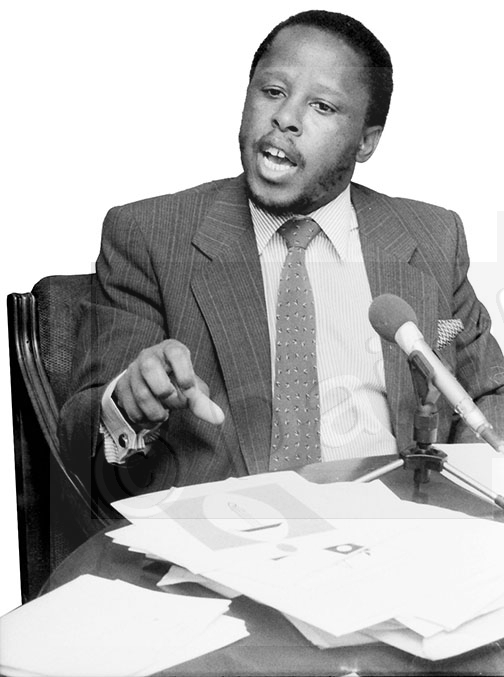
13 May 2026
There was a time in Botswana politics when Festus Gontebanye Mogae was not admired in opposition circles.
In the trenches of the Botswana National Front, where many of us cut our political teeth, he represented the face of an establishment we believed was too cautious, too elitist, and too distant from the lived realities of ordinary people.
We were young, ideological, and convinced that the ruling order had grown too comfortable with power.
The Botswana of the early 1990s was politically tense beneath its calm exterior.
The country was beginning to confront difficult questions: inequality, unequal access to opportunity, land allocation, elite influence, and the growing perception that power was concentrating within political and economic networks.
Opposition politics was not fashionable then. It was rough, underfunded, and driven largely by conviction.
The BNF was militant in tone, deeply leftist in orientation, and unapologetically confrontational toward the ruling Botswana Democratic Party.
It was in this atmosphere that the National Development Bank crisis exploded into national consciousness.
The NDB saga shook public confidence, exposing deeper anxieties about governance, accountability, and politically connected influence. Suddenly, Botswana’s carefully cultivated image of clean and disciplined administration was under scrutiny. The country was confronting uncomfortable truths about oversight failures and the dangers of political proximity to state resources.
At the same time, land scandals and factional battles within the BDP, particularly involving powerful figures like Peter Mmusi and Daniel Kwelagobe, created uncertainty about the future direction of both the ruling party and the Republic itself.
From the opposition benches, we interpreted these events through the language of class politics and state power. To us, it appeared the ruling elite was beginning to fracture under the weight of its own contradictions. But history has a way of revealing complexities that political slogans often miss.
What emerged from that crisis was the elevation of Festus Mogae to the highest office: the Presidency. He did not rise through populism or factional mobilisation.
In fact, within BDP internal politics, he was something of an outsider. He was not a traditional grassroots operator in the mould of Daniel Kwelagobe. He was a technocrat, an economist, a central banker, a man shaped more by institutions than by political theatre.
At a time when the country feared instability and reputational decline, Mogae became the figure associated with order, discipline, and continuity.
Even the Gaborone South succession tensions within the BDP reflected this deeper ideological divide.
On one side stood a powerful tradition of populist political mobilisation and patronage networks. On the other stood the Masire-Mogae philosophy of restrained governance, fiscal discipline, and institutional management.
As young opposition activists, many of us naturally gravitated toward the language of popular struggle. Yet with time, one comes to appreciate that nation-building also requires restraint, particularly in fragile democracies. What distinguished Mogae was not perfection, it was his understanding of limits.
As President, he governed with an almost stubborn belief that Botswana itself was bigger than temporary political gratification. He understood how quickly institutions decay when leaders govern emotionally or personalise state power.
One may not have agreed with every decision, but there remained a consistent sense that he approached the presidency as a stewardship responsibility rather than a personal entitlement.
Even some of the controversies associated with the earlier years of the Republic, including the politically explosive Tshiamo ballot box episode of 1984, deserve to be viewed today with historical balance.
Many in opposition politics, myself included, long associated Mogae with the state establishment of that era because of his senior role within government. Yet, with maturity and hindsight, I have often reflected on another possibility: that if he had been a man driven purely by partisan instinct or personal ambition, the state machinery of the time could very well have buried that matter entirely from public scrutiny.
Instead, the controversy entered public consciousness and became part of Botswana’s democratic memory. To me, that speaks to a deeper institutional culture within leaders like Mogae, an understanding that the credibility of the Republic mattered more than shielding the political establishment from discomfort or embarrassment.
This became especially visible in moments such as the constitutional debates around Section 87. His handling of presidential assent powers frustrated many at the time, including voices in opposition circles who feared excessive executive caution or overreach.
Yet, Mogae approached constitutional authority through procedure rather than impulse. He believed institutions must move carefully, particularly where legislation touched the balance between Parliament, executive authority, and long-term state stability.
Critics argued he could appear overly rigid, excessively technocratic, and detached from grassroots frustrations. There is truth in some of those criticisms. His administration was not free from mistakes, nor should history romanticise it beyond reality.
But there is an important distinction between a leader who makes contested decisions within institutional boundaries and one who governs with reckless disregard for them altogether.
For many of us who came from the BNF trenches, age and responsibility eventually teach a difficult lesson: it is possible to disagree profoundly with a leader’s ideology while still recognising their contribution to the Republic.
President Mogae belonged to a generation that exercised power with caution. The state during those years was certainly not free from heavy-handedness or political imbalance, but visible restraint still governed institutions, constitutionalism, and the handling of dissent.
Political opponents were adversaries, not enemies of the state. Botswana’s democratic culture survived partly because leaders of that era, despite their flaws, generally understood that institutions had to outlive individuals.
Today, under the Umbrella for Democratic Change government, that lesson matters deeply. The maturity of a democracy is measured not only by how fiercely parties compete for power, but by whether they can honour national service across ideological divides once the battles quieten.
As someone shaped by opposition politics, I reflect on former President Mogae with honesty and balance. We fought his government politically and challenged the establishment he represented. Yet with the benefit of hindsight, one recognises a man who carried the burdens of statehood carefully during uncertain times.
He may not have sought to be loved politically. But he worked consistently to ensure Botswana remained stable, respected, and institutionally functional long after his presidency ended.
That, too, is patriotism.
May the soul of former President Festus Gontebanye Mogae rest in eternal peace.
Moeti Caesar Mohwasa is a Botswana National Front veteran. He currently serves as Minister for State President, Defence and Security in the Umbrella for Democratic Change government.
Source : BOPA
Author : Moeti Mohwasa
Location : GABORONE
Event : Mogae National Mourning Service
Date : 13 May 2026
Related News
12 Oct 2026
06 Oct 2026
BPP Party that birthed nation
30 Sep 2026