


FESTUS MOGAE Pragmatic Patriot and Global Statesman
13 May 2026
As an economist, politician, and, perhaps most instrumentally, in his temperament, the late Festus Gontebanye Mogae was an old-school liberal.
His liberal values combined with his candor made him stand out as something of an anomaly among his twenty-first-century peers in leadership positions around the world.
He exhibited a rare combination of personality and worldview that, somewhat ironically, contributed to his exceptional ability to place Botswana, along with himself, in the international spotlight as he tirelessly struggled to meet incessant domestic challenges during his Presidency.
After assuming the highest office in April 1998, much of his energy was by necessity focused on meeting the challenges posed by the HIV/AIDS pandemic.
His early appreciation that the rapid spread of HIV posed an existential crisis to our nation’s very survival resulted in a commitment to total war against the virus.
From 2000 to 2014, he thus personally chaired the National AIDS Council, which he formed as an emergency body under the Office of the President to coordinate the nation's response to the scourge. In this role, his frank and forthright leadership won him widespread respect.
He was thus able to draw upon international goodwill and domestic awareness to achieve what became the global benchmark for the rollout of antiretroviral therapies. In the process, hundreds of thousands of lives were extended while the scourge of mother-to-child transmission was nearly eliminated.
Yet, the legacy of Rra Nametso’s five decades of public service goes well beyond his success in meeting the still ongoing threat of HIV/AIDS.
He was a key contributor to Botswana's first three decades of post-colonial economic development, rooted in the rigorous crafting and implementation of a series of coherent National Development Plans (NDP).
This pattern continued during his tenure as President, helping ensure the continuation of economic growth, expanded social services, and improved livelihoods. He took particular comfort in the fact that the majority of the budget was directed to expanding health, education, and training.
Mogae’s embrace of diverse opinions and desire to seek critical advice enhanced our democracy, as it grounded his decision-making. His inclusive mindset was reflected in his efforts to promote gender empowerment and indigenous entrepreneurship while pushing against vestiges of tribal chauvinism.
During his Presidency, Botswana's sterling social and political indices, including increased representation of women in mid-level and senior positions in both the public and private sectors. While judged by many critics as a "glass half empty" in its outcome, his appointment of the “Balopi Commission” resulted in significant amendments designed to render the Constitution’s language neutral in terms of gender as well as tribal affiliation.
Our third President’s career as an accomplished statesman began as a precocious student. Born on August 21, 1939, in Serowe of humble circumstances, he first made his mark through his academic achievements.
As a top student at Moeng College, he was one of a handful of locals to receive a bursary for tertiary studies abroad in the years before independence.
This elite cadre also included David Magang, Luis Nchindo, and Ponatshego Kedikilwe. In England he excelled earning a BA (Honours) in Economics at Oxford and an MA in Development Economics at Sussex University. His course of studies reflected his early conviction that nascent Botswana's political independence would be meaningless without accelerated economic development.
While still studying in Britain, he also wrote an influential article in Kutlwano suggesting that September 30, then celebrated as Protectorate Day, be retained as a national holiday.
In 1969, he joined the Ministry of Finance and Development Planning, where he became a protégé of the then Minister and Vice President, Ketumile Masire, rising to the position of Permanent Secretary in 1975.
After a secondment as the Executive Director for Anglophone Africa at the International Monetary Fund (IMF), Mogae returned home to serve as the Governor of the Bank of Botswana from 1980 to '81. In 1982, he became President Masire’s permanent secretary.
He retired from the civil service in 1989 to be specially elected to Parliament and appointed Minister of Finance and Development Planning. In the wake of Peter Mmusi's resignation, in 1992 Mogae was appointed Vice President while continuing as Minister of Finance and Development Planning.
In 1994, he won the Palapye constituency, further signalling his transformation into a popular politician.
During this period, he established himself as a strong advocate for fiscal responsibility and accelerated private-sector development. His insistence on accountability caused him to step on a few toes when he flagged the need for repayment of National Development Bank loans.
After becoming President in April 1998 and winning a popular mandate in 1999, Mogae continued to preach fiscal responsibility and transparency. But by necessity, much of his energy was ultimately focused on meeting the challenges posed by the HIV/AIDS pandemic.
His domestic initiatives nonetheless included promoting greater efficiency in the civil service, reform of Ntlo ya Dikgosi, and further liberalizing Botswana’s economy, which continued to grow steadily during his tenure.
Notable accomplishments included the 2006 agreement with De Beers that established the Diamond Trading Company of Botswana. In the international arena, he travelled widely to raise Botswana's international profile as an African benchmark for good governance and economic opportunity.
He also emerged as a leading advocate of debt relief for Africa, clean diamonds for development, and NEPAD.
He also remained a tireless champion of regional economic integration. During this period, Botswana was able to punch well above its proverbial weight due to the interpersonal relationships and mutual respect that Mogae forged with figures as diverse as Fidel Castro and George Bush, Tony Blair and Robert Mugabe, Kofi Annan and Angela Merkel.
On the continent, his insights were valued by the likes of Muammar Gaddafi, Olusegun Obasanjo, and Thabo Mbeki, as well as a host of then-emerging leaders who actively sought his counsel.
New links were forged with Brasilia and Tokyo, while from New Delhi to Paris to Beijing, he was an honored and in-demand guest.
For the country, its external standing and outreach paid dividends in terms of aid, investment, and regional integration initiatives.
Notwithstanding his high status and plain-speaking self-confidence, Rra Nametso remained a man of great humility and empathy, struggling with the large and small struggles of his fellow citizens.
In his private life, he quietly donated to individuals and families in need.
As President, he also remained publicly engaged in community-oriented organizations, including the Kalahari Conservation Society; the Botswana Society, of which he was President; the Lions Club of Palapye; the Botswana Society for the Deaf, of which he was President; and Junior Achievement Botswana, of which he was Patron.
After leaving the State House, Mogae remained in demand as a global statesman, addressing regional and international issues, including the conflict in South Sudan, mediation efforts across the continent, and the ongoing global struggle against HIV/AIDS.
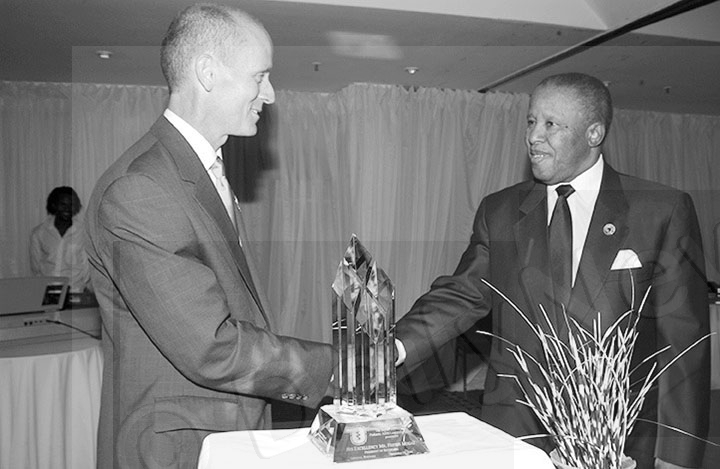
In October 2008, Mogae won the Ibrahim Prize for Achievement in African Leadership. On that occasion, Former United Nations Secretary-General Kofi Annan stated: "President Mogae's outstanding leadership has ensured Botswana's continued stability and prosperity in the face of an HIV/AIDS pandemic which threatened the future of his country and people.”
During his long and productive career, the late Mogae received scores of additional honours at home and abroad. ENDS
Source : BOPA
Author : Dr Jeff Ramsay
Location : GABORONE
Event : Mogae National Mourning Service
Date : 13 May 2026
Related News
12 Oct 2026
06 Oct 2026
BPP Party that birthed nation
30 Sep 2026