


Public expectations for Parliament high
11 May 2026
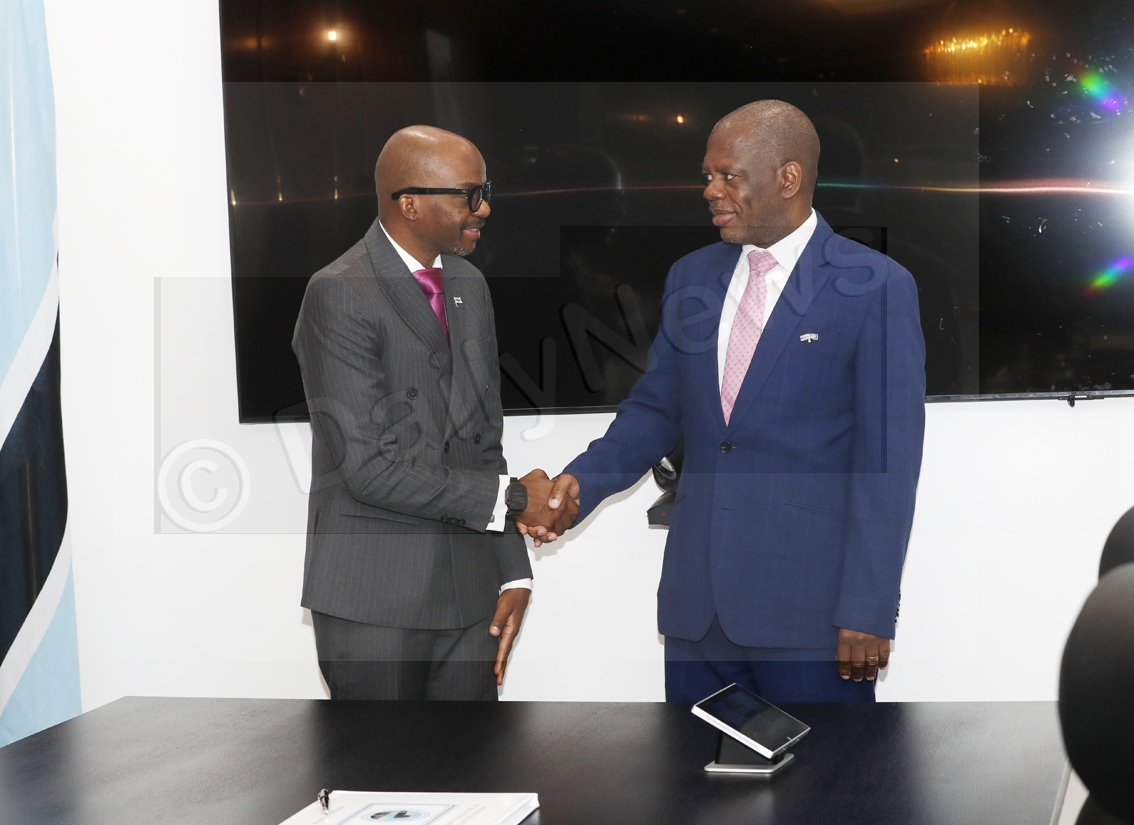
Public expectations are high for Parliament and other government institutions to deliver the change voters demanded at the polls, National Assembly Speaker, Mr Dithapelo Keorapetse, said Friday.
He speaking during a courtesy call by the Bank of Botswana Governor, Mr Lesego Moseki, noting that people who voted for change wanted to see action in terms of law reform, policy reform, representation and economic transformation, among others.
“I believe that the high expectations also extend to other institutions, such as the central bank,” he said, adding that in response, Parliament had discussed and adopted a National Development Plan and the economic transformation plan.
“They want to see Parliament as the embodiment of that change,” Mr Keorapetse explained, noting that this called for democratic consolidation.
Thus, he said there was a need for the development of key democratic institutions, such as the central bank, judiciary and Parliament, to become more independent, well-resourced and empowered.
As for the Central Bank, he said there was a need to preserve it as a key institution that must be independent and insulated from outside influence so that it could execute its mandate.
He also said the Central Bank, as a creation of Parliament, was subject to scrutiny by Parliament in various ways, such as through parliamentary committees, questions from Members of Parliament about the bank, and the Parliamentary General Assembly.
Interaction between the Bank of Botswana and Members of Parliament could assist in understanding the bank’s mandate and challenges as well as clarify how legislators can assist through their law-making function, their oversight role, and how Parliament can work with the bank more generally, Mr Keorapetse said.
Bank of Botswana Governor, Mr Moseki, said the bank was responsible for management, while the government was responsible for spending, adding that people often criticised the bank for spending.
He said the bank was responsible for helping the government preserve the country’s credit rating, and Parliament was responsible for making laws and also for approving budgets.
“That means that if they do not have the capacity to analyse, then the government will spend more on things that are not beneficial to the economy because Parliament is not exercising oversight,” he said.
Mr Moseki said whatever decisions the Central Bank took, they were taken in the best interest of the country, stressing that there was a need for engagement and collaboration between the Central Bank and Members of Parliament. ENDS
Source : BOPA
Author : Bonang Masolotate
Location : Gaborone
Event : COURTESY CALL
Date : 11 May 2026
Related News
12 Oct 2026
06 Oct 2026
BPP Party that birthed nation

30 Sep 2026