


Gen Z ready to make a mark

15 Apr 2026
Stories abound from many adults who speak of a childhood defined by long barefoot walks to school, journeys across distant lands for firewood and water, and a resilience forged in hard times.
Days when, as they put it, eating rice was considered a luxury; those times when maize meal paper packages were used for covering schoolbooks.
Before things got easier, they would say and shake their heads as though in disbelief before adding, ‘you kids have no idea what life used to be like in the old days.’
I have heard my father say, Go ne go aparwa makgabe le ditshega, tse di neng di tlogela re sa ikatega kwa morago.” Meaning, they use to wear traditional clothes that left posterior exposed.
Others would say, “Today you have all this public transport at the snap of your finger. You have TV, technology, cheese, cornflakes and mayonnaise. You children have it easy.”
However, whether boomers and other older generations had it harder while Gen Z gets to have an easier life is entirely subjective.
While Gen Z benefits from advanced technology, social progress, general convenience and comfort that other generations lacked, a UNICEF study revealed that a worrying combination of geopolitical conflict, climate and ecological crisis, economic uncertainty and mental health challenges, that plague today’s modern world, is leaving young people feeling overwhelmed, disempowered and adrift without adequate mental health support or services.
While Gen Z has often been called too soft, too fragile, a generation born into ease and comfort, unlike boomers, who endured wars and colonial oppression; hardships Gen Z may never directly experience because they face a new kind of battle, one shaped by these evolving and often less visible pressures.
More often, social media parodies and comedy skits have mocked what a future led by Gen Z speaking their own slang—might look like, subtly calling into question whether this generation has the grit to lead as those before it did. Bringing into question, “Can they be really taken seriously?”
However, those doubts may have been put to rest recently. Amid rising living costs in Botswana, a transport fare hike - implemented two weeks back, increasing minibus fares from P7 to P13 and taxi fares from P8 to P14, sparked an unexpected response.
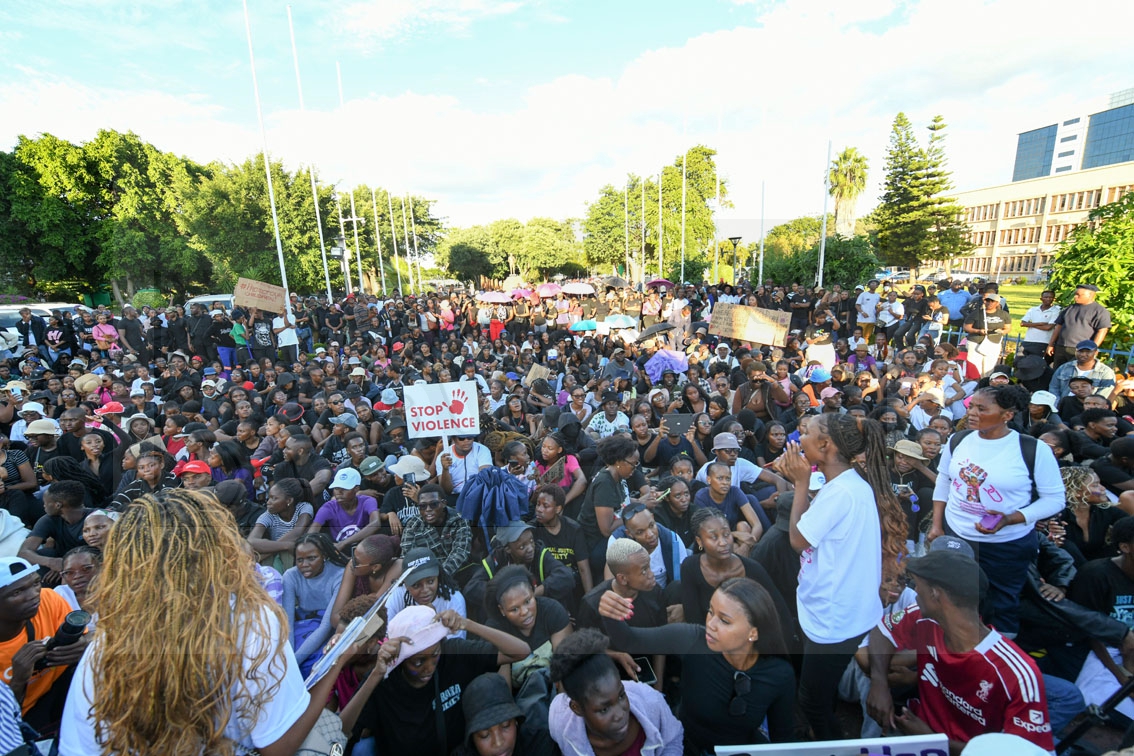
Gen Z took to the Office of the President, demonstrating unity, grit and courage as they confronted President Advocate Duma Boko and his cabinet over the fare increase, as well as the long-promised increment to their student living allowance.
Within hours, Minister of Higher Education Mr Prince Maele announced a P300 increase in the allowance, effective end of April 2026, while transport fares were revised downward to P9 for minibuses and P10 for taxis.
The feat earned Gen Z - commonly referred to as ‘Ma 2000’, a new level of recognition and admiration, not only for their fashion-forward style, slang and cultural nonchalance, but for their audacity and resolve to demand accountability and advocate for their welfare.
Their bold stance drew widespread praise on social media, with comments such as,
“This generation ya Ma 2000 is going to make a change in this country. The economy is in the hands of Ma 2000. They can liberate a country, these ones,” and “Ma 2000 are brave.”
Weeks before, ICT graduates had taken to parliament to voice their grievances over lack of jobs too.
These demonstrations show the power of the youth to fight for themselves if need arises.
Recent occurrences offer insight to the fact that there may be no better generation, but that there is only a better future with “Ma 2000” at the helm of leadership. ENDS
Source : BOPA
Author : Benita Magopane
Location : Gaborone
Event : Interview
Date : 15 Apr 2026
Related News

18 Aug 2026

17 Aug 2026
Gammangwato FM Addition To Online Broadcast

17 Aug 2026
eSwatini Artiste Finds Rhythm In Botswana
17 Aug 2026
Mmasengwe Where Yarn Brings Women Together
13 Aug 2026