


Owa shares indigenous healing practice
09 Apr 2026
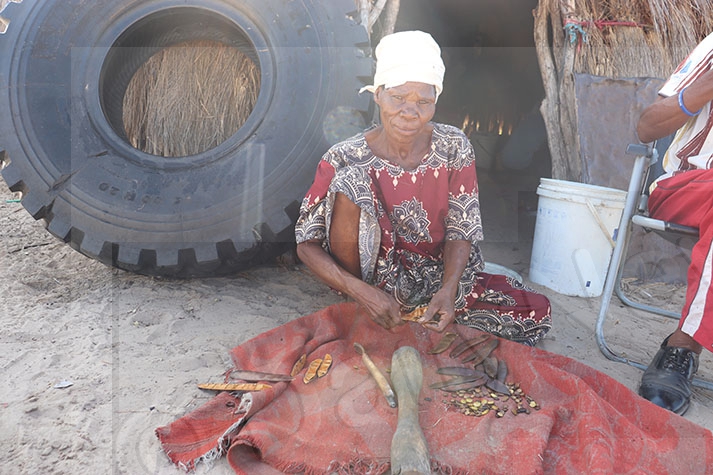
As the world commemorated the International women’s Day in March, to celebrate the strength, resilience and brilliance of women around the world, one Metsiamanong native, Morwalo Owa (63) has proven the strength and brilliance of an Indigenous woman as a household traditional health caregiver while residing in the wilderness Central Kalahari Game Reserve (CKGR) with no modern health facilities or establishments within her vicinity.
“For us locals to reach out for healthcare services, we have to travel over 300km to New Xade settlement or Ghanzi” she said.
Owa, who was born and raised in Metsiamanong in the CKGR, narrated that, life in the game reserve was tough, as there were no economic activities that could accelerate local empowerment of the residents.
She said survival was solely based on the provisions of social/humanitarian services from government and also ploughing rainfed crops in their backyard and domestication of goats, donkeys and horses.
Owa said since it was a norm that mothers took centre stage when it cames to management of household health care, she went an extra mile with traditional health care especially for the children.
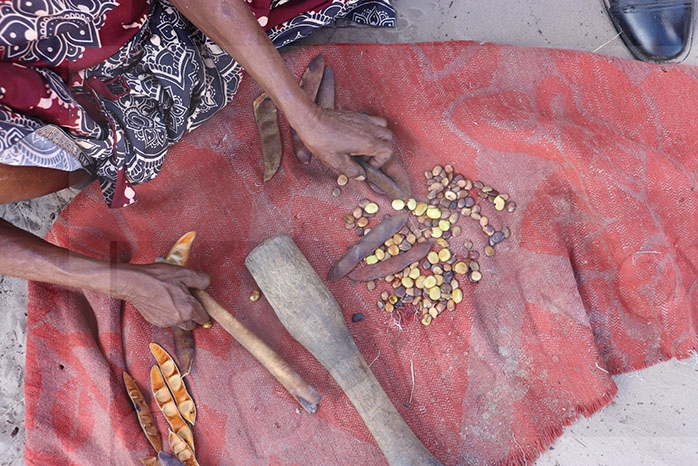
She indicated that she used ‘mogotswe seeds’ scientifically known as Bahunia macrantha and commonly known as Kalahari camels’ foot, which they gathered from the bushes to make a nutritious powder for malnourished children and other related traditional ailments.
She said she mostly gathered the seeds after rains and its processing was more of labour intensive.
She explained that, after gathering the seeds, she broke open the seed pods with a traditional knobkerrie, thereafter, the seeds would be roasted in the pot.
After a cooling off period, they would be pounded into a powder.
She emphasised that the powder would be the final output product and no other ingredients were added, making it an organic product, which would be later stored in containers for later use whenever a need arises.
She attested that there were no cases of malnutrition in CKGR due to the fact that most women in their communities within the game reserve were knowledgeable with the production of this nutritious medicine and therefore relied on it for the upbringing of healthy children.
She said the indigenous knowledge on the medicinal purpose was imparted to them by their elders, saying they were keen to nurture it too and preserve it for their young generations in order to preserve their culture from extinction.
However, Owa decried that, since they lacked local empowerment projects in their communities within the CKGR, she proposed that government could consider to facilitate them to set up joint small industries that would enable them to produce the medicine in bulk upon meeting all the required health standards.
Moreover, she proposed that, they could be empowered with financial and entrepreneurial skills and be linked with relevant authorities that would test the standard of their medicinal content.
She said their wish was to expand their produce to include indigenous fruits to produce various medications and penetrate different markets.
She said the move would economically uplift indigenous women, help protect traditional health system as well as empowering them to contribute to more inclusive and culturally grounded health approaches within their communities. ENDS
Source : BOPA
Author : Malebogo Lekula
Location : Metsiamanong
Event : Interview
Date : 09 Apr 2026
Related News

19 Aug 2026

19 Aug 2026
Maake kaNcube Headlines Inaugural Creators

19 Aug 2026
Gaborone book festival back

18 Aug 2026
Taste of Africa Saturday Ballads returns

17 Aug 2026