


Shift to wealth creation gains momentum
24 Mar 2026
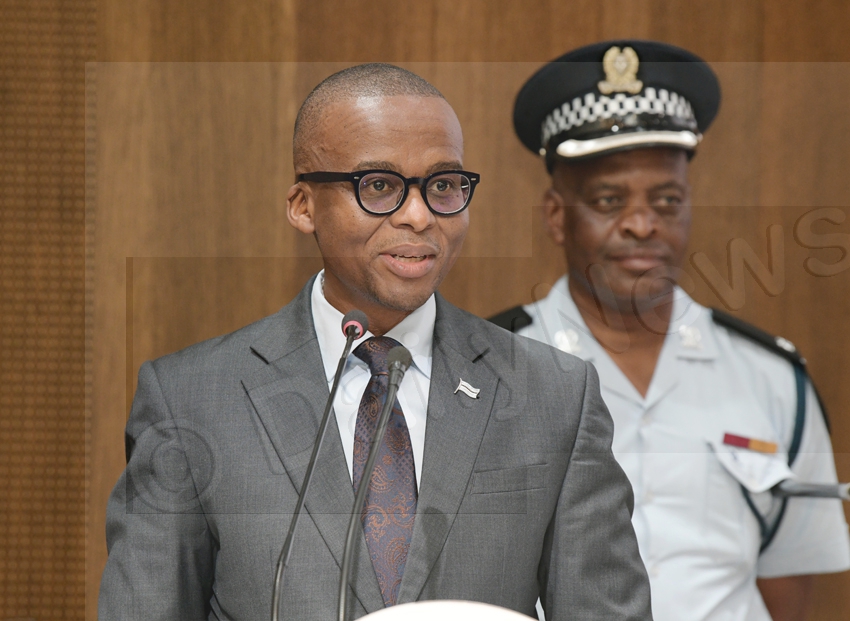
The Vice President and also Minister of Finance, Mr Ndaba Gaolathe has unveiled a decisive shift in Botswana’s development strategy, calling for a transition from welfare to wealth creation through the full implementation of the Sustainable Livelihoods Approach (SLA).
Officiating at the National Dialogue on the Sustainable Livelihoods Approach in Gaborone on March 24, Mr Gaolathe said the initiative marked a critical turning point under the Botswana Economic Transformation Programme, aimed at accelerating inclusive growth and reducing long-standing inequalities.
The dialogue serves as a platform to explore how communities can evolve to meet the goals of Vision 2036 and the United Nations Sustainable Development Goals, with a focus on building inclusive, resilient and people-centred development while addressing factors driving vulnerability.
Despite social protection spending estimated at P9 billion annually, Mr Gaolathe acknowledged that the investment had not translated into sustainable economic inclusion. Poverty, the Vice President said remained prevalent in rural areas, whilst youth unemployment continued to pose a serious challenge.
“Protection alone is not transformation. There is need to move beyond consumption-based support toward systems that enable productivity, self-reliance and opportunity,” he said, adding that a nation rises when its people were empowered to stand on their own.
Originally developed in 2011, Mr Gaolathe said the SLA would now be adopted as a unifying framework across government programmes, focusing on strengthening existing community assets such as skills, land and enterprise and linking them to economic opportunities.
More than 800 stakeholders, he said had been engaged in the rollout, including government officials, trainers and community representatives, with implementation already underway in several districts and set for nationwide expansion.
Plans, he said included scaling livelihood projects, expanding access to microfinance and promoting community-owned enterprises.
Further, Mr Gaolathe said the reform centred on structured pathways to help households transition from dependency to sustainable livelihoods through skills training, entrepreneurship support, financial inclusion and improved market access.
“Success will be measured not by the number of people assisted, but by tangible outcomes such as job creation, business development and increased participation of youth and women in the economy,” he said.
The initiative, the Vice President said was aligned with the National Development Plan 12, Botswana Economic Transformation Programme (BETP), African Union Agenda 2063 and SDGs, and sought to address inequality whilst promoting equitable access to economic opportunities.
The programme, endorsed by Khoe-Na communities, he said included representation in implementation structures and training across districts to promote inclusion and equity.
He also noted that the implementation had commenced in key districts, including; Mogoditshane, Kgatleng, Mahalapye, Tsabong, Serowe, Selibe-Phikwe, Letlhakeng, Tlokweng, Tonota, Charleshill, Northeast, Good Hope, Ghanzi, Gaborone City Council, Palapye, Chobe, Moshupa, Molepolole, Kanye, Francistown and Tutume with plans for further national scale-up to strengthen self-reliant communities.
Led by the Ministry of Local Government and Traditional Affairs, in collaboration with the BETP, the initiative reflects a community-driven approach to development and brings together key stakeholders committed to improving livelihoods and expanding sustainable economic opportunities across the country. ENDS
Source : BOPA
Author : Lorato Gaofise
Location : GABORONE
Event : Dialogue on SLA
Date : 24 Mar 2026
Related News


10 Oct 2026
Feature Reliving the Long March 90 years on

09 Oct 2026