


Gaolathe rallies envoys behind economic transformation agenda
04 Mar 2026
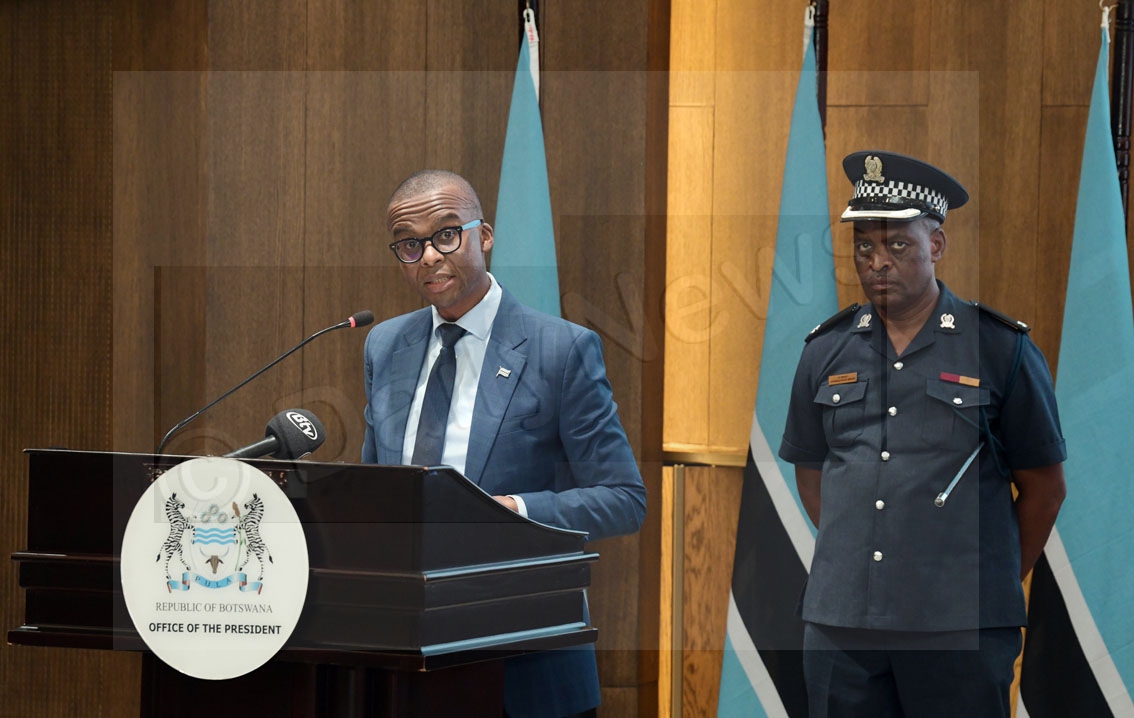
Vice President Ndaba Gaolathe has called on members of the diplomatic corps to play a central role in advancing Botswana’s economic transformation agenda, as global geopolitical and economic uncertainty reshapes trade, investment flows and development finance.
Addressing ambassadors and high commissioners in Gaborone on March 3, Mr Gaolathe described diplomats as “living bridges” between Botswana and the international community, emphasising that trust, credibility and long-term partnerships were essential in an increasingly complex global environment.
“Diplomacy is not merely ceremonial, it is economic capital,” he said.
Mr Gaolathe urged envoys to actively identify intersections between Botswana’s transformation priorities and the strategic interests of their home countries.
He noted that diplomats were uniquely positioned to translate goodwill into tangible investment projects and policy dialogue into measurable outcomes.
“You understand the investment priorities of your institutions and the capabilities of your private sectors; you are uniquely placed to translate goodwill into projects and dialogue into tangible outcomes,” he said.
Mr Gaolathe reaffirmed Botswana’s openness to diversified partnerships grounded in mutual benefit, transparency and respect for sovereignty.
While acknowledging rising global fragmentation and strategic competition, he signalled that Botswana would maintain a pragmatic and balanced foreign policy approach.
Mr Gaolathe expressed both humility and confidence as Botswana embarks on its next phase of development.
“Transformation is demanding; it requires adaptation and sustained effort, and Botswana has demonstrated resilience before,” he said, adding that with strengthened public-private partnership frameworks and structured platforms for bilateral engagement, Botswana intended to deepen collaboration and attract investment that was commercially sound, socially responsible and sustainable.
He said Botswana was prepared, purposeful and ready to shape its next chapter of growth in partnership with the world.
Sharing similar sentiments, the Minister of Health, Dr Stephen Modise, called for bold partnerships, creative financing and innovative technologies to transform the country’s healthcare sector and address persistent structural challenges.
Outlining the vision for health reforms, Dr Modise emphasised the importance of collaboration with international agencies and organisations, including the United Nations, adding that such partnerships have helped unlock critical resources and technical expertise.
“Each partner brings strength in a particular area; when real challenges arise, you can tap into something stronger than what is just on paper,” Dr Modise noted.
He acknowledged that formal diplomatic processes could sometimes slow collaboration, but stressed that genuine working relationships had proven essential, particularly during periods of medicine shortages.
Reflecting on efforts to stabilise pharmaceutical supplies, he said the overwhelming good work that was put in during that period was phenomenal and urged diplomats to continue supporting such initiatives.
Among the reforms being advanced, Dr Modise said, was the rollout of telemedicine, a technology widely established globally but still relatively new in Botswana.
“Telemedicine still sounds esoteric here, but it’s old technology in many countries. The systems exist, the expertise exists; we need the partnerships to implement them effectively,” he said.
Dr Modise reaffirmed his commitment to accessibility and openness to ideas from partners, stressing that innovation must be matched by responsive governance.
“As a country, we face enormous challenges in healthcare, but where others have excelled, we can learn, and with the right partnerships, we can build the future we envision,” said Dr Modise. ENDS
Source : BOPA
Author : Lesedi Thatayamodimo
Location : Gaborone
Event : Diplomats Address
Date : 04 Mar 2026
Related News


10 Oct 2026
Feature Reliving the Long March 90 years on



09 Oct 2026