


Constitutional Court panacea for human rights violation
04 Mar 2026
Some residents of Gabane, Thamaga and Mmankgodi believe that the proposed establishment of the Constitutional Court (ConCourt) comes at the right time when many of their rights have been trampled upon.
Others said it was a misplaced priority as there were other burning issues that needed attention.
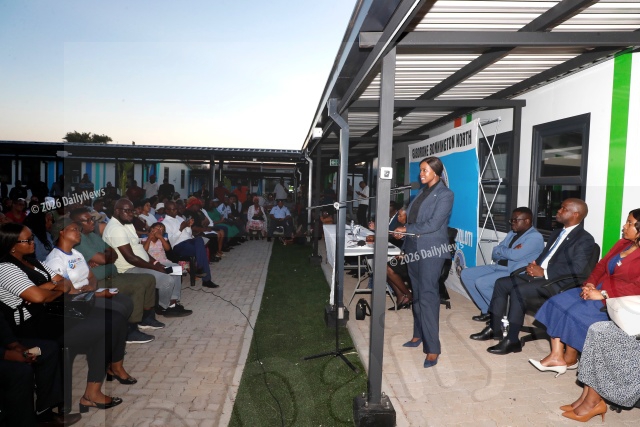
Speaking at a kgotla meeting addressed by the Minister of Justice and Correctional Services, Mr Nelson Ramaotwana recently, Gabane South councillor, Mr Ntuka Moumakwa noted that the announcement came at a time when residents were still dealing with the grief of losing land rights to the Mogoditshane Land Board.
He said many wondered whether the ConCourt could reverse their ordeal, as parents in the area remained landless and trapped in poverty.
In contrast, Mr Kenosi Rantlole voiced skepticism, arguing that Botswana’s history showed persistent friction favouring wealthy elites, and feared the ConCourt might further suppress the rights of ordinary citizens.
He is worried that the institution could open the door to practices he considered immoral, such as same-sex marriage.
Mr Rantlole questioned the relevance of the ConCourt for Botswana’s relatively small population and suggested that the funds allocated could be better spent on improving welfare programmes like Ikageng.
Other residents in Thamaga echoed concerns about the timing and cost of the initiative, while also hoping it might eventually strengthen land rights.
Mr Onthusitse Motsumi expressed hope that the ConCourt would reduce presidential powers. However, he was worried that since the President would appoint top judges, the court might be filled with loyalists.
“We fear these people will pledge allegiance to the President. My plea is that presidential powers be reduced so the ConCourt can operate independently,” he said.
Mr Sekao Mpusetsang supported the idea in principle but highlighted mismatched priorities.
He pointed to the economic crisis and constitutional issues, warning that once the ConCourt idea passed, there may be complaints about insufficient funds to build its premises.
Mr Mpusetsang also shared personal frustrations with the current judicial system, which he described as lengthy, costly and prone to disadvantaging ordinary citizens.
Several residents emphasised the need for more public education on the role and implications of the ConCourt before its full implementation.
While in Mmankgodi, Mr Mozambia Dibe asked government to stop ConCourt and review the whole constitution, adding that he feared that the speed at which government was moving to establish the court might come with unfavourable decisions like abolishing the death penalty.
He said in Africa, there were countries that have ConCourt and were supposed to be protecting human rights but they were the ones that had worst scenario cases of human rights harassment and even death.
Mr Onkabetse Morebodi shared the same sentiments with Mr Dibe that the address by minister Ramaotwana did not necessarily need any response as a decision had already been made.
Even though he believed that they did need ConCourt, he said it was not a priority right as there were other important issues that must be addressed.
Mr Jerry Tau said he believed that as people, they would think differently and that was a welcome development but they should bear in mind that some people have had their human rights violated with nowhere to appeal while others were in jail but have not committed the alleged crimes. ConCourt, he said would come in handy in giving them a chance to consider their judgments.
Mr Kaelo Nkau also believed that those who did not see the need for ConCourt should not deny those who wanted it, as it was a specialised court that would address fundamental human rights violations that he had seen for both individuals and communities.
He said he agreed with the establishment of the court as they were pending issues concerning their lives that the court could assist with.
Earlier when addressing the different communities, Mr Ramaotwana said the introduction of ConCourt could not be done without first amending the Constitution (Chapter 6) to cater for the ConCourt in the hierarchy of courts.
He said the amendment was made to allow ConCourt to attend to cases of fundamental human rights and also to determine and decide on constitutional matters.
Mr Ramaotwana said ConCourt shall be an independent arbiter on issues of the constitution and would be important during the process of the constitutional review.
He brought understanding to the residents that the Court of Appeal and High Court were courts of general jurisdiction that dealt with criminal and civil matters but ConCourt would be a specialised court that focused on constitutional matters and fundamental human rights.
Mr Ramaotwana said the court would help attend to gaps and limitations and accord Batswana an opportunity to launch their cases where they could be assisted without having to wait for case queues that could take about 3-4 years to be attended.
He assured residents that the ConCourt was not something that would begin tomorrow, as all the processes had to be followed until a national referendum was reached that would pave way for its establishment. ENDS
Source : BOPA
Author : Booster Mogapi and Keetile Bontsibokae
Location : Molepolole
Event : Kgotla meeting
Date : 04 Mar 2026
Related News


10 Oct 2026
Feature Reliving the Long March 90 years on

09 Oct 2026