


School feeding strategic investment
02 Mar 2026
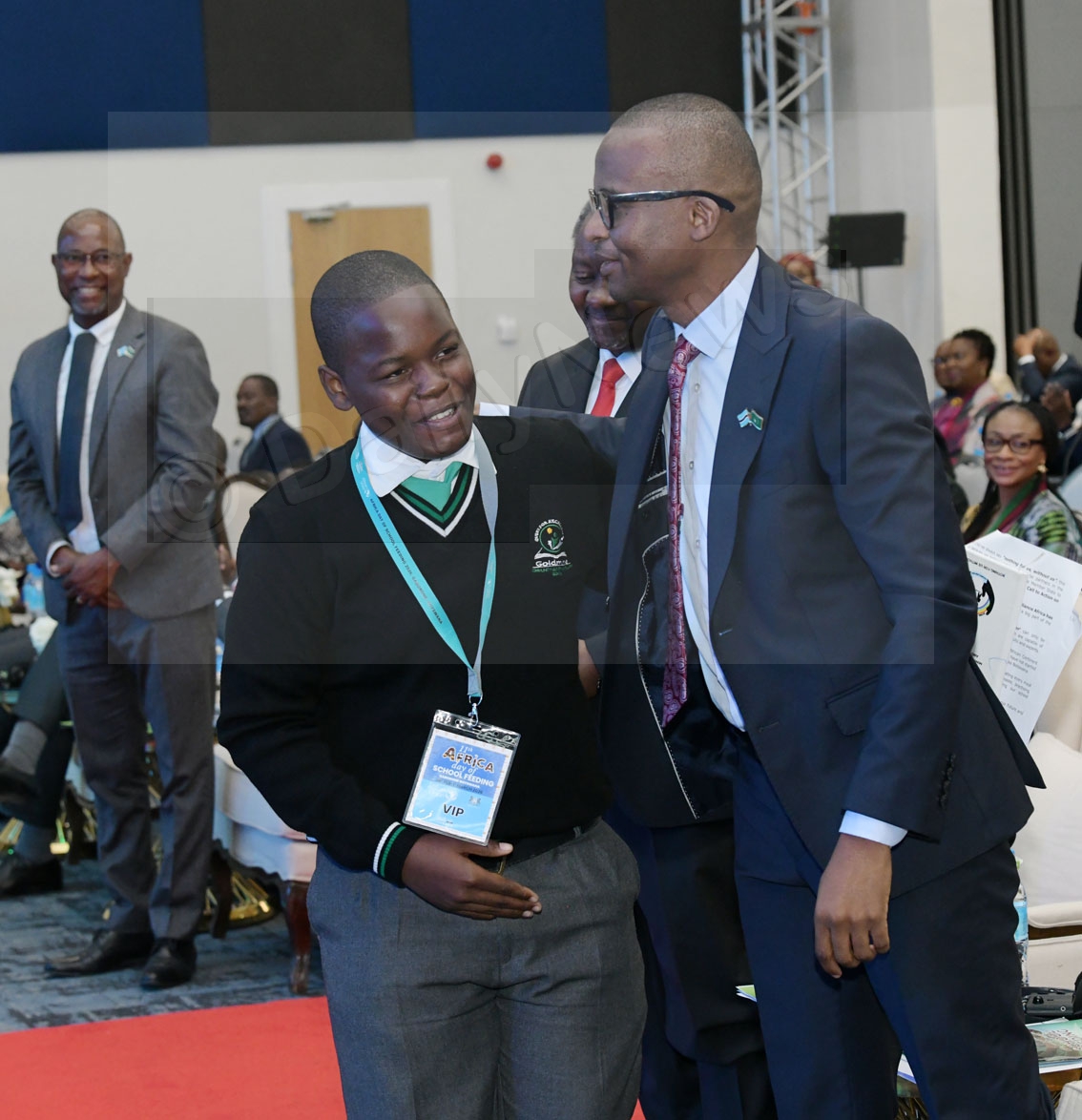
Vice President Ndaba Gaolathe has called for bold, predictable financing and stronger cross-sector coordination to sustain school feeding programmes across Africa as he officially opened the 11th African Day of School Feeding in Gaborone on Saturday.
Addressing ministers, development partners and child representatives from across the continent, the vice president said school feeding must be viewed not as a welfare intervention but as a strategic investment in Africa’s human capital.
Quoting African Union Commissioner Ms Sarah Anyang Agbor, he reminded delegates that “if education is the most powerful weapon which you can use to change the world, then quality food is the source of the strength for quality education.”
“A hungry child cannot fully learn,” Mr Gaolathe said, adding that nutrition, clean water, sanitation and education must function as a coordinated system if school meals were to deliver lasting results.
The continental event, established by the African Union in 2016, to be commemorated annually on March 1, celebrates progress in home-grown school feeding while reviewing challenges and financing gaps. This year’s theme focuses on ensuring access to nutritious meals, clean water and hygiene in schools.
Mr Gaolathe said “Botswana speaks not from theory, but from lived experience,” noting that the country’s school feeding programme spanned nearly six decades and currently reached close to 400 000 learners from pre-primary to secondary level.
He revealed that Botswana spent more than US$100 million annually (over P1 billion) on school feeding, supporting smallholder farmers, women and youth entrepreneurs, manufacturers and rural economies.
“School feeding must feed the child while feeding the local economy,” he said, urging governments to strengthen procurement systems, modernise delivery oversight and shield the programme from short-term fiscal pressures.
The programme however, has its own threats that include rising food prices, climate shocks and supply chain disruptions, which may lead to irregular deliveries that erode confidence and disrupt learning.
These therefore, require predictable financing, transparency and strong monitoring systems, to safeguarding the programme.
Mr Gaolathe called on African governments and international partners to support the next replenishment cycle of the Global Partnership for Education, describing education financing as “co-investment in human capital” rather than charity.
The African Union Commission, School Feeding Division – head, Mr Yurise Fawo-Yunesko, commended member states for increasing domestic financing of school meals, revealing that 83 per cent of the estimated US$2 billion (about P27 billion) invested in school feeding across Africa in 2024 was financed by governments themselves.
He said the number of children benefiting from the programmes had more than doubled over the past decade, now reaching 87 million learners in the continent. However, he cautioned that climate shocks, economic fluctuations and infrastructure gaps continued to threaten gains.
The World Food Programme executive director, Ms Cindy McCain, in her remarks delivered virtually, described school meals as “one of Africa’s most powerful investments,” noting that provision had grown by more than 30 per cent in just two years.
She said while progress was encouraging, millions of vulnerable children still lacked access to school meals and clean water, urging governments to deepen domestic financing and integrate water, sanitation and hygiene into feeding programmes.
National Children’s Consultative Forum of Botswana president, Tumelo Matinkeja, urged leaders to include children in decisions affecting them, saying school meals could not be complete without clean water and proper hygiene.
Similarly, SADC Child Forum president, Ms Aumake Aaron said learners performed better academically when well fed, advocating for meals to be served immediately upon arrival at school and to include fruit and salads.
The event that attracted representatives from more than 30 African states, concluded with ministerial statements from participating countries and visits to selected primary and secondary schools in Gaborone and Mogoditshane. ENDS
Source : BOPA
Author : Lindi Morwaeng
Location : Tlokweng
Event : Africa Day of School Feeding
Date : 02 Mar 2026
Related News


10 Oct 2026
Feature Reliving the Long March 90 years on

09 Oct 2026