


Mohwasa Sets The Record Straight On ConCourt
10 Feb 2026
Establishing the constitutional court is not about addressing same-sex marriages or abolishing the death penalty as some allege.
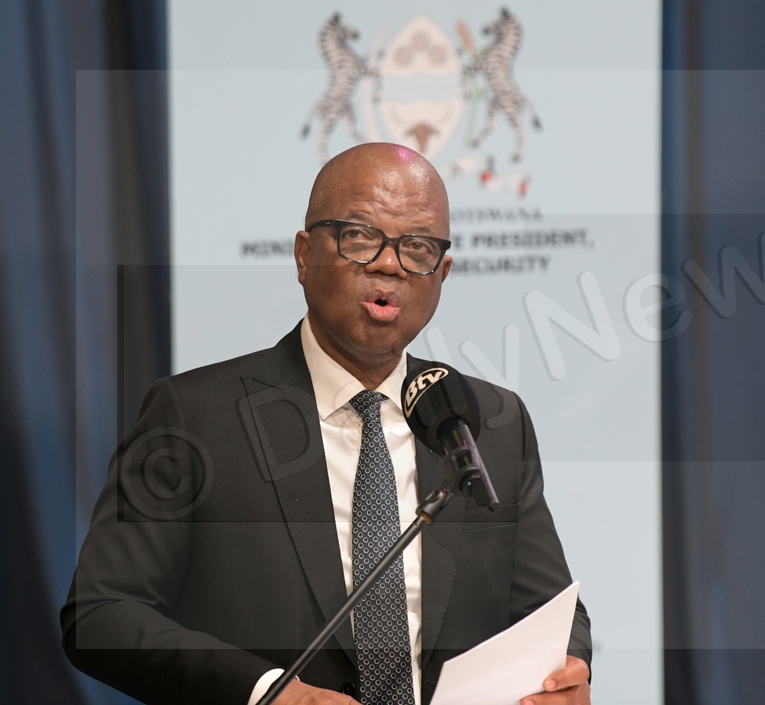
The court would instead be all-encompassing in addressing constitutional and human rights violations, Minister for State President, Defence and Security, Mr Moeti Mohwasa, explained on Monday when addressing Civil Society and Non-Governmental Organisations.
He cautioned against public misinformation by those with agendas, adding that there were civil society members who were meeting with politicians to solidify positions against the constitutional court. The court would serve to protect the rights of all people, as the government is a human rights-based government, it would be a body to oversee the review of the constitution, Mr Mohwasa said.
The minister clarified that the creation of the constitutional court was not anyhow kick-starting the processes of the envisaged constitutional review.
Minister Mohwasa said after passing a two-thirds majority vote by Members of Parliament, there would be a referendum for Batswana to have an input on the creation of the constitutional court.
Civil society and non-governmental organisations’ members varied on the establishment of thec court.
Mr Keabetse Sesenao opined that the country desperately needed the court to safeguard the rights and wellbeing of its people, while Ms Tumisang Seabo called for people-driven and transparent consultations, since Batswana were never consulted on whether they wanted a constitutional court to oversee the constitutional review.
Although Batswana in the Dibotelo Commission indicated they wanted a constitutional court, the reasons they advanced differed from those advanced by the government, she said.
In the Dibotelo Commission, Batswana wanted a concourt to help in the speedy delivery of justice and to relieve the High Court.
She further noted that under the current laws, the ConCourt would operate under the same laws which limit the High Court and the Court of Appeal, thus not having any significant impact.
Another contributor, Ms Lorato Mphusu, said the country faced significant morality and lifestyle detention issues, and wondered how the ConCourt would help to uphold or erode those.
Thus, she called for the protection of the moral fabric of society.
Mr Mohwasa noted that the problem of morality was not a legal issue but a societal problem.
Generally, the minister said Batswana were an angry society, which bred intolerance leading to violence.
“The anger also manifests in falsehood and, at times, vulgarity, which borders on criminality directed at the leadership.”
Minister Mohwasa promised further consultations with civil and non-governmental organisations, adding that the government remained open to dialogue and consultations.
BOCONGO board chairperson, Ms Cindy Kememi, stated that the civil society appreciated the opportunity to engage on the constitutional reform, noting that the process must be founded on meaningful, structured, and inclusive public participation.
She said the dialogue reaffirmed the importance of engagement between civil society and government in strengthening constitutionalism and democratic governance.
Ms Kememi noted that the concerns of civil society reflected the expectations and aspirations of society, adding that consultations must go beyond mere formality.
She called for the publication of clear and accessible information on the constitutional court, including its mandate, jurisdiction, composition, and implications for existing judicial structures.
She also urged for broader public consultations and sufficient time to be allowed for consultations and engagement, among other things. ENDS
Source : BOPA
Author : Bonang Masolotate
Location : GABORONE
Event : Address
Date : 10 Feb 2026
Related News


10 Oct 2026
Feature Reliving the Long March 90 years on

09 Oct 2026