State President Receives Largest Share of Budget Allocation
10 Feb 2026
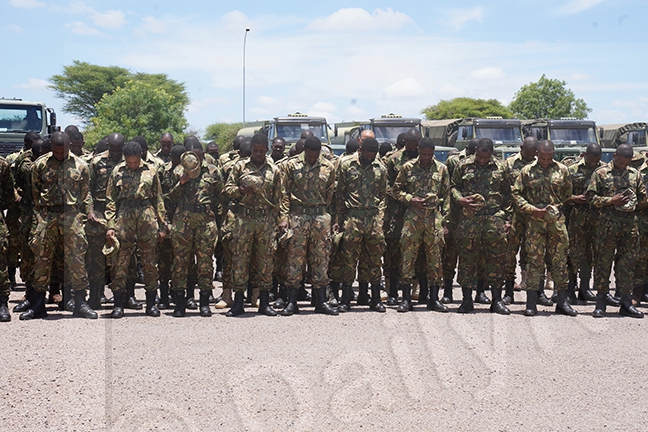
The Ministry for State President, Defence and Security has been allocated the largest share of the proposed Ministerial Recurrent Budget.
The P13.05 billion stake is an increase of P502.77 million or 4.01 percent over this year’s approved budget.
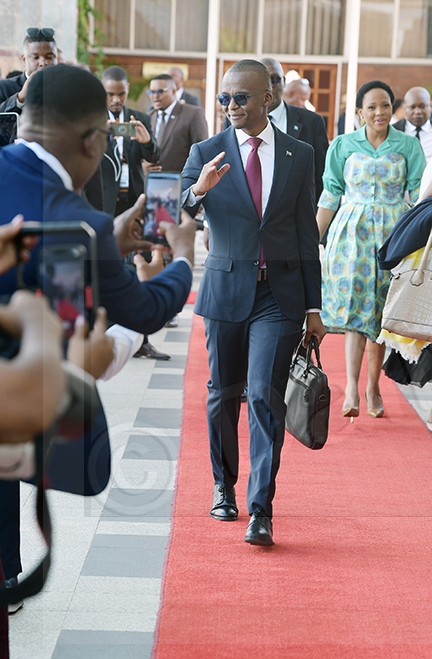
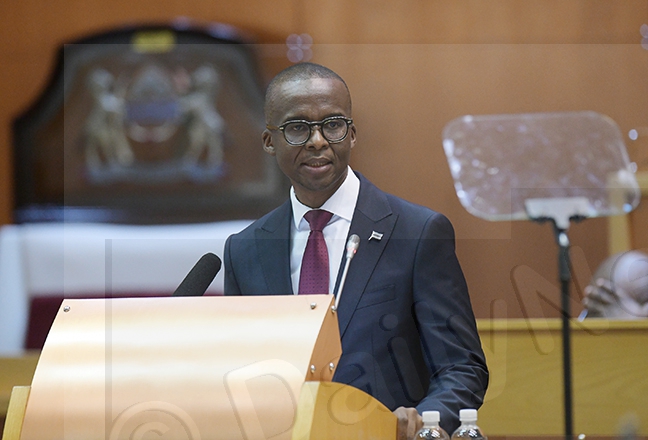
Delivering the National Budget for the financial year 2026/2027 in Gaborone on Monday, Vice president, also Minister of Finance, Mr Ndaba Gaolathe said the proposed budget would largely cover operational requirements of the Botswana Defence Force (BDF) and the Botswana Police Service (BPS), reflecting government’s continued commitment to safeguarding national security.
The proposed budget will also finance the absorption of Special Constables into Regular Constable Cadre as well as procurement of their uniform. In addition, provisions have been made for Termination Allowances; Service Charges and Static Plant under the Directorate on Corruption and Economic Crime (DCEC).
The two security organs have been incorporated into the Ministry for State President while National Aids and Health Promotion Agency (NAHPA) has been transferred back to the Ministry of Health following the rescission of the earlier decision to transfer it to the Ministry for State President, Defence and Security.
The second largest share, P12.99 billion, is allocated to the Ministry of Local Government and Traditional Affairs, representing an increase of P1.71 billion or 15.2 per cent, compared to the allocation for the previous financial year.
Mr Gaolathe said the substantial allocation underscored government’s commitment to strengthening social development and enhancing service delivery within local government structures and traditional affairs.
The allocation is intended to improve the ministry’s operational capacity, ensure effective functionality and sustained provisions of essential services to communities across the country, he said, adding that the significant growth was primarily attributable to the transfer of funding from the Ministry of Health to support the Primary Health Care function, which was reassigned to the Ministry of Local Government and Traditional Affairs as part of the 2024 rationalisation of ministerial portfolios.
Further, a substantial portion of the budget is also allocated to the social welfare programmes, which continue to experience significant growth.
These, the minister said, included Destitute Allowances, Old Age Pension Scheme, Orphan Care Programme and the newly introduced Sanitary Ware Support Initiative for mothers and babies, which is scheduled for roll out this budget year.
The Revenue Support Grant (RSG) will likewise continue to receive increased subvention in response to rising demands. However, to mitigate escalating pressure on the RSG, Mr Gaolathe urged local authorities to expedite the review and valuation of properties in districts such as Gamalete and Palapye.
This initiative is expected to broaden the revenue base, strengthen local revenue mobilisation and reduce over-reliance on Government funding.
The third largest share of the proposed budget is allocated to the Ministry of Child Welfare and Basic Education, amounting to P11.83 billion, an increase of P147.85 million or 1.3 per cent over the current year’s approved budget.
It will cover teachers’ salaries and allowances, the development and implementation of Child Welfare policies and programmes, the payment of service charges in schools and operational costs for SOEs under the ministry.
It also provides for temporary teaching staff necessitated by the expansion of schools. The budget will also cater for service charges for the Department of Secondary Education as well as funding to pilot the Project Bula Buka.
This initiative, undertaken jointly with the Botswana Open University College and Open Schooling and Youth Empowerment Education Trust, aims to expand educational access, provide skills training, build character among out-of-school Junior Certificate leavers and offer remediation opportunities to BGCSE leavers.
The Ministry of Health has been allocated the fourth-largest share of the proposed budget amounting to P7.51 billion, representing a 16.4 per cent decline over the current year’s approved budget.
The decline in the ministry’s budget, the minister said, was mainly attributed to the transfer of personnel-related funds to the Ministry of Local Government and Traditional Affairs, following the reassignment of the Primary Health Care function during the 2024 rationalisation of ministerial portfolios.
The proposed budget will cover essential health sector requirements, including the procurement of drugs, vaccines, laboratory supplies and equipment as well as medical and surgical equipment.
It will also cover Public Officers’ Medical Aid Scheme and fees for medical specialists. The proposed budget further includes funding for NAHPA and provision for the establishment of the NHI.
The fifth largest share of the proposed budget is allocated to the Ministry of Higher Education with a total of P7.37 billion, representing an increase of P2.70 billion or 58 per cent over the current year’s budget allocation.
The bulk of the budget covers tuition fees, now transferred from the Ministry of Finance alongside student allowances, feeding and book provisions as well as operational costs for SOEs under the ministry.
The significant growth in the allocation is primarily due to increased provisions for tuition fees to accommodate the rising number of new tertiary students.
The Ministry of Lands and Agriculture has been allocated the sixth largest share of the proposed budget amounting to P2.41 billion, representing a decline of P28.34 million or 1.2 per cent compared to the current year’s approved budget.
Despite this modest decline, the proposed budget remains strategically aligned to national priorities aimed at enhancing food security through support for agricultural production, promoting self-reliance by empowering farmers, strengthening extension services and investing in climate-resilient farming practices.
The allocation further supports initiatives to expand employment opportunities across the agricultural value chain. In addition, the proposed budget provides for the continued formulation, implementation, monitoring and management of land polices to ensure equitable access to land, enhance productivity and promote sustainable land use.
The Ministry of Transport and Infrastructure has been allocated the seventh largest share of the proposed budget amounting to P1.93 billion. This represents a decrease of P7.98 million or 0.4 per cent, compared to the current year’s approved budget.
The bulk of the allocation will cater for the procurement of petrol, oil and lubricants required to operate the entire Central Government vehicle fleet. Then follows the Ministry of Trade and Entrepreneurship, which is allocated the P1.20 billion. This represents an increase of P30.35 million or three per cent increase over the current year’s budget.
The Ministry of Finance has been allocated P1.14 billion, a significant decline of P1.92 billion, or 62.68 per cent compared to the current year’s approved budget, largely due to the transfer of the tuition fees vote back to the Ministry of Higher Education.
The proposed budget also provides for the establishment of a National Coordination Office to strengthen national efforts in combating Anti-Money Laundering and Counter-Financing of Terrorism (AML/CFT) in alignment with international standards.
This office, Mr Gaolathe said, would play a key role in facilitating Botswana’s participation in the third round of Mutual Evaluation, scheduled for 2027.
Furthermore, the allocation includes provisions for the establishment of the Banking Tribunal in accordance with the new Banking Act and its accompanying regulations, which came into effect in August 2025.
The remaining share of the Ministerial Recurrent Budget allocation of P8.12 billion or 12 per cent has been recommended to be shared among other ministries and extra-ministerial departments. BOPA
Source : BOPA
Author : BOPA
Location : Gaborone
Event : Parliament
Date : 10 Feb 2026
Related News
10 Feb 2026