Fiscal discipline and revenue reform core of 202627 plan

10 Feb 2026
Fiscal consolidation, discipline and the rebuilding of financial buffers are at the core of fiscal strategy for the 2026/2027 financial year as government moves to strengthen debt sustainability and restore economic resilience.
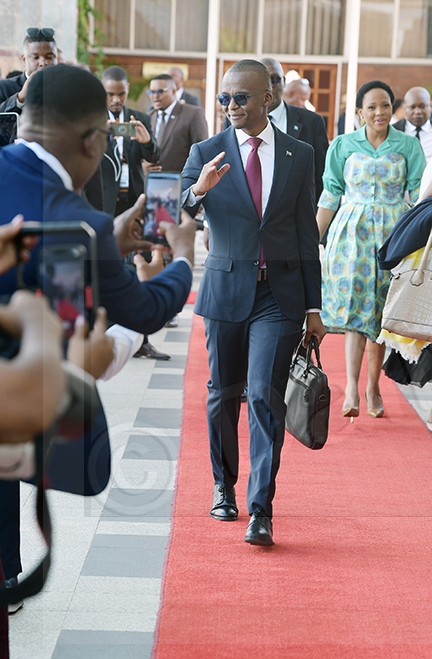
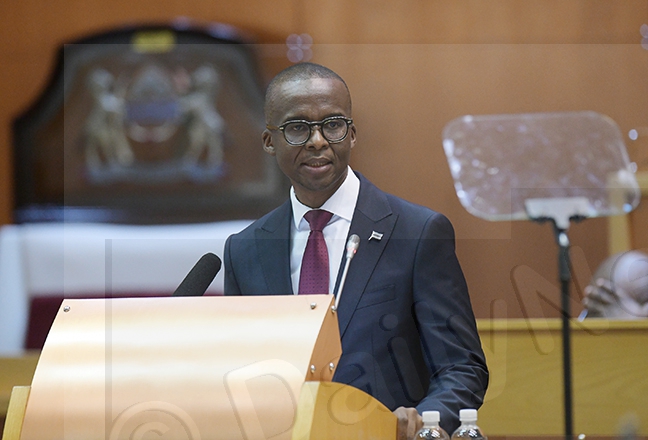
Presenting the 2026 Budget Speech in Gaborone yesterday, Finance minister, Mr Ndaba Gaolathe, emphasised that the approach focused on broadening the revenue base, enhancing tax compliance and improving the efficiency of tax administration, while ensuring that public expenditure is firmly aligned with national priorities and delivers value for money.
Mr Gaolathe said the strategy underscored accountability, results-driven spending and prudent fiscal management as key pillars to advancing Botswana’s economic transformation in a manner that was inclusive and sustainable.
He stressed that adequate domestic revenue was essential for effective service delivery and national development.
“Taxation is not a form of punishment, it is a collective investment in our shared development,” he said, adding that improving revenue performance was not solely about increasing tax rates, but deploying smarter systems and building institutional capacity for effective revenue mobilisation.
He reaffirmed government commitment to maintaining relatively low tax rates, while acting pragmatically when circumstances demand.
“A well-designed tax policy is fundamental to sustaining a healthy and competitive economy,” he noted.
Mr Gaolathe pointed out that the urgency for comprehensive tax reform was highlighted by recent data from the 2025 Organisation for Economic Co-operation and Development (OECD) Report, which shows that Botswana’s tax-to-GDP ratio declined from 13.8 per cent in 2022 to 13.4 per cent in 2023.
He said it remained below the African average of 16.1 per cent and significantly lower than the Southern African Customs Union (SACU) average of 20.5 per cent.
“These comparatively low levels of domestic revenue mobilisation clearly demonstrate the need to modernise our core tax systems, address under-taxed activities, strengthen compliance and broaden the tax base,” Mr Gaolathe said.
He cited international examples to illustrate what was achievable through sustained reform, saying Morocco, for instance, increased its tax-to-GDP ratio to 28.5 per cent in 2023 through strengthened tax administration, improved compliance, rationalisation of tax exemptions and the digitisation of tax processes.
Mr Gaolathe pointed out that Botswana had already begun a similar reform journey, saying the Value Added Tax (Amendment) Act of 2025 was a milestone in modernising the country’s tax framework and enhancing revenue mobilisation.
He highlighted that the Act introduces VAT on remote services and mandates electronic invoicing, aligning Botswana with international best practice. He said implementation was progressing well, supported by extensive stakeholder consultations and ongoing system upgrades.
He said the rollout of electronic invoicing, anticipated in April 2026, was expected to enable real-time transaction monitoring, reduce revenue leakages, strengthen compliance and enhance revenue assurance as part of the broader digital transformation of tax administration.
Mr Gaolathe said as part of a comprehensive multi-year reform agenda, government would table four key pieces of legislation during the current February sitting of Parliament.
He said those include the Value Added Tax Bill (2025), the Income Tax Bill (2025), the Customs Amendment Bill (2025) and a new Tax Administration Bill (2025).
He said the holistic review aims to modernise and harmonise Botswana’s tax framework, simplify procedural and administrative provisions and ensure full alignment with the new Tax Administration Act.
Mr Gaolathe further said government also addressed proposals announced in the 2025 Budget Speech, which included a 1.5 per cent increase in corporate income tax and the top bracket of personal income tax.
“After further reflection and consultation, government now proposes a revised top-earner threshold of P400,001 and above per annum, which will attract an additional 2.5 per cent tax. Additional proposals include a three per cent increase in corporate income tax and a reduction of the zero-rated VAT list to raise the effective VAT rate,” he said. He said detailed provisions of each Bill would be presented during upcoming parliamentary debates.
Reaffirming commitment to inclusive policymaking, Mr Gaolathe announced plans to convene a Tax Pitso that would bring together businesses, labour, civil society, technical experts and members of the public.
“This inclusive engagement will help us build a tax system that is fair, efficient and capable of supporting Botswana’s long-term development goals,” said Mr Gaolathe. BOPA
Source : BOPA
Author : BOPA
Location : Gaborone
Event : Parliament
Date : 10 Feb 2026
Related News

10 Feb 2026