Botswana faces rising debt risks and reserve pressures - Gaolathe

10 Feb 2026
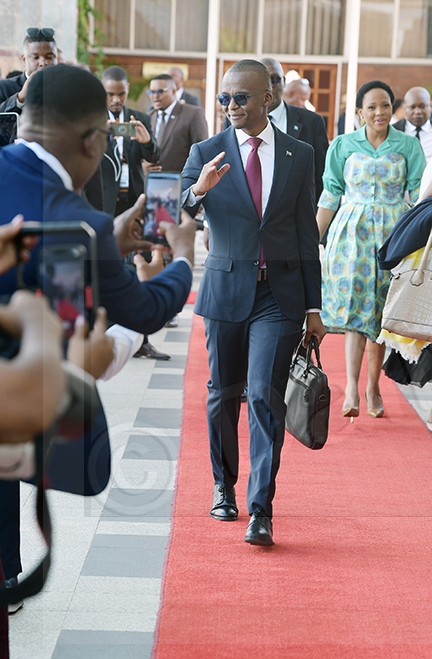
Botswana’s once-formidable financial buffers have thinned dramatically, leaving the country navigating tighter fiscal space, declining reserves and mounting debt risks, Finance Minister Mr Ndaba Gaolathe warned in his 2026 Budget Speech on Monday.
The Government Investment Account (GIA), long a symbol of Botswana’s fiscal prudence, has fallen to just P2.91 billion, down sharply from its P37.2 billion peak in 2014. At the same time, the country’s Net Financial Asset position has swung from a surplus of 40 per cent of GDP in 2008 to a negative 30.1 per cent in 2024.
This shift according to minister Gaolathe reflected years of budget deficits, weaker mineral revenues and growing reliance on borrowing.
He stated that the medium-term fiscal outlook had been revised downward, with government acknowledging that mineral revenues were unlikely to recover quickly, while spending pressures remain high.
Without consolidation, Mr Gaolathe said structural deficits were expected to persist, pushing public debt onto a steeper trajectory. Although debt remains within legal limits, the minister cautioned that continued slippage could threaten long-term sustainability.
However, he said government’s response would centre on gradual fiscal consolidation, prioritising essential spending, improving efficiency, reforming State-Owned Enterprises and strengthening domestic revenue mobilisation.
He nonetheless stated that social protection and growth-driving investments were expected to be shielded to avoid derailing economic recovery.
Minister Gaolathe further explained that external pressures are compounding fiscal challenges. For instance, he said Botswana recorded a P15.32 billion trade deficit between January and November 2025 as export earnings weakened and imports of fuel and food remained high.
Foreign exchange reserves, he said also declined from six months of import cover in 2024 to five months in 2025, tightening liquidity in the forex market.
The minister revealed that without recent exchange rate policy adjustments, projections showed that the pace of reserve depletion would have exhausted the country’s foreign exchange by mid-2026.
Policy changes introduced in July 2025 and January 2026 he said have since reduced pressure on reserves and improved interbank foreign exchange trading. New asymmetric exchange rate margins are also intended to make exports more competitive and support reserve rebuilding.
However, Mr Gaolathe said the fiscal outlook remained vulnerable to several risks including prolonged weakness in the diamond market, global economic slowdowns, climate shocks and domestic threats such as delays in economic reforms and the spread of Foot and Mouth Disease, which could hit beef exports and rural livelihoods.
Revenue shortfalls he mentioned remained the biggest concern, while rising recurrent spending and large infrastructure commitments pose additional strain.
With that being said the minister cautioned that the country now faced a delicate balancing act, rebuilding fiscal buffers while still supporting growth and protecting vulnerable households.
The success of this strategy minister Gaolathe stressed, depended heavily on accelerating economic diversification, improving public spending efficiency and restoring investor confidence.
The era of easy fiscal cushions, the minister made clear, was over. What lies ahead he suggested was a period of careful repair, disciplined spending and structural reform aimed at restoring the country’s financial resilience. BOPA
Source : BOPA
Author : BOPA
Location : Gaborone
Event : Parliament
Date : 10 Feb 2026
Related News

10 Feb 2026