


SKMTH A National Healthcare Pillar
09 Feb 2026
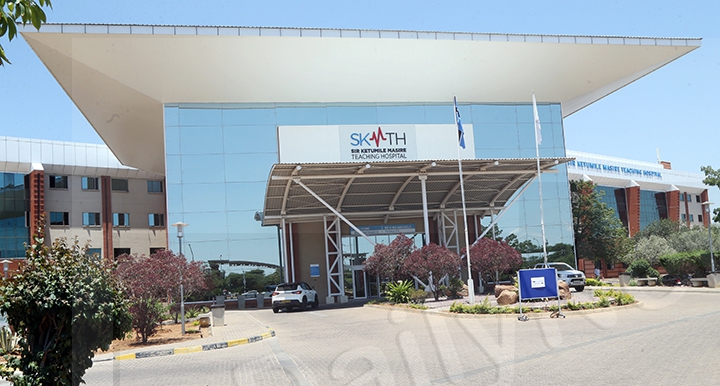
The transformation of Sir Ketumile Masire Teaching Hospital (SKMTH) into a public health hospital has ignited nationwide debate, with differing views on whether the facility should remain true to its original mandate as a teaching and referral institution.
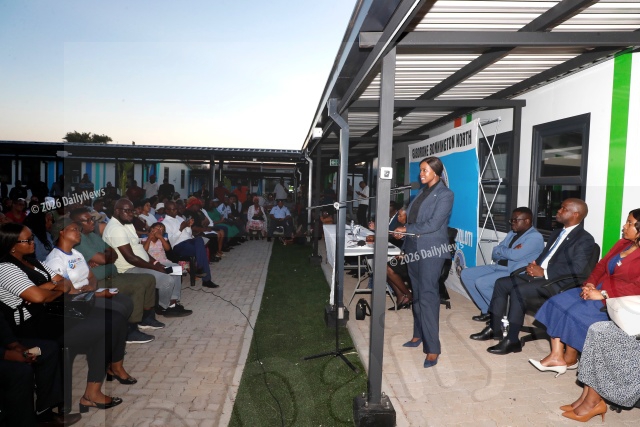
Briefing the media recently, SKMTH acting chief executive officer, Dr Rachel Seleke-Motsu, said the move was aimed at easing chronic congestion at Princess Marina Hospital (PMH), which had for years struggled under the weight of rising patient numbers.
By expanding Sir Ketumile’s role to provide broader public health services, Dr Seleke-Motsu said pressure on PMH would be significantly reduced, ultimately improving access to healthcare for Batswana.
She noted that the move aligned with government’s commitment to universal health coverage, a key pillar under the Ministry of Health. Within the broader national healthcare system, she added, SKMTH had already made a significant structural impact.
“As the transition continues, further adjustments and commissioning of spaces are expected,” she said.
She emphasised that the transition phases would be critical in ensuring that the facility met its long-term goals of excellence in healthcare, teaching and research.
Nonetheless, Dr Seleke-Motsu reiterated that SKMTH’s mandate remained firmly centred on specialised healthcare delivery, adding that the institution was designed to support advanced medical treatment, medical education and research, while positioning itself to meet global standards of clinical excellence.
Sharing similar sentiments, a Paediatric Endocrinologist at PMH, Dr Seeletso Nchingane said the hospital’s infrastructure reflected such ambition, adding that SKMTH played a central role in improving access to specialised care and reducing long patient waiting times.
He reiterated that the expansion was intended to improve patient flow management, strengthen primary healthcare referral pathways and ensure that specialised services were accessed appropriately.
Dr Nchingane confirmed that government had recently approved the reinstatement and integration of certain services into public hospitals, stressing that “this does not mean services have been shut down elsewhere.”
Instead, he said, hospitals were now running together and in parallel in a coordinated manner.
“Radiology and other diagnostic services are among those being aligned across facilities,” he said.
He explained that a major focus of the transition was the introduction and expansion of sub-specialist services.
“From February 2 this year, sub-specialist clinics in internal medicine and paediatrics began operating, alongside efforts to clear a longstanding backlog of orthopaedic surgical cases. Sub-specialties now available or being strengthened include cardiology, nephrology, neurology, gastroenterology, endocrinology and adolescent health services,” he added.
Dr Nchingane noted that while some clinics started later than planned due to the sudden nature of the transition and space constraints, the move was already yielding positive results.
He said the expansion of outpatient department (OPD) space had increased the number of consulting rooms operating simultaneously, allowing more patients to be attended to in a shorter period and significantly reducing waiting times that previously stretched from six months to over a year.
He further said the Theatre capacity was also improving, saying PMH currently had four paediatric theatres, while across SKMTH network there are 18 theatres, five of which were operational.
He said plans were underway to activate additional theatres, a move expected to substantially reduce surgical backlogs over the next three years.
“There will no longer be patients queuing from 4am, only to leave late in the day,” he said.
Furthermore, he said access to high-level diagnostic technology, including MRI and fluoroscopy, had also improved, reducing the need for costly external referrals and enabling earlier diagnosis to prevent complications.
“The expansion of intensive care unit (ICU) services is another priority, as ICU care remains one of the most resource-intensive components of healthcare delivery,” he said.
Looking ahead, Dr Nchingane said Phase Two of the transition was scheduled to begin on February 16, with parallel services running across hospitals to further ease pressure on emergency departments.
Further plans include expanding oncology and other specialised medical wards, with new wards and programmes currently in development. He said the reforms aimed to open services to all patients, improve efficiency and ensure Botswana’s public healthcare system continued to progress.
However, not everyone is convinced. Some citizens argue that SKMTH should remain focused on its initial purpose as a teaching hospital, designed primarily to training health professionals and providing specialised medical services. They fear that expanding its scope could dilute its academic mission and long-term strategic value.
One concerned Motswana acknowledged that the transition has not been smooth, reflecting broader concerns about implementation challenges and whether the shift was adequately planned and communicated.
Others, however, point out that Botswana has precedent for such adjustments during times of national need.
Mr David Modise recalled that during the COVID-19 pandemic, SKMTH was temporarily repurposed as a COVID-19 referral hospital.
“At the height of the crisis, the facility was cordoned off and dedicated almost entirely to managing COVID-19 cases, despite this not being part of its original mandate,” he said.
He said those decisions were made under extraordinary circumstances, often through Extraordinary Gazettes, with policies adopted swiftly and the public required to comply in the interest of national health and safety.
As a supporter of the current transformation, Mr Modise argued that the same principle applied today, noting that public need can necessitate a shift in how national resources are utilised.
“The pandemic showed us that intentions can change when the needs of the people demand it,” he said.
He added that Botswana now faced a different but equally pressing challenge of overcrowded hospitals and a growing demand for quality healthcare. Similarly, Ms Mpho Thebe noted that comparable policy decisions had been implemented in other sectors.
Ms Thebe cited the education sector during the tenure of former Minister of Education, Ms Pelonomi Venson-Moitoi, when Form Three students were allowed to progress to Form Four despite unsatisfactory results as an urgent intervention to address systemic challenges. BOPA
Source : BOPA
Author : Lesedi Thatayamodimo
Location : Gaborone
Event : Tour
Date : 09 Feb 2026
Related News

10 Oct 2026
Feature Reliving the Long March 90 years on

09 Oct 2026