Power Profits and Prescriptions

29 Jan 2026
On a Thursday evening, Minister of Health Dr Stephen Modise walked into the BTV studio to address the nation.
He appeared composed, almost Zen-like. This was striking for a man widely known within political circles as The Hurricane: restless, kinetic, always in motion. On this night, however, the storm had slowed. The posture was calm. The language measured. The reassurance deliberate.
But the 30-something-year-old minister is burdened with a crisis that did not begin with him, nor with his administration. It did not even begin with the political moment that brought him to office. It is a crisis decades in the making, shaped under a political order that governed Botswana continuously for 58 years, the era of the Botswana Democratic Party.
This matters, because much of the anger now directed at a new generation of leadership is historically misdirected. The collapse now visible in hospitals and clinics was designed, normalised, and defended long before this minister was born, through policies, procurement choices, and administrative cultures entrenched over successive administrations.
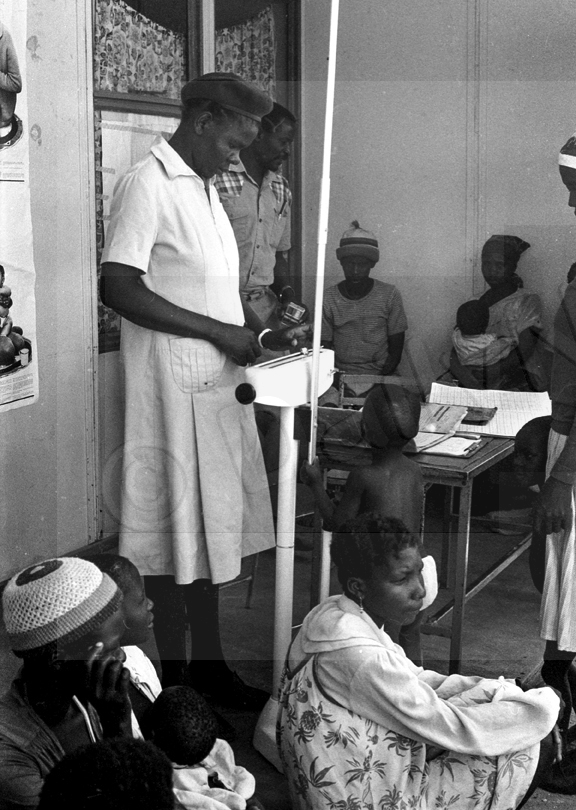
For a long time, Botswana’s health system survived on trust. Trust that the clinic would be there. Trust that the referral hospital would function. Trust that illness, though frightening, would not automatically become punishment.
That trust did not disappear suddenly. It was worn down through repeated exposure to institutional harm, one missing drug at a time, one broken machine left unrepaired, one referral that felt less like care and more like abandonment. What citizens experienced was not a single failure, but a pattern of injury, repeated, predictable, and largely uncorrected.
A Crisis with a Political Lineage
From the late 1990s through to the end of BDP rule, Botswana’s health system was shaped under successive presidencies, those of Festus Mogae, Ian Khama, and Mokgweetsi Masisi.
These administrations differed in style, rhetoric, and political temperament. What they shared was institutional continuity: the same ruling party, overlapping political elites, entrenched procurement systems, and a bureaucratic culture shaped by long incumbency.
It was during this period that key features of the current crisis hardened: Procurement systems that tolerated fragmentation and opacity, Maintenance regimes that allowed public infrastructure to decay,
Referral pathways that quietly redirected patients into private care. Policy choices that insulated commercial intermediaries from competition and consequence. These were not momentary lapses. They were governance choices sustained over time.
What the Record Shows
Over successive years, Botswana’s own oversight institutions raised alarms. The Auditor General repeatedly documented weaknesses in health-sector procurement and contract management,delays, irregularities, poor value for money, and the normalisation of emergency purchasing that bypassed safeguards.
Findings reappeared across audit cycles, recommendations acknowledged but not implemented, weaknesses identified but left structurally intact. The Office of the Ombudsman investigated cases of maladministration in public hospitals, identifying equipment failures, dysfunctional referral systems, and administrative neglect that directly harmed patients.
These reports were produced, tabled, and debated during the BDP’s long tenure in government. The evidence was available. The patterns were visible. The corrective action was partial at best.
Individually, these findings read like technical shortcomings. Taken together, they reveal something more serious: a system that absorbed damage without resisting it, because the damage did not threaten those with the power to change it.
From Failure to Capture
It is tempting, convenient even—to explain Botswana’s health crisis as incompetence, capacity strain, or fiscal pressure. But such explanations collapse under scrutiny. Botswana was not uniquely poor during this period. It did not lack trained professionals.
It did not lack rules, audits, or warnings. What it lacked was the political will, across administrations, to dismantle a system that increasingly rewarded private gain from public failure. This is where the language of elite capture becomes unavoidable.
Elite capture describes a condition in which public institutions are bent toward the interests of a narrow, powerful group, even as they continue to operate in the name of the public. It does not require overt illegality. It requires self-seeking behaviour protected by proximity to power. Under prolonged one-party dominance, that proximity became stable, predictable, and difficult to challenge.
Collaborative Destruction under Long Rule
There was no dramatic dismantling of public healthcare under BDP rule. What occurred was more dangerous: collaborative destruction. Political elites controlled policy direction and appointments. Commercial actors positioned themselves to profit from shortages, breakdowns, and the steady outsourcing of care. Bureaucratic discretion expanded where enforcement weakened.
Each group benefited differently—but all benefited from the same harm. When medicine was unavailable, patients suffered. When equipment remained broken, treatment was delayed. When referrals became routine, families absorbed the cost. This harm was not accidental. It was reproduced through tolerance.
The Ecosystem That Endured
By the time BDP rule ended, the health sector had become an ecosystem of extraction. Public hospitals failed reliably. Private providers expanded predictably. Public money followed patients out of the system. This did not require conspiracy. It required time, continuity, and greed disciplined by access to power.
Why This Series Matters Now
This article marks the beginning of a six-part investigative series that will examine Botswana’s collapsed health system as a product of historical governance, not recent surprise.
Over the coming weeks, the series will trace: how political power under long BDP rule converged with commercial interests, how procurement became a site of extraction, how public hospitals were allowed to decay, how professionals and insurers navigated—and benefited from—the harm, how key policy decisions protected profiteers, and ultimately, who did what, when, and how.
This is not an exercise in partisan score-settling. It is an effort to restore historical accuracy. The crisis confronting the current minister was not inherited from the election cycle. It was inherited from 58 years of accumulated decisions.
The evidence is not hidden. The timeline is clear. The responsibility is structural—and traceable. What has been missing is the courage to say so plainly. BOPA
Source : BOPA
Author : Tshireletso Motlogelwa
Location : GABORONE
Event : Address of the nation
Date : 29 Jan 2026
Related News

08 Oct 2026