


A new digital dawn as ORI receives GIS computers
26 Jan 2026
The Okavango Delta is often described as a ‘miracle of nature’, a luxurious and emerald maze of water pulsing through the heart of the Kalahari Desert.
But for the researchers at the Okavango Research Institute (ORI), monitoring this UNESCO World Heritage Site has recently felt like trying to navigate a high-speed world with a broken compass.
For years, the institute’s computers, the very engines required to process complex climate data and wildlife patterns, had grown sluggish and outdated.
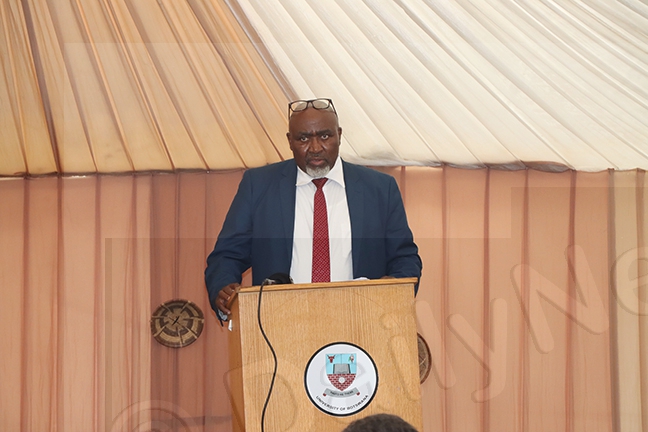
“Our existing equipment has become largely unusable,” admitted ORI director, Dr Casper Bonyongo when he received a donation of eight high-end Geographical Information Systems (GIS) computers worth P400 000 recently from the US Embassy.
This was not just a technical inconvenience, but a bottleneck for conservation. Without the processing power to handle large datasets, critical insights into flooding, fire dynamics and habitat loss remained locked behind frozen screens.
The GIS machines allow researchers to layer vast amounts of data including satellite imagery, rainfall records and animal migration paths, into high-resolution digital maps.
“Graduates and researchers alike will greatly benefit from this enhanced capacity. We can now support complex simulations and sophisticated spatial modelling that were simply impossible before,” said Dr Bonyongo.
For the students at the University of Botswana, this is not just about new hardware but about ‘future-ready’ skills.
UB acting vice chancellor, Mr Dawid Katzke believes these tools will bridge the gap between classroom theory and the urgent, interdisciplinary research needed to protect one of the world’s most significant wetland ecosystems.
While the technology is impressive, the sentiment behind it is deeper. At the handover ceremony, Acting Minister of Higher Education, Mr Shawn Ntlhaile said the donation was a milestone in an enduring partnership between Botswana and the US.
“It is a partnership built on a shared realisation. The challenges of the 21st century including climate change, disaster risk reduction and biodiversity loss, cannot be solved with 20th-century tools” Mr Ntlhaile said.
US Ambassador, Mr Howard Van Vranken echoed the same sentiments, noting that the donation underscored the global importance of local research.
“To protect the Delta is to protect a piece of the world’s heritage and that requires data that is as precise as it is timely. We are delighted to support ORI in analysing the Okavango Delta and recognising the critical role research plays in tackling global and regional challenges,” he said.
He added that the arrival of the eight computers was only the beginning. The US has demonstrated continued commitment to ORI, with plans already in motion for a high-capacity server and an expansion of the ORI laboratory.
As the Delta faces an uncertain future shaped by a changing climate, its guardians now have the digital ‘eyes’ they need to see what is coming.
With every map generated and every flood-cycle simulated, Botswana is proving that while the Delta’s beauty is timeless, its preservation requires cutting-edge innovation. BOPA
Source : BOPA
Author : Gaolethoo Kgatitswe
Location : Maun
Event : Interview
Date : 26 Jan 2026
Related News


10 Oct 2026
Feature Reliving the Long March 90 years on

09 Oct 2026