

Women can change mining trajectory
17 Dec 2024
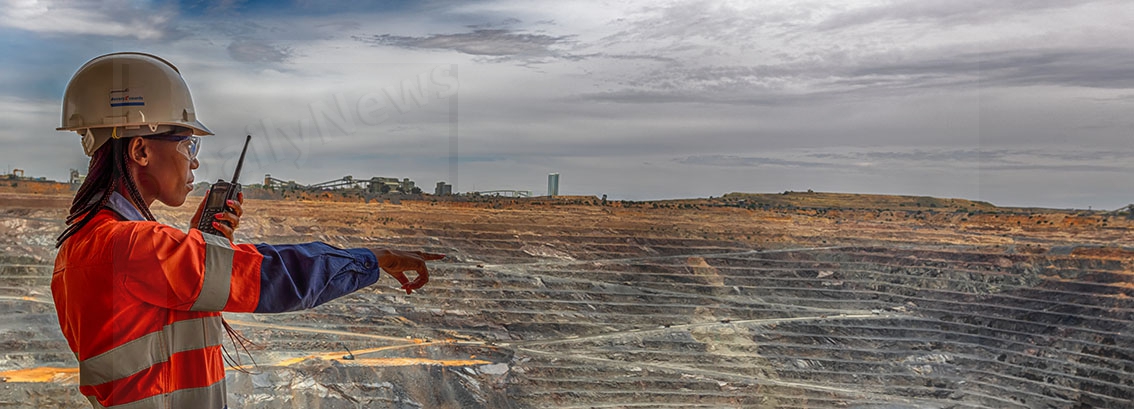
Women have the potential to change the face and trajectory of the mining industry.
For them to meaningfully partake and contribute to the mining industry they need to be robust, and innovative. There’s no doubt, however that they have often proved, they can go an extra mile to substantiate they are proficient, if not more skilful than, their male counterparts.
Ms Keneilwe Orapeleng, mining manager at Morupule Coal Mine, is a woman passionate about the industry and the role women can play in advancing the industry. Her work as the first woman in Botswana to obtain an underground blasting license subjected her to face resistance in a space traditionally dominated by men.
“At times, I was questioned not only about my technical competence but also about my ability to lead in high-pressure underground operations,” she says.
Ms Orapeleng drew strength from the belief that ‘the most certain way to success is always to try just one more time'. She has conceded to be inspired by the words of Thomas A. Edison.
By taking some of the most demanding roles within the underground mining environment, she gained hands-on experience and credibility. The focus of her leadership style of building competent and diverse teams, ensured that women and men work together toward shared goals.
Her completion of Management Development Program at the University of Stellenbosch further prepared her to lead and drive transformation in the industry.
She confirmed that when brainstorming together, women from various societies can bring diversity of thoughts to the organisations, resulting in better decision-making, stronger governance and improved economic performance.
Being female to her is not an excuse; it is not a weakness or disadvantage. By just being with her, one could scrutinise, there exists a strong business case for gender diversity, for women to drive inclusive shared programmes to mainstream in the industry.
She believes innovation, collaboration and resilience are essential tools for driving diversity and inclusion programmes in mining. The industry is rapidly evolving, with new technologies, automation and digitisation, from her point of view, reshaping traditional roles.
“Women can position themselves as leaders in this transformation by embracing new technologies and taking part in projects that focus on sustainable mining practices and modern workplace solutions,” she says.
She is adamant resilience allows women to stay focused and motivated, even when the journey becomes challenging. However, resilience taught Ms Orapeleng that setbacks are part of the journey in mining sector, she expressed.
She says for women to drive effective inclusion, they must develop innovative solutions to overcome barriers they face, whether through mentorship programs, inclusive recruitment strategies, or policies that promote work-life balance.
To her resilient leaders are also willing to challenge the status quo and influence decision-making, even at higher levels.
Ms Orapeleng, truly embraced the capability of women saying, to advance diversity programmes, women must lead courageous conversations, promote policies supporting gender equality, and model the change they want to see.
By fostering an inclusive culture in the work place, she says, women can create environments where both men and women have equal opportunities to succeed.
Her personal journey at Morupule Coal Mine, has shown her that while the road could be challenging, it is also incredibly rewarding.
By collaborating across the SADC region can empower more women to enter and thrive in the mining industry, Ms Orapeleng has said.
She urges women to challenge traditional norms, embrace new opportunities, in order to mentor the next generation of women leaders.
Through perseverance, innovative thinking, and regional cooperation, she cautions women can ensure the future of mining is inclusive, diverse, and sustainable. “Regional cooperation allows us to exchange best practices, mentor future leaders, and influence policies that promote gender equality in the mining sector,” she says.
Programmes such as regional mentorship networks, leadership exchange initiatives, and collaborative advocacy efforts, from her perception, can help address common challenges too.
Through stronger regional alliances, women can lobby for inclusive policies, she said giving example of, equal access to leadership roles and recruitment of women into technical fields. Public-private partnerships can also play a critical role in driving diversity programs, she explained.
She further says by collaborating with governments, educational institutions and companies across the region, women in mining can access training, funding and entrepreneurial opportunities.
In addition, she of the view that by creating such networks, they will not only promote career advancement, but also help remove barriers women face when trying to enter or grow within the industry.
As a woman with great reputation in the industry, Ms Kefilwe Mokone, Debswana’s Cultural Transformation, Diversity Inclusion senior manager concurs that the industry is male dominated, traditionally with research indicating women constitute less than 10 per cent of the global mining workforce.
Male domination is evidenced by force demographics where men typically represent a significant majority particularly in technical and leadership roles.
She describes diversity inclusion programmes as initiatives, which create equitable and inclusive workplaces where employees feel valued and supported across their diverse identities.
The diversity programmes, she says aims to promote learning, and provoke thought on gender bias and stereotypes.
This is to drive the inclusion of diverse persons from the widest possible range of backgrounds and experiences at a social, economic, political and cultural level, she sincerely perceived.
“Debswana Diamond Company is committed to promoting and developing a diverse, equitable and inclusive environment that delivers excellent results and supports the psychological safety and belonging of all employees to achieve their full potential,” she says.
The company encourages its employees to embrace gender inclusivity whether of age, family, marital status, colour, ethnicity, language, national origin, physical, mental ability, political affiliation, race, religion, sexual orientation, socio-economic status and other characteristics that make a unique workforce.
Ms Mokone says the company is aligned to the United Nations Sustainable Development Goals and labour rights principles set out by International Labour Organisation core conventions, as well as the aspirations of Southern African Development Community.
To overcome regional obstacles she says women in the region must ensure diversity inclusion programmes has corresponding documents (laws and acts) that are signed-off by presidents and well-chronicled..
Further, to assist, women to overcome obstacles governments should provide access to education to enable them fully participate in leadership and economic opportunities.
She is adamant, governments should also provide among others, financial support and resources to assist women in implementing their ideas and projects.
Another dedicated miner, curious, investigative and principled in the industry believed that for women to mainstream in the mining sector, they should equip themselves with necessary skills.
Ms Mapthutho Hunge, chairperson of Women in Mining, Lesotho, says given a chance, women can yield better results.
According to her, partnership is a necessary tool, when asserting themselves in the male dominated industry. Ends
Source : BOPA
Author : Idah Basimane
Location : Gaborone
Event : Interview
Date : 17 Dec 2024
Related News
23 Jul 2026
23 Jul 2026
School pins hope on new ICT laboratory

23 Jul 2026
Residents call for more education on ConCourt
23 Jul 2026