


Palapye Glass Project - The Art of Impunity
20 Feb 2026
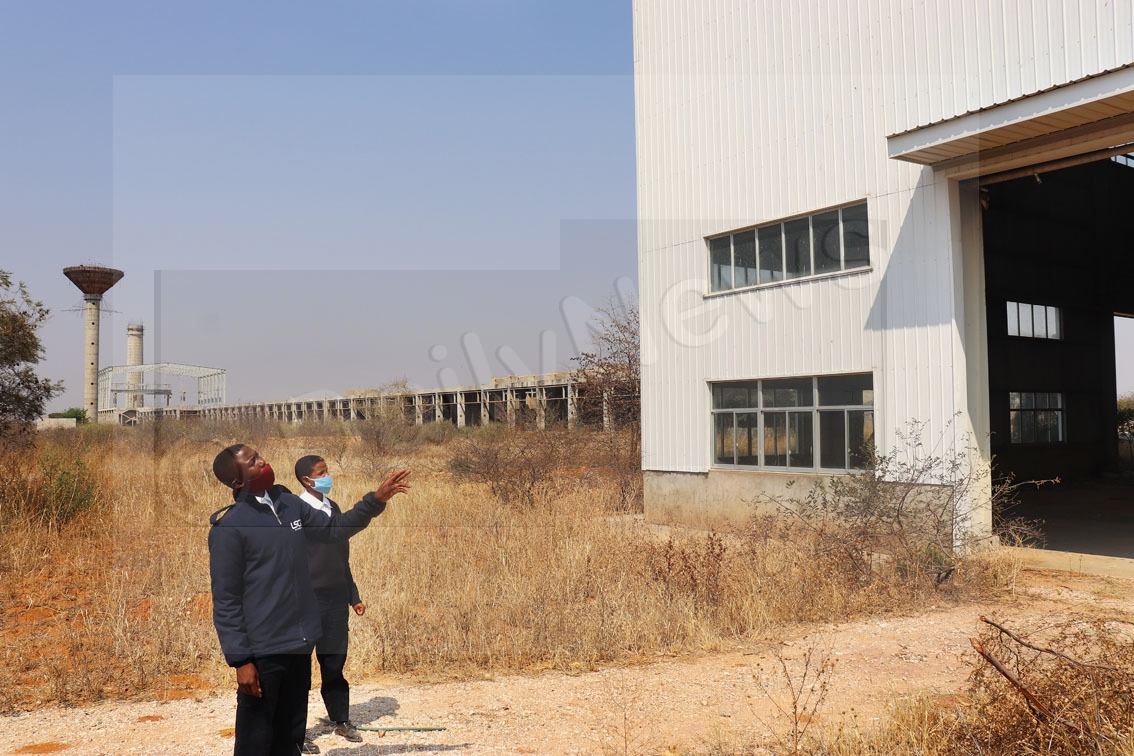
The final accounting arrived in Parliament on 10 February 2026, though the project itself had ceased to exist over a decade earlier. Responding to Serowe South MP L. Lesedi, the Minister confirmed the arithmetic that had long circulated in audit reports and court papers: P601.2 million expended on the Palapye float-glass project, P67.8 million recovered, P380 million realised as loss . The venture-conceived in 2007 as a joint enterprise between the Botswana Development Corporation and Shanghai Fengyue, stalled by 2011, liquidated in 2013—was now reduced to a line in the Hansard. The furnaces never fired. The glass was never produced. What remains unresolved is the question of consequence for those culpable, whether by omission or commission, directly or indirectly.
The Documented Warnings
The Auditor General’s report for the year ended 30 June 2012 recorded the investment in Fengyue Glass at P422 million, noting that “the Board approved additional funding amounting to P332 million to cover additional project costs” . The report carried this finding:
“The auditors were unable to obtain sufficient appropriate audit evidence… because the financial information of the joint venture company was not available.”
The same report observed that “payments were not made directly to the EPC contractor but into the bank account of Fengyue Glass Manufacturing Botswana (Pty) Ltd,” and that auditors were denied access to those records .
These were findings of the constitutional officer charged with safeguarding public funds. They did not result in publicly recorded disciplinary action against board members, executives, or ministerial overseers at the time.
The Parliamentary Special Select Committee of Inquiry, appointed in December 2011 and chaired by Abram Kesupile, submitted its report in 2012. The committee found the project was “premised on poor due diligence, doubtful technical project partner selection, a litany of project implementation violations, and doubtful and reckless project fund disbursement” . A forensic audit referenced in committee proceedings revealed “hundreds of thousands of pula in the bank accounts of key BDC executives and employees that could not be accounted for” .
The Prosecutorial Gap
In July 2013, then Minister of Trade and Industry Dorcas Makgato-Malesu assured Parliament that “Government is not sitting idle… DCEC is investigating this matter” . She confirmed that “some of the files have been passed on to the DPP” .
The investigation produced no prosecutions. In September 2020, Director of Public Prosecutions Stephen Tiroyakgosi informed the Public Accounts Committee that his office was “still awaiting evidence from Beijing” regarding a mutual assistance request sent in February 2012-eight years prior . No charges were laid against BDC executives, board members, or ministerial overseers. The DPP is not compelled by law to provide reasons for declining prosecution .
The DCEC itself has acknowledged this pattern. According to Commonwealth Africa anti-corruption research citing DCEC annual reports, the agency referred multiple dockets to the DPP concerning the BDC allegations, yet “there were no cases sent for prosecution” .
Liquidation and Recovery
The High Court in Lobatse granted a provisional liquidation order on 13 November 2013, with BDC lawyers stating that “the company has no sources of income. It is hopelessly insolvent and its liabilities far exceed its assets” . Court papers noted that Fengyue Glass had “failed to submit PAYE, WHT and Income Tax returns and has many VAT returns outstanding,” and that “the full extent of its liabilities are unknown, because the company has no reliable financial records and has never been subjected to an annual financial audit” .
Assets were eventually sold for P54.3 million in 2017, with Assistant Minister Biggie Butale informing Parliament that “the valuation report showed that the technical equipment to be sold was either used, incomplete, considerably deteriorated or out of any possible warranty” . The land was separately sold for P50 million .
The Fiscal Context
The loss crystallises during a period of acute fiscal pressure. The International Monetary Fund’s 2025 Article IV consultation noted that Botswana’s “fiscal deficit increased further in fiscal year 2024/25, to 7.1 percent of GDP,” with public debt rising “to more than 30 percent of GDP” . The IMF projected that “unless additional fiscal consolidation measures are adopted, public debt could rise sharply” .
This represents a marked shift from earlier decades. The 2024/2025 budget acknowledged “constrained fiscal space” and “rising debt servicing costs.” When large capital outlays fail to generate returns, the strain compounds. Palapye’s P380 million realised loss is not the primary driver of the current tightening—but it is emblematic of a period in which significant public resources were deployed without commensurate productive output.
The Continuum of Office
The project spanned multiple administrations. Conceived during Festus Mogae’s presidency, it escalated during Ian Khama’s. Trade portfolios during its active period included Neo Moroka, Dorcas Makgato, and Thapelo Olopeng. Finance oversight during key phases was provided by Kenneth Matambo, who subsequently attempted to sue Parliament over the select committee report—a litigation dismissed by the Attorney General on grounds of parliamentary privilege .
No parliamentary finding has established that any of these individuals engaged in criminal wrongdoing in relation to Palapye. The public record does, however, document a consistent pattern: forensic findings of unaccounted funds, parliamentary findings of “reckless” disbursement, and no prosecutorial outcome.
Systemic Patterns
Reports from the Accountant General and Public Accounts Committee over the last decade have recurrently cited: “Delays in submission of financial statements,” “Weak commitment controls,” “Inadequate asset management,” “Unreconciled balances” . PAC Chair Taolo Lucas noted in 2025 that some cases “from as far as 2014 were still pending in 2025, with little progress to put issues to finality” .
The Ombudsman’s recent reports, while focused on service delivery, echo a broader institutional diagnosis: “systemic challenges,” “failures in implementation.” Palapye followed a comparable trajectory—findings issued, frameworks adjusted, enforcement uneven.
The Verdict of 2024
The Minister’s February 2026 statement closes the legal dimension of Palapye. The arithmetic is settled: P380 million lost. What remains unsettled is the governance question. The Parliamentary Select Committee found “reckless” disbursement. The forensic audit found unexplained funds in executive accounts. The DCEC referred files to the DPP. The DPP awaited evidence for eight years, then silence.
Yet the final footnote to this saga may have already been written. In October 2024, the Botswana Democratic Party was removed from office after 58 years of uninterrupted rule. The electorate’s verdict was delivered not in audit language but in ballots—an assertion, rendered at the polling station, that the architecture of inconsequence had exhausted public patience. Palapye was not the sole cause of that electoral outcome. But it stands as the definitive case study of a system in which P380 million could vanish and no one would pay—a system that Batswana, by their vote, declared they would no longer tolerate. ENDS
Source : BOPA
Author : Tshireletso Motlogelwa
Location : Gaborone
Event : Analysis
Date : 20 Feb 2026
Related News

03 Aug 2026
03 Aug 2026
BPOPF assets grow by 10 percent
03 Aug 2026
Child Support Grant commences
03 Aug 2026
Taskforce assesses social protection programmes
03 Aug 2026