African women must tell own stories-Kunonga
26 Nov 2023
African women in film are uniquely positioned to tell their own rich and diverse stories often influenced by experiences drawn from culture and tradition.
This emerged during the inaugural International Film Festival held in Gaborone last week under the theme: Capturing our narratives.
Discussions centred on pivotal issues aimed at propelling the film industry forward to contribute to Africa’s ambition of becoming a global powerhouse.
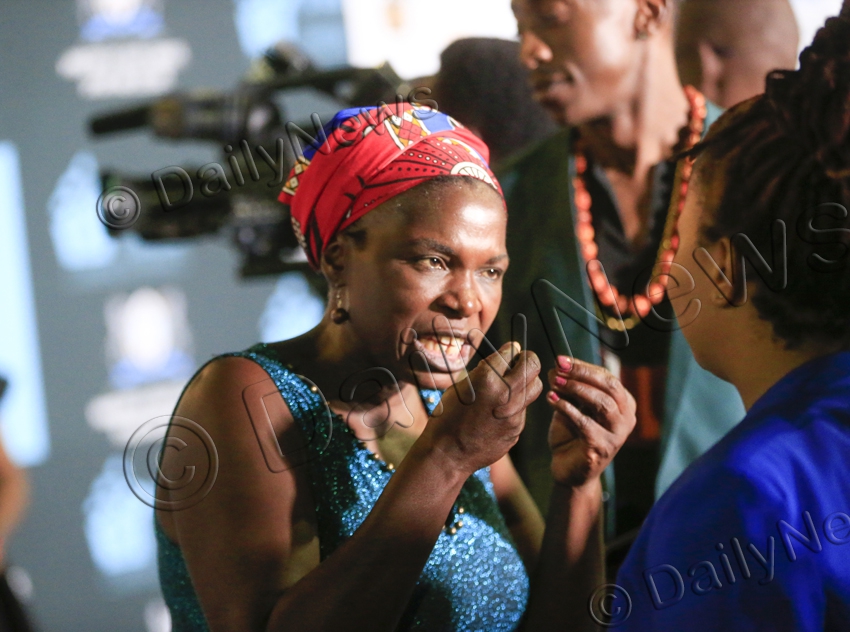
Producer and filmmaker Marian Kunonga from Zimbabwe, emphasized that African women in the film industry must embrace and share their own narratives rather than allow others to dictate their stories.
Kunonga, who has previously worked in Botswana’s film industry, conveyed her perspective on the topic of women and youth in film and television.
Her discussion also encompassed a question posed by the moderator, radio personality Tumisang Mothei, about the delicate balance filmmakers must strike between artistic freedom to exploring challenging themes and the responsibility of promoting positive change and contributing to broader conversations about youth and women.
She stressed the importance of women telling their stories authentically and wholeheartedly, without concern for outside opinions.
“We have to tell our stories from the heart as women. Don’t worry about what people think,” she emphasized.
Kunonga also highlighted the power of visual storytelling, noting that impactful stories have the potential to resonate and linger in the minds of audiences.
“When I look at a film, I look at the opportunities and the impact that we can have as women. We need to speak from the heart and express ourselves genuinely,” she said, indicating that women go through a lot of things but often lack confidence in expressing themselves.
By so doing, she said women in film could use their creative talents to tell diverse and authentic stories that reflect the richness and complexity of African culture and society.
Botswana producer and filmmaker, Afentse Lekolwane emphasised the importance of women telling their own stories.
“You do not get somebody else to be the one telling your story. My grandmother told me the story and I’m telling my story and we need to have women as show-runners,” she said.
Lekolwane is currently working on a film called Anafiki, which portrays the story of a blind woman pursuing love despite adverse circumstances.
The film, she said is motivated by her belief in the significance of telling stories that resonate with the audience as she understands that people were interested in the story itself.
“I am committed to creating films that hold meaning and significance, while also recognising the power of storytelling in driving important conversations about social issues,” she said.
Zambian actress, Grace Ramsey, who was asked about the film industry in Zambia and cross-border collaboration, shared the vision of diversifying young African women’s representation in the film industry through mentorship.
Drawing from her experiences, Ramsey said collaborating with a female director was pivotal, as she influenced her career decisions and introduced her to international opportunities.
“She unveiled a different aspect of the industry to me,” she said.
As a result, she has found it important to mentor and support other aspiring female filmmakers, actors, and crew members by providing guidance and resources to help them succeed in the industry.
“We hail from budding industries grappling with numerous developmental challenges, including inadequate regulations and skills. Consequently, effectively managing oneself to gain exposure in other markets becomes crucial,” she said.
Her Botswana counterpart, Serena Mmifinyane, a trained scriptwriter and content creator and vice chairperson of Women in Film, emphasised the importance of mentorship in Africa, stating that it manifests in various ways and forms, ultimately enabling personal growth and the ability to be vulnerable.
She acknowledged the invaluable support of her mentor, who had been instrumental in guiding her journey.
Mmifinyane highlighted how her mentor encouraged and supported her career choices, from applying for mentorship in the factory to co-founding Women in Film.
She credited her mentor for connecting her with relevant organisations and individuals who have helped shape her path and amplify her voice.
“This experience has empowered me to comprehend the significance of my role as a chairperson and vice chairperson of Women in Film,” she said.
Furthermore, she expressed her eagerness to witness the growth of those around her, emphasising that she does not yet consider herself to be a mentor.
She stressed the necessity for individuals to not only seize opportunities presented to them, but to actively create opportunities for themselves in order to progress in their personal and professional lives.
“Women in film in Africa could ensure that the creative arts play a major role in contributing to Africa’s growth and development. Their creativity, talent, and determination could help drive positive change and create a more inclusive and vibrant creative industry in Africa,” she said. ENDS
Source : BOPA
Author : Bakang Wren
Location : GABORONE
Event : Inaugural International Film Festival
Date : 26 Nov 2023
Related News

27 Jul 2026

27 Jul 2026
New P1.1m Child Helpline Call Centre opens
27 Jul 2026
Mohwasa commits to maintain public order
27 Jul 2026