SADC encourages adoption of protocols
20 Nov 2022
SADC member states have been encouraged to adopt two newly developed protocols on cross border transport to facilitate the movement of people and goods.
SADC official Mr Lovemore Bingandadi said the regional organisation recently developed two agreements on vehicle load management and multilateral cross-border transport which were ready to be adopted by SADC ministers of transport.
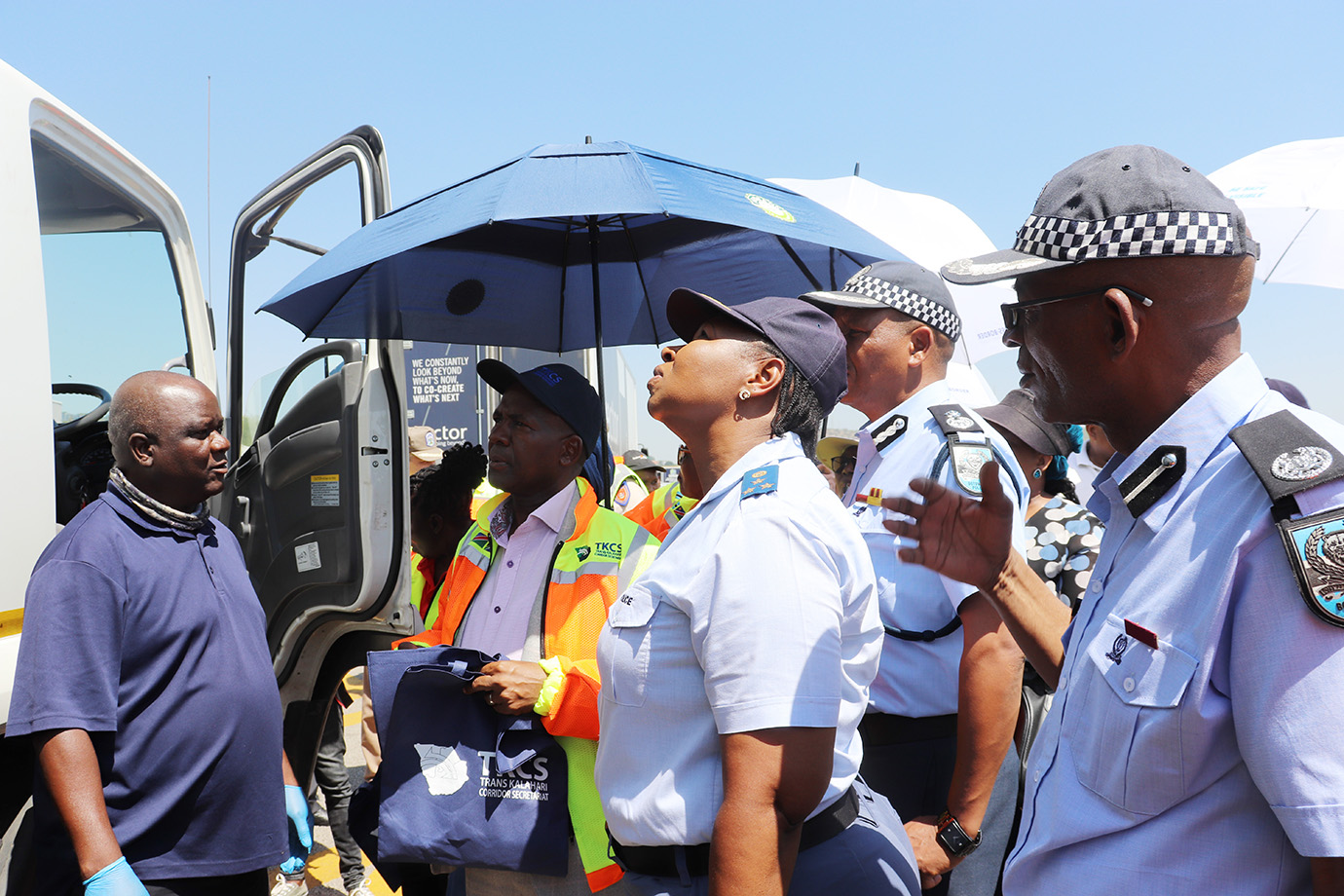
Mr Bingandadi was speaking on behalf of the SADC secretariat executive director Mr Elias Magosi at the end of the Trans Kalahari Corridor (TKC) Joint Law Enforcement Operation organised by Botswana, South Africa and Namibia in Rustenburg, Friday.
He said the instruments would aid countries to harmonise legislation and regulations as well as remove hindrances that might impede the movement of freight and people across borders.
He noted that the TKC was established under the SADC Protocol on Transport and Communication which identified regional corridors as the major framework to assist the member states to implement regional integration, facilitate trade and encourage spatial development initiatives.
Developing and managing transport corridors, he said assisted SADC states to trade globally as some countries were landlocked.
”SADC has the highest number of countries which are landlocked. Six out of 12 mainland countries are landlocked which means they depend on gaining access to international markets through the ports of their coastal neighbors,” he said.
Thus he said cooperation between member states was important, adding that the majority of corridors were mainly road networks that carried 80 per cent of goods but grappling with limited infrastructure due to missing rail links and the poor state of railways.
Mr Bingandadi stated that currently, the region experienced high transport costs due to delays and inefficiencies at the border posts. To date, he said the TKC was one of the major regional corridors which was a model where member states built infrastructure and placed a management institution in place to coordinate and manage their interests.
He appreciated Zimbabwe, Namibia and Zimbabwe for redesigning and implementing their driving and licensing cards in compliance with ISO standards. He said they have installed a corridor Trip Monitoring System at all major points of entry into Botswana and Namibia, with South Africa expected to be the next so that the TKC is digitally enabled to facilitate paperless trade and transport facilitation.
He said in Botswana, European Union had pledged 250 million Euros to the TKC, Maputo development corridor and the North-South corridor.
TKC secretariat executive secretary Mr Leslie Mpofu said the organisation targeted to simplifying cross-border transactions, by harmonising conflicting regulations, procedures and processes.
“As we harmonise these, we take into consideration economic challenges. The corridor is supposed to inject economic activity so that rural settlements can also grow,” he said.
Namibia Deputy Police Commissioner, Mr Gerald Klazen said harmonizing the movement of people and goods across the border would make life easier for them. “Namibia supports joint law enforcement of the three member states to foster deeper regional integration,” he said.
Botswana Police Services director of road traffic, Mr Katlholo Mosimanegape appreciated the joint law enforcement operation saying it served as a yardstick for the three countries to exchange notes on law enforcement across borders. Botswana is set to host the Joint Law Enforcement Operation next year. Ends
Source : BOPA
Author : Calviniah Kgautlhe
Location : RUSTENBURG
Event : TKCJoint Law Enforcement Operation
Date : 20 Nov 2022
Related News

01 Aug 2026