Molepolole submit divergent views
13 Nov 2022
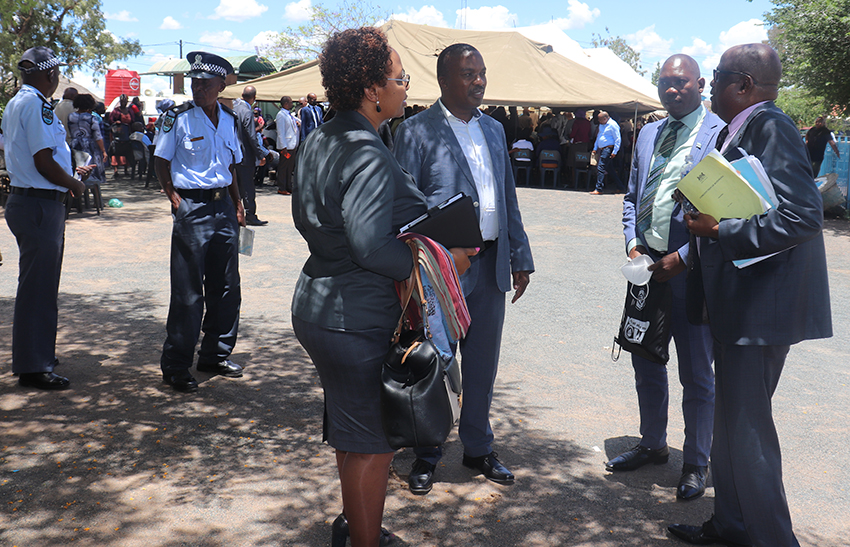
Molepolole residents have submitted divergent views before the Delimitation Commission at the Molepolole main Kgotla on Wednesday. Different groups and individuals presented to the commission stating reasons as to why Molepolole deserved the third constituency or be left as is.
Some residents were of the view that Molepolole needed a third constituency, some argued that the current two constituencies of Molepolole South and North should be altered or re-arranged to cater for the third constituency.
In contributing to the commission, Mr Gaotlhobogwe Kwelagobe of GaMasilwana Ward said that Molepolole deserved a third constituency of Molepolole East to add on the existing Molepolole North and Molepolole South.
He said the reasons were that Molepolole with more than just 80 000 deserved another constituency because the village was densely populated, which affected provision of services and developments.
Therefore, he suggested that some villages currently under Lentsweletau- Mmopane and Letlhakeng-Lephepe could make up the third constituency.
Mr Alfred Kwenasetso of GooraMmopi suggested that before the commission came, residents met at main Kgotla to deliberate on how they wished their constituency could be re-arranged using the same wards or villages that formed up a constituency and submitted that there was no point to form the third constituency. “We are below the quota for a third constituency,” he submitted.
Another resident, Kgosi Mompoloki Motswagole, a representative at Ntlo Ya Dikgosi, maintained that a third constituency was important. He said Molepolole should have a third constituency called Molepolole South East.
He said the new constituency and the existing two should be rearranged to include areas like Ditshukudung, Mmamarobole, Mahetlwe, Hatsalatladi, Mogonono, Khuduyamajako, Mapharangwane, Mosinki, Monwane, Moralane, Kotolaname, Lesilakgikong Gamodubu, Gakgatla, Mmanoko and Gakutwe.
These settlements, he said initially were part of Molepolole, but they were transferred to Lentsweletau-Mmopane, Thamaga-Kumakwane and Letlhakeng Lephepe constituencies adding that people from such settlements traversed long distances to access services that they could access from Molepolole.
Kgosi Matlhabaphiri Matlhabaphiri of Ga-Ranta also concured with Kgosi Motswagole that there was need for a new constituency.
Moruti Diane Mogome of Bokaa ward who is also a chairperson of churches’ council in Molepolole argued that he was surprised that after consultation earlier before the delimitation meeting, residents now unanimously agreed that the two constituencies of Molepolole be left as they were. He said they only spoke about rearranging them.
Kweneng District Council chairperson, Motlhophi Leo said a third constituency should be established. He concurred with Kgosi Motswagole that settlements that make up other constituencies initially belonged to Molepolole.
Ms Kedumetse Majafe of Magokotswane said it was meaningless to form another constituency because the quota already indicated otherwise, owing to the current numbers. She suggested that the boundaries be rearranged using the main road to divide the two constituencies.
MP for Molepolole North, Mr Oabile Regoeng asked the meeting not to ignore the guidelines and the parameters within which the delimitation exercise was to be carried out. He said it was futile to rearrange existing constituencies by adding settlements around Molepolole, because the numbers would still work against them.
Earlier, chairperson of the Delimitation Commission, Justice Chris Gabanagae apprised the residents about the criteria used to delimitate constituencies that would see four more constituencies being established to increase the number from 57 to 61.He said ideally each constituency should have same number of inhabitants that was calculated by dividing the total population with the 61 envisaged constituencies. In that regard he said the population quota dictated that ‘all things being equal’ a constituency should have 38 682.
To this end, however, he stated constituencies could not be delimited presenting exactly equal population in all cases because of unique features of some places, such as geographical features that should be taken into consideration, citing an example of some sparsely populated constituencies with vast administrative areas.
Justice Gabanagae therefore, informed residents that they should present to the commission their aspirations bearing in mind that population quota was the determinant for delimitating constituencies, geographical features, administrative districts and other factors.
He admitted that whereas other constituencies do not meet the stipulated quota, they were created on the basis of understanding the geographical features and avoiding to break their administrative districts.
“The other factor is that if we were to delimitate based on numbers, some areas that are vast such as Ghantsi would be having one area MP and those with unique features like villages of Tswapong that have hills will face the same predicament,” This he said would disadvantage residents as they would be forced to travel long distances and bad terrains to get services.
“Bokspits, Shakawe and Seronga are some of the areas with unique features although they might be sparsely populated. We also look at other things that unite tribes such as languages and culture,” he said.
Justice Gabanagae said delimitation also considered the extent at which the population would be affected by such things as the means of communication, roads, public convenience, contiguity of the areas and the necessity to avoid breaking of administrative districts.
“This is the reason why some constituencies do not meet the desired numbers, but we cannot take some villages belonging to other administrative districts to make up the desired numbers. This will be against the Constitution,” he stated.
Furthermore,Justice Gabanagae said the 2011 census registered a total of 34 943 in Molepolole North while the 2022 census saw 39 024 people and that Molepolole South in 2011 was 36 714 and the current population was 42 826 out of the total 388 126 total Kweneng inhabitants. ENDS
Source : BOPA
Author : Mmoniemang Motsamai
Location : MOLEPOLOLE
Event : Kgotla meeting
Date : 13 Nov 2022
Related News

03 Aug 2026
Diving into South China Sea
01 Aug 2026
First Lady calls for Youth Friendly Services