


Monganakodu report not ready
20 Sep 2022
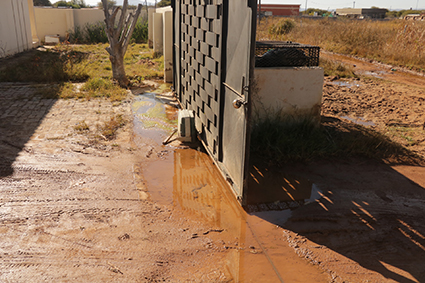
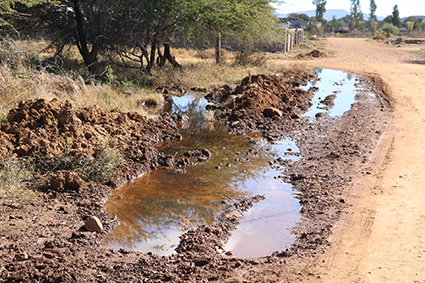
An inception report on the probable cause of water seepage at Monganakodu wardand intervention measures to the challenge are yet to be finalised.
This came to light on Monday September 19 during an update meeting for residents of Monganakodu in Taung, near Ramotswa, on the water seepage situation by the technical taskforce from stakeholders.
Lands planning officer from Malete Landboard, Mr Motshidisi Mafoko said regular updates from the taskforce were important so as to consult with the community to assist with further intervention measures to address the situation.
He said lack of resources, manpower and other logistical challenges hampered their efforts to deliver on their mandate timely.
Mr Mafoko said those charged with identifying a long-lasting solution were working round the clock to meet the target.
He said the taskforce had even extended their area of investigation to establish the root cause of the seepage.
He advised allotees not to undertake any developments in their plots until a solution is found.
Ground water technician from the Department of Water and Sanitation, Mr Phemelo Makoba told residents that the water quality analysis had primarily ruled out contributions from Water Utilities Corporation infrastructures.
He explained that soil samples from 18 trial pits from Monganakodu and Gamarete wards had been collected and submitted for atterberg analysis at the University of Botswana geotechnical laboratory.
He noted that the study area covered 2147.48ha running from Boatle landfill as the southern boundary, Mafukutswe-Rankepe hills as western boundary, Notwane farms as northern boundary and Notwane River as Eastern boundary.
Mr Makoba said Monganakodu was highly saturated, posing threat of flooding from rains.
He said as part of the remedial measures, 16 boreholes would be drilled throughout the study area and selected ones would be used for dewatering the groundwater system in order to lower the water table.
For his part, South East District Council roads engineer, Mr Steven Tshukudu said efforts had been made in the past to avert water from flowing from its natural pathway and cause extensive damage to property.
He said remedial works had been undertaken and so far at least 1.7 million litres had been drawn from the area and discharged into Taung River, a tributary of Gaborone Dam.
Mr Tshukudu said an interception drain was also excavated on the western side of the access road in order to intercept the heavy ground water, which was observed after excavation of trial pits, while trying to track the origins of the water.
He said as part of short term intervention measures, shallow drains would be excavated in between residential plots to assist with storm water drainage.
A structural engineer at the Department of Building and Engineering Services, Mr Antony Monthe said they had completed assessment of buildings affected by the seepage and were awaiting a consolidated report compilation.
He said reports that some people were undertaking developments on their plots was disturbing even though some had been awarded building permits, which the taskforce was not mandated to halt.
Malete Land Board had requested an investigation from Department of Geological Survey in 2013 to assess the cause of the seepage and come up with intervention measures.
Results and observations from the investigation showed that there was ponding in the area of investigation as a result of surface run-off during the rainy season.
The visible ponds in the area had raised concern among the residents, fearing that if the problem was not addressed at the earliest, it could cause major problems to their lives and property.
Preliminary investigations show that the water comes from underground, with origins from the western side of Taung Industrial Site Access road. Ends
Source : BOPA
Author : Baleseng Batlotleng
Location : TAUNG
Event : Residents Meeting
Date : 20 Sep 2022
Related News

03 Aug 2026

03 Aug 2026
Child Support Grant commences
03 Aug 2026
Taskforce assesses social protection programmes

03 Aug 2026
BCL liquidation costs near P2bn

03 Aug 2026