


Whose Crisis study releases findings on COVID-19 impact
11 Sep 2022
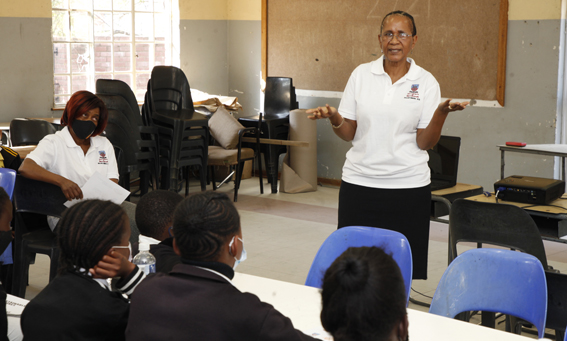
Research findings of the COVID-19 impact on the lives of Old Naledi residents have been released.
Speaking at the dissemination meeting in Gaborone recently, Project Coordinator for Whose Crisis, Professor Oitshepile Modise said the research project was intended to amplify the voices of the disadvantaged communities living with COVID-19.
She said the platform allowed the disadvantaged to share their understandings of the social and cultural crisis generated by the pandemic.
“The situation calls for genuine engagement, innovative methods, and appropriate communications to attend ethically to the current situations of vulnerable communities and households in Botswana to better understand the dynamics of COVID-19," she said.
Prof Modise said their main research objectives were to explore and document experiences, perspectives and responses to COVID-19 in vulnerable communities in sub-Saharan Africa.
Amongst their findings, Prof Modise said the research proved that gender based violence had gone up as couples spent too much time together.
She said lack of family resources had put breadwinners in an awkward position that affected their self-esteem thereby leading to domestic violence, noting that rape cases also escalated since the pandemic.
In addition, she said loss of employment had left people loitering around, while some were depressed by lack of income with some resorting to crime.
Concerning vulnerability risks by gender, she said teenage pregnancies arose during this period as young people found themselves idling and engaged in unprotected sex.
Moreover, she observed that some of the perpetrators were family members who were entrusted with care of young girls at the home.
Prof Modise said research revealed that the informal sector was adversely affected because vendors could not sell during lockdown.
Amongst other findings, Prof Modise said the research proved that traditional medicine was not recognised, mentioning that residents believed that traditional medicines must be recognised as they had the potential to contribute immensely to curbing future pandemics.
She said traditional healers emphasised the need for government to collaborate with traditional healers/practitioners in addressing the COVID-19 pandemic.
“The findings revealed that the closure of churches during lockdowns exacerbated fear and insecurity leading to moral decay and hence the rise in crime including gender-based violence,” she said.
Prof Modise stated that a comprehensive report on the findings could be accessed at the University of Botswana, in the Department of Lifelong Learning and Community Development, Faculty of Education.
Prof Modise is a member of Board of Directors of the Sustainable Futures Global Network; SF Global Network.
The SF Global Network brings together researchers, practitioners, and communities to address the common goal of a sustainable and equitable world in Asia, Europe, Africa, and America.
However, the Whose Crisis Study was only carried out in Africa by five countries, namely Botswana, Malawi, Swaziland, Uganda, and Nigeria. ends
Source : BOPA
Author : Marvin Motlhabane
Location : GABORONE
Event : report
Date : 11 Sep 2022
Related News
04 Aug 2026

04 Aug 2026
Adapt To Shifting Workforce Needs - Official

04 Aug 2026
Police Destroy 299 FIrearms
04 Aug 2026
Sehube Signs Off From The Airwaves

04 Aug 2026