


Dikoloti urges collaboration to tackle malnutrition

11 Sep 2022
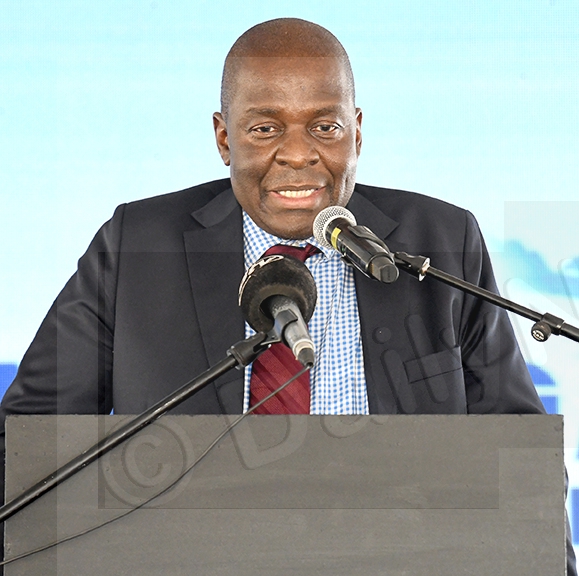
Minister of Health, Dr Edwin Dikoloti has emphasised the need for Africa to collaborate to strengthen social protection systems and safeguard access to food and nutrition for the most vulnerable groups in communities. Dr Dikoloti was speaking at the launch of the African Union (AU) theme of the year on nutrition in Botswana on Friday.
Dr Dikoloti said the Food Security Information Network (FSNI) global report on food crises (2021) showed that malnutrition remained a challenge as Africa had some of the highest rates of malnutrition globally.
He said such evidence suggested that although the African region seemed to have witnessed a decrease in malnutrition of its population by about 13.5 per cent from 35.5 per cent in 1990 to 22 per cent in 2019, more work still needed to be done to improve nutrition and food security in the continent.
He therefore called on collaborations for an inclusive growth and sustainable development in AU member states through its long-term vision set out in Agenda 2063 that highlighted the importance of healthy and well-nourished citizens.
He said AU declared 2022 as the Year of Nutrition under the theme: Strengthening Resilience in Nutrition and Food Security on the African Continent: Strengthening Agro-Food Systems, Health and Social Protection Systems for the Acceleration of Human, Social and Economic Capital Development.
“The theme is appropriate and fitting as it seeks, not only to celebrate the gains made in nutrition and focus the continent on maintaining stronger political momentum on nutrition, but also challenges member states to earnestly contribute towards ending all forms of malnutrition in Africa,” Dr Dikoloti said.
He said contribution could be achieved through new pledges and resolves to support, resource and finance action plans dedicated to achieving set targets and results by all AU member states.
Dr Dikoloti added that malnutrition contributed to a wide range of clinical manifestations and non-specific physiological impairments, especially for vulnerable population groups hence it should be given utmost attention by all.
He said malnutrition consequences included, among others, increased morbidity and mortality in children, reduced economic productivity, negative socio-economic impacts on households as well as increased disease burden on countries.
“We surely do not wish this on our people and should do anything as countries to ensure that no child dies of malnutrition. It could be truly stopped through the abundance of food produced and health standards put in place, to ensure nutritious food availability for all and also safeguard its safety for consumption,” he added.
Further, the minister said Africa was said to account for more than nine out of 10, of all children with stunting and was also home to more than seven out of 10 children who were overweight worldwide.
As such, he emphasised the need to aim to reach the endorsed Malabo Declaration goal of reducing stunting to 10 per cent and underweight to five per cent by 2025. He called on the continental frameworks, including the African Regional Nutrition Strategy (ARNS), to implement multi-sectoral nutrition action plans, budgets and expenditure tracking systems for effective implementation and monitoring of nutrition interventions.
He said other strategies to fight malnutrition included coherent policies, governance and accountability, building resilience, multi-sectoral and interdisciplinary approach, link between agriculture and nutrition, financing for nutrition, promotion of trade, knowledge generation and capacity building as well as commitments to action.
He also urged all stakeholders to accelerate the strengthening of data management and information systems and knowledge generation and dissemination to inform decision making in line with the goals and aspirations of the 2022 theme. Nevertheless, Dr Dikoloti said some great strides had been made in Botswana through interventions introduced to support children’s growth in schools and also through programmes targeting the poor and other disadvantaged communities.
He however said more still needed to be done to make a more permanent impact. Therefore he encouraged all stakeholders to join hands in defeating malnutrition in Botswana given that its causes were multifaceted and diverse, hence a multi-sectoral approach was needed to address them. ends
Source : BOPA
Author : Lesedi Thatayamodimo
Location : GABORONE
Event : launch
Date : 11 Sep 2022
Related News
04 Aug 2026

04 Aug 2026
Adapt To Shifting Workforce Needs - Official

04 Aug 2026
Police Destroy 299 FIrearms
04 Aug 2026
Sehube Signs Off From The Airwaves

04 Aug 2026