


Farmers anticipate better season
18 Aug 2022
Some farmers in the Ngamiland region have anticipated a good year, despite the low water levels from the recent annual floods.
They said with certainty that there would be a moderate drought this year, as the vegetation was in good condition, but they wondered if the little water received would last.
Following reports that Angola experienced adequate rainfalls, some residents expected high inflows from Mohembo River, especially after the disappointing water levels of the previous years.
Mohembo River receives water from sources in the Angola Highland and spills over into the famous hand shape of the Okavango Delta, which feeds the Boro channel and empties into the Thamalakane River, then spreads out into Nxaraga, Komana and Toteng channels.
Normally, the floods influence a lot of activities such as fishing and molapo farming, among others, but this time, the activities were minimal as some sources dried up quickly, while some did not receive the inflow at all.
In an interview, Kgosi Moatlhodi Motlhabane of Nxaraga village revealed that they anticipated a better season, even though this year’s floods were not satisfactory.
Last year, he said Thamalakane River and Nxaraga channel received better flows compared to this year, but noted that they do not anticipate any drought situation.
“We do not expect the worst dry spell, similar to the one that befell us in 2019 to repeat itself. We believe that the little water will sustain both the communities, wildlife and livestock for some months,” he added.
The year 2019 was a challenging one for the Ngamiland communities as the entire district experienced severe drought due to the drying up of water sources, which left many communities, livestock and wildlife in a desperate situation.
In Nxaraga, some hippos died in the ponds because of lack of vegetation. Kgosi Motlhabane appreciated that this year the hippos would survive as the ponds received water, which would last for 3-4 months, adding that the vegetation was also good.
Asked what could be the cause of floods variations, Kgosi Motlhabane said it was due to climate change. He said in the past, they used to speculate as well as use the indigenous knowledge to tell if the floods would be high or low but “things have changed now days and the floods are unpredictable, varying from year to year,” he added.
Kgosi expressed concern that the floods had not yet arrived at Lake Ngami as it was the norm. He said in previous years, the lake used to be a beehive of activity around this time of the year. The presence of the floods, he said brought excitement as the community flocked water sources to make ends meet.
A farmer, Mr Boitshoko Ndozi of Komana village concurred that this year’s floods were very low, noting that they had not even reached the Komana channel that feeds Lake Ngami.
He said they expected the high level of flows as reports indicated that Angola experienced adequate rainfall this year. Mr Ndozi said the water flows usually arrived in Komana around June/July, but currently the channel was dry.
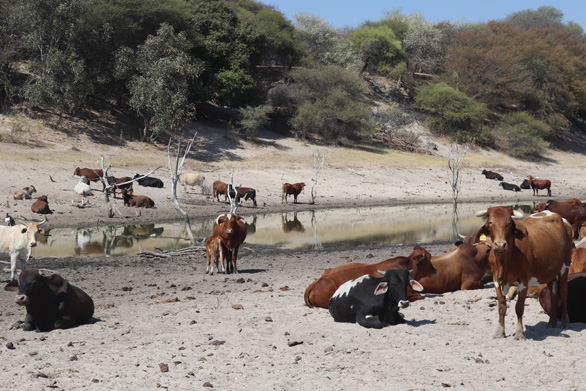
The situation, he said would negatively impact livestock and wildlife, which currently congregated around the little water that remained from the previous floods. He, however anticipated moderate drought as the vegetation was satisfactory. “Go lebega re tla nna le leuba la metsi fela monongwaga, mme la phulo lone ga le yo ka jaana bojang bo le bontsi,” he added.
Mr Ndozi attributed the good vegetation to the adequate local rainfalls experienced early this year. He said as the water sources were source of livelihood for residents and home to some animals, the absence of floods was a blow. He however, hoped that they would not have a repeat of what happened in 2019. ends
Source : BOPA
Author : Esther Mmolai
Location : MAUN
Event : interview
Date : 18 Aug 2022
Related News

06 Aug 2026
05 Aug 2026
Zim foreign currency earnings rise sharply in H1
05 Aug 2026
More women join ranks of game rangers

05 Aug 2026